








































Picture Hanging Systems for Galleries, Offices, and Commercial Spaces
Explore flexible picture hanging systems for galleries, offices, and commercial spaces, offering secure, adjustable, and professional display solutions.
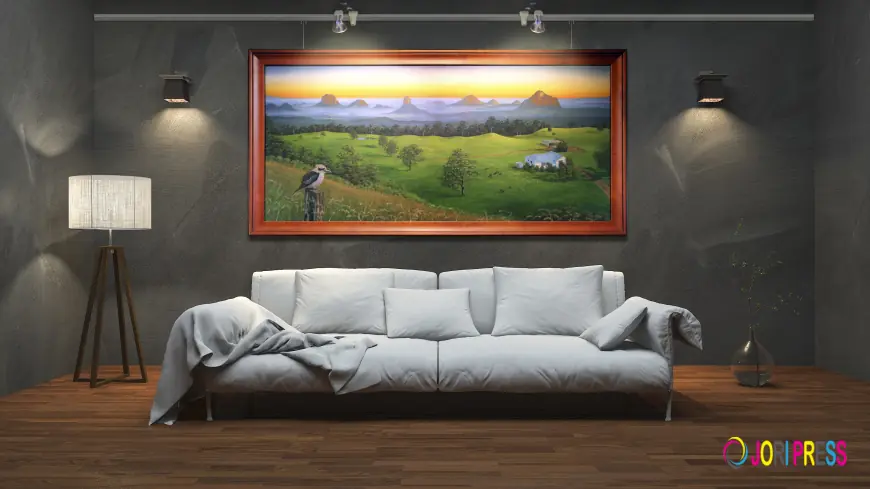
Walk into any well-curated gallery, and the artwork looks like it belongs there. It floats against the wall in perfect alignment, evenly spaced, properly lit. What most visitors never notice is the mechanism making that possible. Behind the scenes, a track, a cable and a hook are doing all the work. Picture hanging systems are the invisible backbone of professional art display, and they are increasingly finding their way into offices, retail spaces and commercial buildings where presentation matters just as much.
What Is a Picture Hanging System?
At its simplest, a picture hanging system consists of a track mounted at ceiling or wall height, with adjustable cables or cords dropping vertically from it. Artwork hooks onto those cables at whatever height is required, and the entire assembly can be repositioned along the track without tools. The track itself is the only element fixed to the wall or ceiling. Everything else moves freely.
Modern picture hanging systems come in several configurations. Cable-based systems use stainless steel wire for maximum strength, rated to hold up to 20 kg per hook. Clear cord systems are near-invisible against the wall, suited for lighter pieces and contemporary interiors. Some systems are designed for existing picture rail mouldings, using purpose-built hooks that fit over the rail without any drilling. The common thread is flexibility: hang, adjust, rehang, all without new fixings.
Why Choose a Picture Hanging System?
The reasons go well beyond convenience, though convenience alone would be enough for most people. Picture hanging systems address four specific pain points that traditional hanging methods create.
1. Flexible Artwork Placement
A single nail gives a single position. The picture lives there until someone decides to move it, at which point there is a hole to fill and a new spot to measure. Picture hanging systems eliminate that rigidity entirely. Artwork slides along the track horizontally and adjusts vertically on the cable. Rearranging a display takes minutes, not hours. For spaces that rotate artwork regularly, this flexibility is not a nice-to-have. It is essential.
2. A Clean, Professional Appearance
Tracks are slim and discreet, running along the wall in a powder-coated white or anodised silver finish that blends into the architecture. The cables are thin, often less than 1.5 mm in diameter, and barely visible at a conversational distance. The result is artwork that appears to float against the wall, uncluttered by bulky brackets or visible hooks. For galleries, this clean aesthetic is non-negotiable. For offices and commercial spaces, it communicates attention to detail and professionalism.
3. Reduced Wall Damage
Every nail driven into a wall is a repair waiting to happen. Multiply that by dozens of framed pieces across a commercial building, and the maintenance costs add up quickly. Picture hanging systems require only the initial track installation. After that, no further fixings are needed. Walls stay intact through years of display changes, saving significant time and money on plastering, patching and repainting.
4. Easy to Update Displays
In a gallery, an exhibition might change every six weeks. In an office, motivational prints or employee recognition displays rotate monthly. In a hotel lobby, seasonal artwork keeps the space feeling fresh. Picture hanging systems make each of those changes a ten-minute job rather than a half-day project involving a ladder, a drill, a spirit level and a tube of filler.
Picture Hanging Systems for Art Galleries
Galleries were the original use case for picture hanging systems, and they remain the most demanding. Exhibition schedules are tight, walls must stay in gallery-grade condition through hundreds of display changes, and the artwork itself can range from a small watercolour to a three-metre canvas weighing well over 15 kg.
Stainless steel cable systems are the standard in this environment. They provide the load capacity needed for oversized works, and the cables can be swapped or adjusted individually without disturbing neighbouring pieces. Security hooks add theft deterrence in public-access galleries, with a latch mechanism that prevents the cable from being unhooked without a tool. Many institutions, including Oxford University and major galleries throughout the UK, have adopted these systems as permanent infrastructure.
Picture Hanging Systems for Offices
An office that looks good works better. Research consistently links aesthetically considered workplaces with improved employee wellbeing and productivity. Artwork is a significant part of that equation, and picture hanging systems make it practical to maintain rotating displays across meeting rooms, reception areas and open-plan floors.
The advantage in an office context is speed. A facilities team can update the artwork across an entire floor in an afternoon, without booking tradespeople or waiting for plaster to dry. For companies that display brand imagery, client work or rotating collections from local artists, the system pays for itself within a few display cycles just through avoided maintenance costs.
Picture Hanging Systems for Commercial Spaces
Hotels, restaurants, retail showrooms, medical clinics, schools, libraries. Any space that welcomes the public benefits from well-displayed artwork, and any space where the walls are not owned outright benefits doubly from a system that avoids permanent damage.
For tenanted commercial spaces, picture hanging systems are especially valuable. A business can install a full display, use it for the duration of a lease, and remove the track when it moves out, leaving minimal evidence behind. The same applies to exhibition spaces, pop-up venues and shared buildings where multiple tenants rotate through the same rooms.
Schools and universities represent another major use case. Corridor displays, art department exhibitions and library galleries all benefit from systems that staff can update without specialist help. Over 60 universities and schools across the UK currently use track-based picture hanging systems for exactly this reason.
Choosing the Right Picture Hanging System
The choice comes down to three factors: the weight of the artwork, the frequency of display changes and the visual style of the space.
For heavy pieces and high-rotation environments, stainless steel cable systems are the strongest option. For lighter artwork in modern interiors, clear cord or tape systems keep the mechanism almost invisible. For properties with existing picture rails, a traditional rail hook system uses what is already on the wall and requires zero new fixings. Most suppliers, including The Gallery System, offer sample kits so the look and feel of each option can be tested before committing to a full installation.
Ceiling-Mounted vs. Wall-Mounted Systems
Both approaches use the same principle, but the track position changes the visual effect. Wall-mounted tracks sit at the junction of wall and ceiling, blending into the architecture. They suit standard-height rooms and spaces with conventional layouts.
Ceiling-mounted tracks drop the cable from above, creating a gallery-style display where artwork hangs with visible air between it and the wall. This approach works well in spaces with high ceilings, open-plan layouts, or where room dividers are needed. Some installations use ceiling tracks to hang artwork in the middle of a room, creating visual partitions without physical walls.
A Flexible Solution for Modern Interiors
The shift toward minimalist, flexible interiors has put picture hanging systems in higher demand than ever. Architects and interior designers now specify them at the planning stage rather than treating artwork display as an afterthought. For new builds and refurbishments alike, integrated hanging systems offer a future-proof solution that adapts to changing tastes, tenants and uses over the lifetime of a building.
The trend is particularly strong in mixed-use developments, co-working spaces and hospitality venues, where the look of the walls changes more frequently than the walls themselves. A single track installation accommodates every future display without a single additional hole.
Conclusion
Picture hanging systems have moved well beyond the gallery floor. They are now a practical standard in offices, commercial buildings, schools and modern homes. The benefits are consistent wherever they are installed: cleaner walls, easier display changes, lower maintenance costs and a more polished presentation. For anyone managing a space where artwork matters, the smart move is to install once and rearrange forever. Visit thegallerysystem.co.uk to explore the full range of picture hanging systems available for delivery across the UK.
What's Your Reaction?
 Like
0
Like
0
 Dislike
0
Dislike
0
 Love
0
Love
0
 Funny
0
Funny
0
 Angry
0
Angry
0
 Sad
0
Sad
0
 Wow
0
Wow
0