





































OPINION: When Power Becomes Culture
What Jacqueline Mbabazi's Testimony Reveals About the Sociology of Political Office

Fellow Globals.
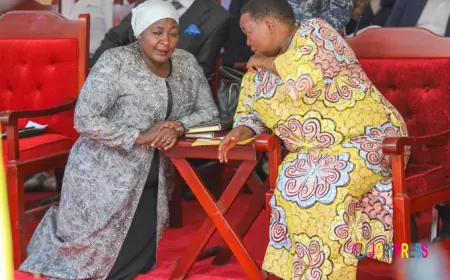
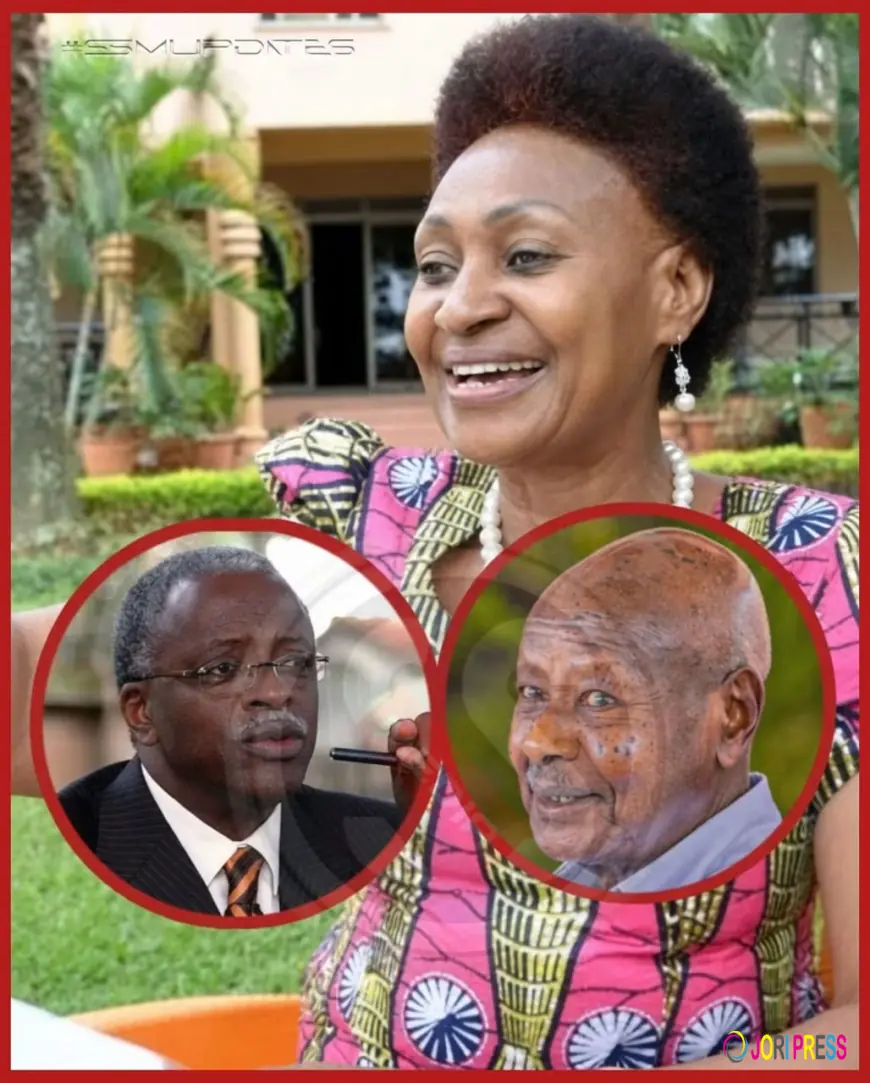
During a recent Cabinet induction retreat, Uganda's Minister of State for Gender and Labour (Elderly Affairs), Jacqueline Mbabazi, shared a deeply personal account with fellow ministers. Reflecting on the period after her husband, former Prime Minister Amama Mbabazi, fell out with President Yoweri Museveni and left the centre of political power, she described how her family had to adjust almost overnight to a completely different way of life.
She recalled the withdrawal of official security, government vehicles, and other privileges that had become part of their daily existence. She spoke of children who struggled to understand why the soldiers had gone and why life had suddenly changed. She reflected on moving away from shopping in New York and London and discovering fulfilment in wearing clothes made by a tailor in Kihihi. Most importantly, she urged fellow ministers never to assume that the privileges of political office are permanent, reminding them that power is temporary and that they should prepare themselves and their families for life beyond public office.
Whether one views this simply as a personal testimony or as a lesson to newly appointed ministers, I found myself listening to it through a different lens—not as a political story, but as a sociological one.
For me, *Mrs Mbabazi's testimony raises a fascinating question* that reaches far beyond Uganda:
*When does political power cease to be merely an office and become a culture?*
Political office is often understood simply as a constitutional position. Yet sociology reminds us that every office also creates a culture. It shapes identities, relationships, expectations, lifestyles, and even family life. In time, people do not merely occupy office; they begin to inhabit an entire way of living.
The details Mrs Mbabazi shared may appear personal, but they are sociologically revealing. They remind us that political office creates an entire ecosystem. Ministers are surrounded by security personnel, drivers, protocol officers, official residences, invitations, influence, and public attention. Families gradually adjust to this environment until it becomes normal. Children grow up assuming that such privileges are simply part of everyday life.
*Then, one day, the office ends.*
What disappears is not merely authority. An entire social world disappears with it.
This raises important questions. Is this experience unique to Uganda? Or is it characteristic of many post-colonial societies where the state remains the principal source of prestige, influence, and opportunity? Would a former minister in Britain, Sweden, Canada, or Japan tell a similar story to newly appointed ministers? If not, what explains the difference?
*History may provide part of the answer.*
Many African states inherited highly centralised colonial administrations in which power was concentrated at the centre. Although independence transformed political leadership, many of the institutional cultures surrounding authority remained remarkably intact. Political office, therefore, came to symbolise not only public service but also status, security, and access to opportunity.
*This suggests that the challenge is not simply political it is cultural.*
Perhaps we have been asking the wrong question. Instead of asking why politicians struggle to leave office, perhaps we should ask what kind of political culture makes leaving the office feel like falling off a cliff.
Another aspect of Mrs Mbabazi's testimony deserves attention.
Why did she choose to tell this particular story, in this particular setting, to this particular audience?
Cabinet inductions are not merely administrative exercises. They are moments when one generation of leaders transmits values, warnings, and expectations to another. Her testimony may, therefore, represent more than a personal reflection. It may be part of the unwritten curriculum through which political systems teach their leaders about the temporary nature of power and the importance of remaining grounded.
*Whether one agrees with the politics surrounding the Mbabazi family is almost beside the point.*
The real significance of her remarks lies in the questions they provoke about the relationship between power, identity, and society.
Perhaps the true measure of a mature political system is not how powerful its leaders become while in office, but how naturally they can return to ordinary citizenship after leaving it.
That may tell us more about the health of a nation than any election result.
This reflection marks the beginning of what I hope will become a broader exploration entitled *"The Sociology of Political Office",* a comparative study of how different societies construct, exercise, and relinquish political power. By understanding these cultures of power, we may better understand not only Uganda but the wider human condition.
Global People's Network (GPN) is a growing international platform dedicated to raising global consciousness through thoughtful, respectful, and evidence-based discussions on history, culture, governance, and society.
Ciaociao
Gertrude Kamya Othieno
Political Sociologist
Founder of GPN
gokbooks@gmail.com
What's Your Reaction?
 Like
0
Like
0
 Dislike
0
Dislike
0
 Love
0
Love
0
 Funny
0
Funny
0
 Angry
0
Angry
0
 Sad
0
Sad
0
 Wow
0
Wow
0