




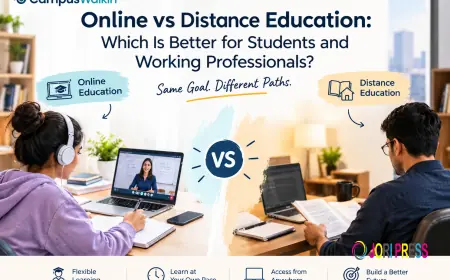
























Online vs Distance Education: Which Is Better for Students and Working Professionals?
Compare online and distance education to understand their differences, benefits, flexibility, and which learning option is best for students and working professionals.
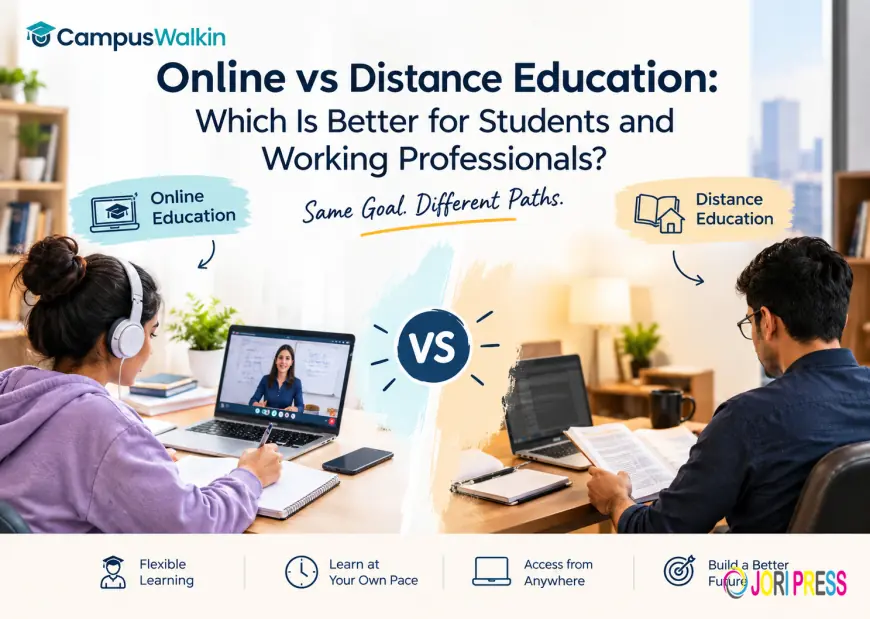
Choosing between online and distance education can be confusing, especially when you want to continue studying alongside work or other responsibilities. Both options offer flexibility, but they differ in how classes are delivered, how students interact with teachers, and how learning materials are accessed.
So, which is better: online education or distance education? The answer depends on your schedule, learning preferences, and career goals.
What Is Online Education?
Online education allows students to attend classes through the internet. It may include live lectures, recorded sessions, online assignments, virtual discussions, and direct interaction with teachers.
This format is useful for students who prefer structured learning but need the flexibility to study from home. Working professionals can also attend classes without travelling to a college campus.
What Is Distance Education?
Distance education allows students to study without regularly attending physical classes. Learning materials may be provided through online platforms, printed books, recorded lessons, or study resources.
It is often suitable for learners who need greater independence and want to manage their studies around work, family, or other commitments.
Online vs Distance Education: Key Differences
1. Learning method: Online education often includes virtual classes and digital interaction, while distance education may rely more on independent study materials and self-paced learning.
2. Flexibility: Both options offer flexibility. However, online courses with scheduled live classes may require students to follow a timetable.
3. Teacher interaction: Online learning can provide more frequent interaction through video classes, chats, and virtual discussions. Distance learners may have less frequent interaction, depending on the programme.
4. Study routine: Online education may suit learners who prefer regular classes and guidance. Distance education can work well for those comfortable studying independently.
Which Option Is Better for Working Professionals?
For working professionals, the right choice depends on their daily schedule. Online education may be suitable for people who want regular classes and opportunities to interact with instructors. Distance education may be more convenient for those who prefer studying independently and managing their own timetable.
Before enrolling, check the course curriculum, total fees, examination process, flexibility, and recognition of the institution.
How Should You Choose the Right Course?
Start by identifying your career goals and the qualification you need. Compare the course structure, learning format, support services, and total cost. Most importantly, verify that the university and programme have the required recognition and approvals.
Platforms such as CampusWalkin can help students explore educational options and understand different courses before making a decision.
Final Thoughts
Neither online education nor distance education is automatically better for everyone. Online learning may suit students who value live interaction, while distance education may appeal to independent learners who need greater flexibility.
The best option is the one that fits your routine, learning style, budget, and long-term career plans.
What's Your Reaction?
 Like
0
 Dislike
0
 Love
0
 Funny
0
 Angry
0
 Sad
0
 Wow
0