






































Off-Patent Semaglutide in 2026: What It Means for Clinical Research, Generics, and Obesity Drug Development
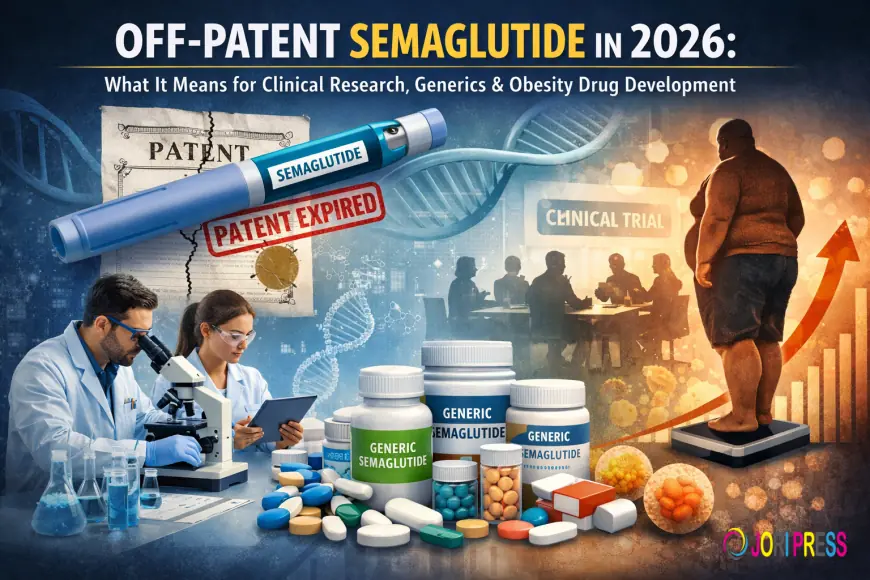
The anticipated loss of exclusivity (LoE) for semaglutide starting in 2026 is expected to reshape the global obesity and diabetes treatment landscape. As one of the world’s highest-selling GLP-1 receptor agonists, semaglutide’s transition to off-patent status presents both commercial opportunity and clinical research complexity—particularly for generic manufacturers, biosimilar developers, and CRO partners supporting late-phase trials and regulatory submissions.
For companies operating across India, Canada, China, Brazil, and other emerging markets, this shift signals a surge in clinical development programs, regulatory activity, and post-approval evidence generation, all of which require strong CRO execution.
Semaglutide and the 2026 Patent Cliff
Semaglutide is the active ingredient behind widely used therapies for type 2 diabetes and obesity, and global demand continues to grow rapidly. While patent protection extends into the early 2030s in some regions, multiple high-population countries will see patent expiry beginning in 2026, opening the door for off-patent versions.
This transition is expected to accelerate:
-
Phase III clinical trials for generic and alternative formulations
-
Regulatory submissions across multiple jurisdictions
-
Market access and pricing competition
-
Demand for real-world evidence (RWE) and post-marketing studies
Each of these areas relies heavily on robust clinical development services supported by experienced CRO partners.
India, China, and Emerging Markets: A Clinical Research Surge
India is positioned to become a central hub for off-patent semaglutide development due to its strong manufacturing base and regulatory environment. Multiple Indian pharmaceutical companies have already initiated Phase III clinical trials, including differentiated approaches such as oral semaglutide formulations.
China shows similar momentum, with numerous candidates advancing through late-stage trials. This growth places increased importance on:
-
Clinical data management services to handle high-volume, multi-site datasets
-
Biostatistics services for comparative efficacy, safety analysis, and submission-ready outputs
Accurate data handling and statistical rigor are critical to demonstrating bioequivalence, efficacy, and safety in competitive markets.
Implications Beyond Obesity: Diabetes and Cardio-Metabolic Indications
While obesity treatment may experience the most visible disruption, off-patent semaglutide will also influence diabetes and broader cardio-metabolic research. In many regions, GLP-1 therapies are already embedded in treatment guidelines, meaning prescribing behavior may evolve gradually rather than shift overnight.
However, the availability of lower-cost semaglutide could expand clinical research into:
-
Cardiovascular outcomes
-
Renal and metabolic comorbidities
-
Long-term maintenance therapy
These studies depend on high-quality medical writing services to produce clinical study reports (CSRs), protocols, investigator brochures, and regulatory documents aligned with global standards.
Regulatory and Submission Challenges for Off-Patent Players
As multiple manufacturers enter the market simultaneously, regulatory scrutiny will intensify. Authorities will focus on:
-
Trial design robustness
-
Data integrity and traceability
-
Patient safety monitoring
-
Manufacturing and quality consistency
Strong regulatory affairs services are essential to navigate submissions to the US FDA, EMA, CDSCO, Health Canada, and other agencies. Early regulatory strategy can reduce delays caused by additional data requests or protocol amendments.
The Role of Site Management and Central Lab Support
With dozens of concurrent trials expected globally, competition for experienced sites and investigators will increase. Efficient site management ensures:
-
Faster site activation
-
Reduced non-enrolling sites
-
Better investigator engagement
At the same time, obesity and metabolic studies rely heavily on biomarkers, making central lab support critical for standardized sample handling, laboratory data integration, and regulatory-compliant reporting.
Project Management in a Highly Competitive Trial Environment
Off-patent semaglutide development programs are time-sensitive. Delays in enrollment, data cleaning, or submissions can significantly impact market entry.
Effective clinical project management aligns:
-
Recruitment timelines
-
Budget controls
-
Vendor coordination
-
Data, biostatistics, and regulatory deliverables
This integrated oversight helps sponsors maintain speed without compromising quality.
Strategic Opportunities for Sponsors and Manufacturers
The 2026 semaglutide LoE represents more than a pricing event—it is a testing ground for future biologic patent expiries. Companies that succeed will be those that:
-
Execute well-designed Phase III programs
-
Generate credible real-world evidence
-
Maintain regulatory compliance across regions
-
Differentiate through formulation, adherence, or maintenance positioning
All of these depend on coordinated CRO support across clinical development, data management, medical writing, regulatory affairs, and project management.
Conclusion: A Defining Moment for Obesity and Metabolic Research
The off-patent entry of semaglutide marks a defining moment for global obesity treatment and clinical research ecosystems. While increased competition may pressure prices, it will also expand patient access and accelerate innovation in formulations, delivery, and long-term care strategies.
For sponsors navigating this transition, partnering with a CRO like Curexbio—offering end-to-end clinical research services—can be the difference between delayed entry and successful, compliant market access.
What's Your Reaction?
 Like
0
Like
0
 Dislike
0
Dislike
0
 Love
0
Love
0
 Funny
0
Funny
0
 Angry
0
Angry
0
 Sad
0
Sad
0
 Wow
0
Wow
0