








































NEET PG Rank Predictor 2026: How to Evaluate Medical College Organ Donation and Transplant Training
The NEET PG Rank Predictor 2026 can help medical graduates explore postgraduate college options, but selecting an institution requires more than understanding an expected rank.
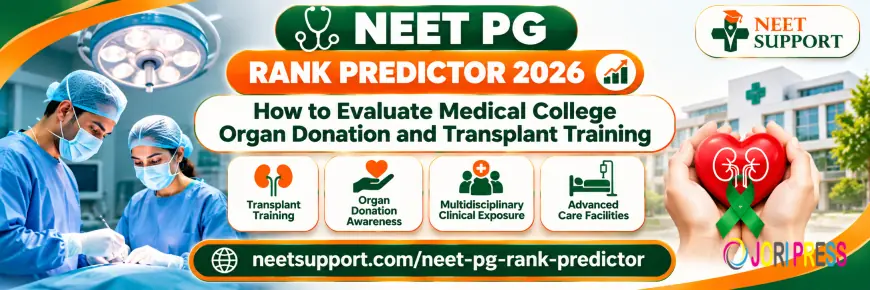
The NEET PG Rank Predictor 2026 can help postgraduate medical aspirants understand their possible rank range and explore suitable medical colleges. However, selecting the right institution requires careful evaluation of its clinical departments, specialised services, academic environment, and opportunities for practical learning.
Organ donation and transplantation have become important components of advanced medical care. Kidney, liver, heart, lung, and other organ transplants require coordination between multiple medical specialities, experienced healthcare professionals, and dedicated clinical facilities.
For postgraduate medical students, exposure to transplant-related services can provide valuable insights into complex patient management, surgical decision-making, critical care, immunology, and long-term follow-up.
NEET Support encourages aspirants to look beyond institutional reputation and examine the actual learning opportunities available at their preferred colleges. Understanding transplant facilities and related clinical exposure can help candidates make more informed postgraduate admission decisions.
Why Organ Donation and Transplant Training Matter in Medical Education
Organ transplantation involves much more than performing a surgical procedure. It includes donor identification, medical evaluation, recipient preparation, surgical intervention, postoperative management, and lifelong monitoring.
Doctors working in transplant-related specialities must understand several interconnected areas, including:
-
Organ failure and its clinical progression.
-
Donor eligibility and medical assessment.
-
Recipient selection and transplant suitability.
-
Surgical and anaesthesia considerations.
-
Immunological compatibility.
-
Infection prevention after transplantation.
-
Immunosuppressive medication management.
-
Long-term patient monitoring.
Medical colleges associated with established transplant services may offer students opportunities to understand these processes through supervised clinical learning, departmental teaching, case discussions, and multidisciplinary interactions.
However, the availability of transplant procedures does not automatically guarantee postgraduate exposure. Aspirants should examine the teaching arrangements and responsibilities provided to residents.
Evaluate the Availability of Transplant Departments
One of the first factors to examine is whether the institution has dedicated transplant services or established clinical partnerships with transplant centres.
Depending on the institution, these services may include:
-
Renal transplantation.
-
Liver transplantation.
-
Cardiac transplantation.
-
Lung transplantation.
-
Bone marrow and stem cell transplantation.
-
Transplant-related intensive care.
Not every medical college offers every transplant service. Some institutions may provide selected programmes, while others may refer patients to specialised centres.
Candidates should check whether the relevant departments actively participate in postgraduate education. They should also understand whether residents receive structured teaching, clinical observation opportunities, and supervised responsibilities.
A college with a smaller but academically organised transplant programme may offer more meaningful learning than an institution where residents have limited involvement despite a large number of procedures.
Understand Donor Evaluation and Organ Allocation
Donor evaluation is a critical part of transplantation. Healthcare professionals must determine whether an individual can safely donate an organ and whether the donated organ is suitable for transplantation.
Postgraduate students may benefit from understanding the medical principles involved in:
-
Living donor assessment.
-
Deceased donor evaluation.
-
Medical history and clinical examination.
-
Organ function testing.
-
Infection screening.
-
Immunological compatibility.
-
Donor risk assessment.
-
Ethical approval and informed consent.
Organ allocation also requires careful consideration of medical urgency, compatibility, established allocation policies, and applicable legal requirements.
A strong academic programme should explain how these decisions are made and why transparency, fairness, and patient safety are essential.
Aspirants should ask whether the institution conducts teaching sessions on donor evaluation, transplant eligibility, and organ allocation procedures.
Examine Recipient Assessment and Pre-Transplant Care
Recipient evaluation is another important learning area. Patients requiring transplantation often have complex medical conditions that need detailed assessment before surgery.
Depending on the organ involved, evaluation may include:
-
Assessment of the underlying disease.
-
Cardiovascular and respiratory fitness.
-
Kidney and liver function.
-
Infection screening.
-
Nutritional assessment.
-
Psychological evaluation.
-
Medication history.
-
Surgical risk assessment.
Students should understand how specialists determine whether transplantation is appropriate for an individual patient.
They should also examine whether residents participate in pre-transplant case discussions and learn how different departments contribute to recipient preparation.
This exposure can strengthen clinical reasoning and help postgraduate students understand the importance of comprehensive patient assessment.
Assess Transplant Surgery and Perioperative Training
Transplant procedures require specialised surgical expertise and coordinated perioperative care.
For students interested in surgical specialities, exposure to transplant operations can provide insights into complex surgical planning, operative techniques, anaesthesia, and postoperative decision-making.
When evaluating a medical college, candidates should examine:
-
Whether transplant operations are conducted regularly.
-
Which surgical specialities participate in the programme.
-
Whether postgraduate residents receive structured teaching.
-
Whether residents can observe procedures under appropriate supervision.
-
Whether case discussions explain surgical complications and management.
-
Whether simulation or skills-based teaching is available where appropriate.
It is important to distinguish between observing a procedure and receiving hands-on training. Residents should never assume that transplant exposure automatically includes operative responsibilities.
The nature of participation depends on the speciality, institutional policies, training level, and supervision arrangements.
Evaluate Post-Transplant Critical Care Facilities
The period immediately after transplantation is clinically important. Patients may require close monitoring in intensive care because of surgical complications, organ dysfunction, infection risks, and medication-related problems.
A postgraduate institution should ideally provide access to appropriate critical care services and coordinated specialist support.
Important facilities to examine include:
-
Intensive care units with suitable monitoring systems.
-
Mechanical ventilation facilities.
-
Haemodynamic monitoring.
-
Emergency diagnostic services.
-
Infection prevention protocols.
-
Laboratory support.
-
Specialist consultation services.
-
Emergency surgical intervention arrangements.
Students should also understand how transplant recipients are monitored for early complications and how healthcare teams respond to unexpected clinical changes.
This knowledge is particularly relevant to anaesthesiology, critical care, general medicine, nephrology, gastroenterology, and surgical specialities.
Understand Immunosuppression and Rejection Management
After transplantation, patients generally require specialised medication to reduce the risk of immune-mediated organ rejection.
Immunosuppressive treatment requires careful monitoring because inadequate suppression can increase rejection risk, while excessive suppression can increase susceptibility to infections and other complications.
Postgraduate students should receive opportunities to understand:
-
The purpose of immunosuppressive therapy.
-
Common medication categories.
-
Therapeutic drug monitoring.
-
Medication interactions.
-
Infection-related complications.
-
Signs of possible organ rejection.
-
Long-term treatment adherence.
-
Patient education and follow-up.
The exact medication regimen depends on the transplanted organ, patient characteristics, clinical circumstances, and specialist protocols.
Candidates should check whether the institution offers teaching through clinical case discussions, pharmacology sessions, and multidisciplinary reviews.
Understanding these principles is valuable for doctors who may manage transplant recipients even outside dedicated transplant departments.
Check Multidisciplinary Transplant Coordination
Transplantation requires collaboration between several medical and non-medical professionals.
Depending on the programme, the transplant team may involve:
-
Transplant surgeons.
-
Nephrologists.
-
Hepatologists.
-
Cardiologists.
-
Anaesthesiologists.
-
Intensivists.
-
Pathologists.
-
Microbiologists.
-
Radiologists.
-
Transplant coordinators.
-
Clinical pharmacists.
-
Nutrition specialists.
-
Mental health professionals.
A well-coordinated transplant programme can help postgraduate students understand how different specialists contribute to patient care.
Aspirants should investigate whether the college organises multidisciplinary meetings, transplant case conferences, clinical reviews, or academic discussions.
These activities help students understand complex medical decisions from multiple professional perspectives.
Examine Ethical Practices and Legal Awareness
Organ donation and transplantation involve important ethical and legal responsibilities.
Doctors must protect donor autonomy, ensure informed consent, maintain confidentiality, and follow applicable legal safeguards.
Medical education should cover subjects such as:
-
Voluntary and informed donor consent.
-
Donor safety and medical suitability.
-
Prevention of coercion and exploitation.
-
Confidentiality of medical information.
-
Ethical organ allocation.
-
Prevention of illegal organ trade.
-
Transparency in transplant-related decisions.
-
Respectful communication with families.
In India, students should understand the applicable legal framework governing organ donation and transplantation, including the Transplantation of Human Organs and Tissues Act and relevant rules and amendments.
Candidates should evaluate whether their preferred institution provides formal teaching on transplant ethics, legal responsibilities, and professional conduct.
These principles are essential for responsible medical practice.
Review Transplant Registries and Clinical Research Opportunities
Transplant registries help healthcare institutions collect and analyse information about transplant activity, patient outcomes, complications, and long-term follow-up.
Research exposure can help postgraduate students develop skills in clinical data interpretation and evidence-based medicine.
When comparing institutions, candidates can investigate whether the college provides opportunities to participate in:
-
Transplant-related clinical research.
-
Retrospective and prospective studies.
-
Case reports and case series.
-
Academic presentations.
-
Clinical audits.
-
Transplant outcome analysis.
-
Research methodology workshops.
-
Scientific conferences.
Students should also understand the importance of research ethics, patient confidentiality, accurate data collection, and appropriate statistical analysis.
Aspirants should not judge research quality only by the number of published papers. Mentorship, methodological quality, meaningful participation, and opportunities to learn are equally important.
Assess Long-Term Follow-Up and Patient Counselling
Transplantation does not end when the surgical procedure is completed. Patients generally require ongoing medical supervision and long-term follow-up.
Post-transplant care may involve:
-
Monitoring organ function.
-
Reviewing medication adherence.
-
Screening for infections.
-
Managing treatment complications.
-
Monitoring nutritional status.
-
Assessing psychological well-being.
-
Educating patients about warning signs.
-
Coordinating follow-up appointments.
Patient counselling is particularly important because recipients must understand the need for regular monitoring and adherence to prescribed treatment.
Aspirants should explore whether residents participate in follow-up clinics, patient education activities, and discussions about long-term transplant outcomes.
This experience can improve communication skills and help future doctors understand continuity of care.
How NEET Support Can Help Aspirants Compare Medical Colleges
The NEET PG Rank Predictor 2026 can help candidates explore possible postgraduate college options based on their expected rank and available admission information.
However, a predicted rank should be treated as an indicative estimate rather than a confirmed admission result.
NEET Support encourages aspirants to combine rank-based planning with detailed institutional research.
When comparing medical colleges, candidates can use the following checklist:
|
Evaluation factor |
What to investigate |
|---|---|
|
Transplant facilities |
Types of transplant services available |
|
Clinical exposure |
Actual resident participation and teaching |
|
Donor evaluation |
Training in donor assessment |
|
Recipient management |
Pre-transplant clinical evaluation |
|
Surgical exposure |
Supervised observation and learning |
|
Critical care |
Availability of suitable postoperative facilities |
|
Immunosuppression |
Teaching on medication and rejection management |
|
Multidisciplinary care |
Coordination between specialities |
|
Ethics and law |
Formal education on donation and transplantation |
|
Research |
Clinical research and academic mentorship |
|
Follow-up |
Exposure to long-term recipient care |
Candidates should verify information through official institutional documents, postgraduate departments, counselling authorities, and other reliable sources.
They should also compare the speciality-specific curriculum rather than assuming that every postgraduate department provides the same transplant-related exposure.
Common Mistakes to Avoid While Selecting a Medical College
Aspirants sometimes focus entirely on predicted rank, college reputation, or the number of specialised procedures performed.
This can result in an incomplete understanding of the actual postgraduate learning environment.
Avoid these common mistakes:
Choosing a college only because it has transplant facilities: The presence of a transplant centre does not guarantee structured resident training.
Assuming every speciality receives equal exposure: Transplant-related opportunities differ between departments and postgraduate programmes.
Ignoring supervision: Clinical learning should take place under appropriate faculty guidance.
Relying on promotional claims: Verify institutional information and understand the actual role of postgraduate residents.
Ignoring long-term patient management: Transplant education includes follow-up, medication monitoring, and complication management, not just surgery.
Treating predicted rank as a guarantee: Actual admission depends on the applicable counselling rules, seat availability, eligibility, reservation criteria, and other factors.
A balanced approach can help candidates make more realistic and informed decisions.
Conclusion
Organ donation and transplantation provide important learning opportunities in modern medical education, combining clinical assessment, surgical care, critical care, immunology, ethical decision-making, and long-term patient management. Aspirants should evaluate these facilities by examining actual postgraduate participation, faculty supervision, multidisciplinary coordination, research opportunities, and patient follow-up services. The NEET PG Rank Predictor 2026 can support initial college shortlisting, while NEET Support encourages candidates to verify institutional facilities and compare speciality-specific training before making their final decisions. A thoughtful selection process can help postgraduate medical aspirants choose an institution that supports meaningful clinical learning and long-term professional development.
Frequently Asked Questions (FAQs)
1. Why should NEET PG aspirants evaluate organ transplant facilities in medical colleges?
Transplant facilities can provide exposure to complex clinical conditions, multidisciplinary decision-making, surgical procedures, critical care, and long-term patient management. Their educational value depends on the actual opportunities available to postgraduate residents.
2. Does every medical college provide organ transplantation training?
No. Transplant services are generally available at selected institutions and specialised centres. Candidates should verify the services offered by each college and whether its postgraduate departments participate in related academic activities.
3. Which specialities are connected with organ transplantation?
Several specialities may be involved, including general surgery, urology, nephrology, gastroenterology, hepatology, anaesthesiology, critical care, cardiology, pathology, and microbiology. The specific departments depend on the transplant programme.
4. What should students learn about donor evaluation?
Students should understand donor eligibility, medical history, clinical assessment, infection screening, organ function, compatibility, informed consent, and donor safety.
5. Why is immunosuppression important after transplantation?
Immunosuppressive medication helps reduce the risk of immune-mediated organ rejection. Patients require careful monitoring because these medicines can also increase the risk of infections and other complications.
6. How can NEET Support help candidates shortlist postgraduate colleges?
NEET Support can help aspirants explore rank-related possibilities and understand factors involved in medical college selection. Candidates should also verify current counselling information, institutional facilities, and speciality-specific training opportunities.
7. Is the NEET PG Rank Predictor 2026 a guarantee of admission?
No. It provides an indicative rank estimate. Actual admission depends on examination results, counselling procedures, seat availability, eligibility, reservation rules, and applicable admission policies.
What's Your Reaction?
 Like
0
 Dislike
0
 Love
0
 Funny
0
 Angry
0
 Sad
0
 Wow
0