






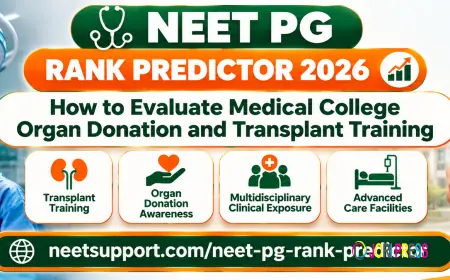
































NEET College Predictor 2026: How to Evaluate Organ Donation and Transplant Education in Medical Colleges
Explore how medical colleges teach organ donation and transplant medicine with this NEET College Predictor 2026 guide.
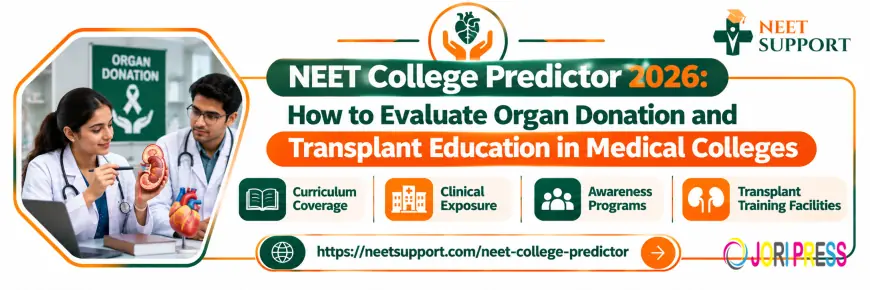
Choosing a medical college involves more than comparing admission chances and infrastructure. Students should also understand whether an institution provides exposure to important areas of modern healthcare, including organ donation and transplantation. A reliable neet college predictor can help aspirants identify potential colleges based on their expected rank, category, and applicable counselling options. However, evaluating the quality of medical education is equally important. Understanding how a college teaches organ donation, transplant medicine, and related ethical responsibilities can help students make a more informed decision about their future medical careers.
Why Organ Donation Education Matters in Medical Training
Organ transplantation is an important part of modern medicine. It can offer life-saving treatment to patients with severe organ failure, while tissue donation can improve the quality of life for people with certain medical conditions.
Future doctors need to understand the medical, ethical, legal, and communication aspects of organ donation. Even students who do not plan to specialise in transplant medicine may encounter patients and families who need accurate information about donation.
A medical college should introduce students to the fundamental principles of organ donation through relevant classroom teaching, clinical discussions, case-based learning, and supervised hospital exposure wherever available.
Check Whether the Curriculum Covers Transplant Medicine
The first step is to examine how organ donation and transplantation are included in the medical curriculum. Students should look for teaching that explains the basic concepts, clinical indications, and responsibilities involved in transplant-related care.
Important learning areas may include:
-
Types of organ and tissue donation.
-
Basic principles of organ transplantation.
-
Organ failure and transplant eligibility.
-
Donor assessment and recipient evaluation.
-
Immunological compatibility and rejection.
-
Post-transplant monitoring and complications.
-
Ethical responsibilities in donation and transplantation.
-
Communication with patients and families.
A college does not need to offer a separate transplant medicine department to provide foundational education. What matters is whether the subject is meaningfully integrated into relevant medical disciplines.
Evaluate Clinical Exposure and Hospital Facilities
Practical exposure helps students connect theoretical knowledge with real healthcare situations. During college selection, aspirants can investigate whether the associated teaching hospital provides exposure to transplant-related services or relevant specialist departments.
Where available, students may learn about:
-
Evaluation of patients with advanced organ failure.
-
Pre-transplant investigations.
-
Multidisciplinary patient management.
-
Post-transplant follow-up.
-
Immunosuppressive treatment principles.
-
Long-term monitoring and patient counselling.
Not every medical college performs organ transplantation. Some institutions may provide foundational teaching through affiliated hospitals, specialist lectures, clinical case discussions, or external academic collaborations.
Students should distinguish between a hospital that performs transplantation and one that provides only general clinical exposure. They should verify the actual services available rather than assuming that every teaching hospital has a transplant programme.
Understand the Importance of Ethical and Legal Education
Organ donation involves sensitive medical decisions. Doctors must understand the ethical principles and applicable legal requirements before participating in related clinical responsibilities.
A strong educational programme should explain informed consent, donor rights, confidentiality, medical suitability, and the importance of preventing coercion or commercial exploitation.
In India, students should become familiar with the legal framework governing organ and tissue donation and transplantation, including the Transplantation of Human Organs and Tissues Act and its applicable rules and amendments.
Medical education should also address the distinction between living donation and deceased donation. Students need to understand that these processes involve different medical assessments, consent requirements, and safeguards.
When evaluating a college, check whether ethical and legal topics are taught through practical examples rather than only through textbook definitions.
Assess Training in Brain Death and Donor Identification
Understanding brain-stem death and its clinical and legal significance is an important part of deceased organ donation education in India.
Medical students should learn the relevant medical principles, applicable protocols, and the responsibilities of authorised healthcare professionals. They should also understand that the determination of death must follow the prescribed legal and clinical procedures.
A college can strengthen this learning through:
-
Structured classroom sessions.
-
Case-based discussions.
-
Teaching by relevant specialists.
-
Demonstrations of clinical protocols where appropriate.
-
Discussions about family communication and consent.
Students should not expect to independently perform these responsibilities during undergraduate training. Their role is to develop foundational knowledge and understand professional boundaries under appropriate supervision.
Review Faculty Expertise and Academic Guidance
Faculty expertise influences how effectively complex medical subjects are taught. While comparing colleges, aspirants can examine the qualifications and clinical experience of faculty members in relevant departments.
Depending on the institution, useful academic guidance may come from specialists in nephrology, urology, hepatology, gastroenterology, critical care, pathology, immunology, and other related disciplines.
Consider the following questions:
-
Are relevant specialists involved in teaching?
-
Are students introduced to multidisciplinary transplant care?
-
Are clinical cases discussed in academic sessions?
-
Does the institution organise specialist lectures or workshops?
-
Are students encouraged to understand current clinical guidelines?
The availability of experienced faculty can improve learning, but students should verify actual teaching arrangements instead of relying only on institutional promotional material.
Explore Research and Academic Opportunities
Organ transplantation is a developing field involving immunology, surgical techniques, organ preservation, infection management, and long-term patient outcomes.
Medical students may benefit from opportunities to explore research questions under qualified academic supervision. Depending on the institution, these opportunities could include literature reviews, research projects, seminars, poster presentations, or participation in approved academic activities.
Potential research areas include:
-
Organ rejection and immunological responses.
-
Advances in transplant medicines.
-
Infection risks after transplantation.
-
Organ preservation techniques.
-
Long-term transplant outcomes.
-
Ethical challenges in organ allocation.
-
Public awareness and donation behaviour.
Research participation should follow institutional approval, ethical requirements, patient confidentiality rules, and appropriate supervision. Students should also understand that research opportunities vary considerably between colleges.
Compare Colleges Beyond Their Transplant Facilities
Organ donation education is one factor among many when assessing medical colleges. A college without an active transplant programme may still offer strong undergraduate teaching through its curriculum, faculty, affiliated hospitals, and academic activities.
Before making a final choice, evaluate:
-
Recognition and approval: Confirm the institution's current recognition and applicable regulatory status.
-
Teaching hospital: Examine patient exposure, clinical departments, and available services.
-
Faculty: Review the academic and clinical expertise of relevant teachers.
-
Curriculum: Check how specialised medical topics are incorporated into undergraduate education.
-
Practical learning: Understand the availability of case discussions, demonstrations, and supervised clinical exposure.
-
Research opportunities: Explore genuine student participation in academic projects.
-
Overall affordability: Compare tuition fees, hostel charges, living expenses, and other applicable costs.
These factors provide a broader picture of the learning environment and help students avoid selecting a college based on a single attractive feature.
How NEET Support Can Help Aspirants Make Informed Choices
NEET counselling decisions should combine admission possibilities with careful institutional research. NEET Support helps students understand the college selection process and evaluate available options using relevant admission information.
A NEET College Predictor can provide an indicative list of colleges based on the details entered by an aspirant. However, predicted options are not guaranteed allotments. Actual admission depends on factors such as the official seat matrix, candidate preferences, category, applicable quotas, counselling rules, eligibility, and the year's competition.
Students should use predictor results as a starting point and verify college details through official institutional and counselling information before submitting their choices.
A practical approach is to prepare a shortlist, compare academic and clinical facilities, review financial commitments, and arrange college preferences according to individual priorities.
Common Mistakes to Avoid While Selecting a Medical College
Aspirants sometimes focus only on college popularity or admission probability. This can lead to decisions that do not reflect their long-term educational needs.
Avoid these common mistakes:
-
Assuming that every medical college performs organ transplantation.
-
Confusing general clinical exposure with specialised transplant training.
-
Relying on unverified claims about hospital facilities.
-
Ignoring faculty expertise and academic support.
-
Overlooking recognition and regulatory requirements.
-
Treating predicted admission chances as confirmed allotments.
-
Selecting a college without reviewing the complete financial commitment.
A balanced assessment is more useful than relying on rankings or promotional claims alone.
Frequently Asked Questions
1. Why should medical students learn about organ donation?
Organ donation education helps future doctors understand transplantation, donor assessment, ethical responsibilities, patient communication, and the medical principles involved in organ failure treatment.
2. Does every medical college in India have a transplant centre?
No. Many medical colleges do not perform organ transplantation. However, they may introduce relevant concepts through classroom teaching, specialist lectures, clinical discussions, and affiliated hospital exposure.
3. What subjects are connected with transplant medicine?
Transplant medicine is multidisciplinary and may involve nephrology, urology, hepatology, gastroenterology, critical care, pathology, immunology, and surgery.
4. Is organ donation law included in medical education?
Students should understand the relevant legal and ethical framework governing organ and tissue donation in India, including applicable provisions of the Transplantation of Human Organs and Tissues Act and related rules.
5. Can undergraduate students participate in transplant research?
Depending on institutional opportunities, students may participate in supervised academic projects, literature reviews, seminars, and approved research activities. Access varies by college.
6. How can a NEET College Predictor help during college selection?
A NEET College Predictor can help aspirants explore potential colleges based on their expected rank and other relevant details. Its results are indicative and should be checked against official counselling information.
Conclusion
Medical education should prepare students to understand both established treatments and developing areas of healthcare. Organ donation and transplantation education introduces future doctors to multidisciplinary clinical care, medical ethics, legal responsibilities, and the importance of informed communication. Aspirants should therefore examine curriculum coverage, faculty expertise, hospital exposure, and academic opportunities while comparing institutions. A neet college predictor can help create an initial shortlist, but the final decision should also consider verified college information, individual priorities, and official counselling rules. NEET Support encourages students to approach college selection with careful research and realistic expectations.
What's Your Reaction?
 Like
0
 Dislike
0
 Love
0
 Funny
0
 Angry
0
 Sad
0
 Wow
0