






































Metalworking Fluids Market Dynamics: Key Drivers, Challenges, and Emerging Industrial Trends
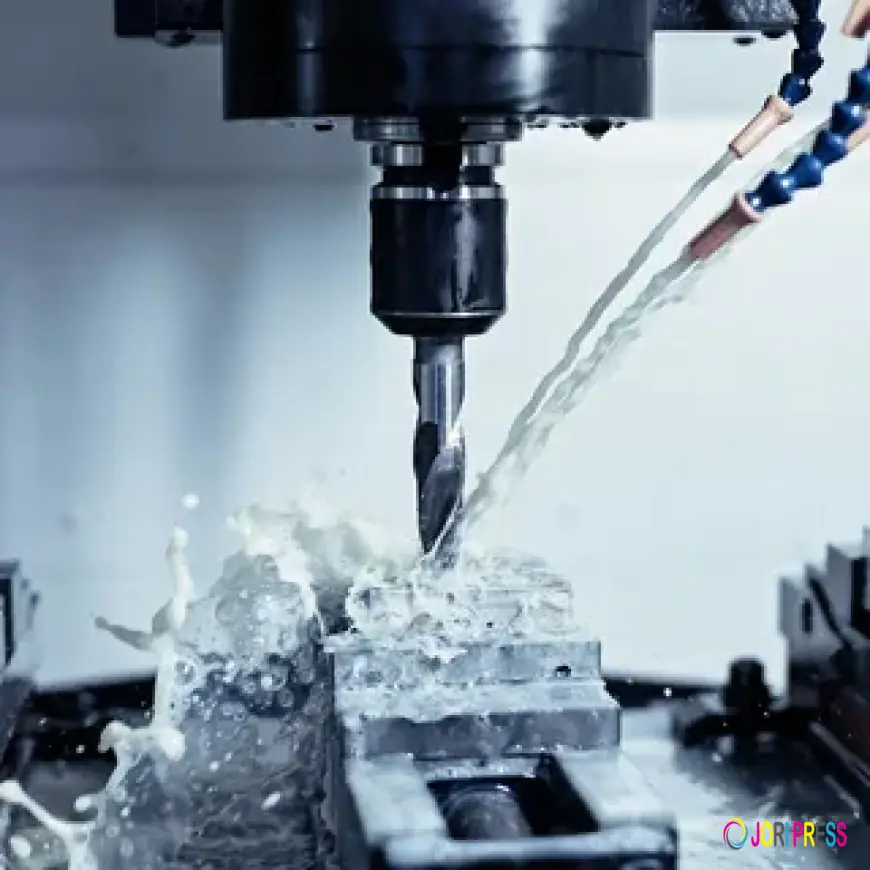
Metalworking fluids play a critical role in modern manufacturing by controlling heat, reducing friction, improving surface finishes, and extending the service life of cutting tools. From automotive components and aerospace structures to precision-machined medical devices and heavy industrial equipment, these fluids help manufacturers maintain dimensional accuracy, production efficiency, and consistent product quality.

Introduction
Metalworking fluids play a critical role in modern manufacturing by controlling heat, reducing friction, improving surface finishes, and extending the service life of cutting tools. From automotive components and aerospace structures to precision-machined medical devices and heavy industrial equipment, these fluids help manufacturers maintain dimensional accuracy, production efficiency, and consistent product quality. As machining technologies evolve and manufacturing processes become increasingly automated, the requirements for fluid performance, reliability, and environmental compatibility are also changing.
The metalworking fluids market dynamics reflect a combination of industrial production trends, technological developments, regulatory requirements, raw material availability, and changing customer expectations. Manufacturers are no longer evaluating these fluids solely on their purchase price. Instead, they are considering their total operational impact, including tool consumption, machine downtime, waste treatment, worker safety, and maintenance costs. This broader perspective is reshaping product development and purchasing decisions across the metalworking industry.
Key Factors Driving Market Growth
Expansion of Automotive and Precision Manufacturing
The automotive industry remains an important source of demand for metalworking fluids because vehicle production involves extensive machining, grinding, drilling, stamping, and forming operations. Engine components, transmission systems, braking assemblies, and structural parts require carefully controlled manufacturing conditions to achieve the necessary tolerances and surface quality.
The transition toward electric vehicles is also influencing fluid requirements. Electric vehicle production involves machining lightweight aluminum components, motor housings, battery-related structures, and specialized drivetrain parts. These applications can present different cooling, lubrication, and residue-control challenges compared with conventional automotive manufacturing.
Aerospace, medical equipment, industrial machinery, and electronics manufacturing further support demand. These sectors often require fluids capable of delivering consistent performance during demanding operations involving specialized alloys, complex geometries, and high-value components.
Increasing Adoption of Advanced Machining Technologies
Computer numerical control (CNC) machining, high-speed cutting, and automated production systems have increased the importance of reliable fluid performance. As manufacturers seek higher production rates and tighter tolerances, fluids must provide effective cooling, lubrication, corrosion protection, and chip removal without disrupting automated workflows.
Modern machining operations also require greater consistency across production batches. Inadequate fluid performance can contribute to tool wear, poor surface finishes, thermal distortion, and unplanned equipment stoppages. Consequently, manufacturers increasingly assess fluid formulations according to their compatibility with specific machines, cutting materials, and operating conditions.
Advanced monitoring systems are strengthening this trend. Sensors and fluid-management software can help track concentration, temperature, contamination, and other operating parameters. These capabilities allow maintenance teams to identify potential problems earlier and maintain more stable production conditions.
Major Product and Formulation Trends
Growing Interest in Sustainable Formulations
Environmental considerations are becoming an important influence on product development. Conventional formulations may contain ingredients that require careful management because of occupational exposure concerns, wastewater treatment requirements, or disposal obligations. Manufacturers are therefore exploring formulations designed to reduce environmental impact while preserving machining performance.
Water-miscible fluids, improved synthetic formulations, and selected bio-based ingredients are attracting attention in applications where their technical characteristics meet operating requirements. Product developers are also working to improve fluid longevity, reduce foaming, and limit microbial growth without relying on unsuitable or unnecessarily hazardous ingredients.
However, sustainability does not automatically make a formulation commercially viable. A replacement fluid must perform reliably under actual machining conditions, remain compatible with equipment and workpiece materials, and satisfy applicable health and safety requirements. Its full lifecycle cost is equally important, particularly when changes affect filtration, maintenance, or waste treatment.
Shift Toward High-Performance and Specialty Fluids
Manufacturers increasingly require formulations tailored to specific processes rather than products intended for broad, undifferentiated use. Heavy-duty cutting, precision grinding, metal forming, and machining of difficult alloys can each demand distinct combinations of lubrication, cooling, and surface protection.
Specialty fluids can help address these differences by improving tool life, minimizing residue, or supporting more consistent surface finishes. Their value is especially apparent in operations where a small improvement in machining performance can reduce scrap, rework, or production interruptions.
At the same time, formulation complexity creates challenges for suppliers. Developing products that perform consistently across different water qualities, machine designs, and operating environments requires extensive testing and technical support.
Challenges Influencing Market Development
Raw Material Price Volatility
The cost of producing metalworking fluids is influenced by the availability and pricing of base oils, specialty additives, emulsifiers, corrosion inhibitors, and other chemical ingredients. Changes in energy prices, transportation expenses, supply chain conditions, and industrial demand can affect manufacturing costs.
Suppliers must balance these pressures against customer expectations for competitive pricing and dependable product availability. Large manufacturers may negotiate long-term contracts, while smaller machining businesses can be more vulnerable to sudden price increases.
Product reformulation is not always a straightforward solution. Substituting an ingredient may alter stability, corrosion protection, compatibility, or machining performance. Suppliers must therefore evaluate cost-saving measures carefully to avoid creating operational problems for customers.
Environmental Compliance and Workplace Safety
Regulatory requirements and workplace safety expectations are influencing the selection, handling, monitoring, and disposal of industrial fluids. Employers must consider skin contact, mist generation, ventilation, microbial contamination, and appropriate handling procedures when managing machining environments.
Fluids that deteriorate during use may develop unpleasant odors, lose performance, or require premature replacement. Maintaining suitable concentration levels, removing tramp oil, controlling contamination, and following proper maintenance schedules can help address these issues.
Compliance can increase operating expenses, particularly for facilities that need upgraded monitoring systems, improved filtration, employee training, or wastewater treatment. Nevertheless, better fluid management can also reduce waste generation, improve working conditions, and prevent avoidable production disruptions.
Competitive Landscape and Strategic Opportunities
Competition in this industry depends on more than formulation quality. Suppliers must demonstrate reliable performance, provide technical assistance, maintain consistent supply, and help customers manage fluid-related operating costs. Product selection often involves close collaboration among purchasing teams, production engineers, machine operators, and environmental health and safety personnel.
One significant opportunity lies in integrated fluid-management services. Instead of supplying products alone, providers can assist with concentration monitoring, contamination control, system cleaning, maintenance planning, and disposal coordination. These services help customers improve process consistency while making fluid consumption and maintenance expenses easier to evaluate.
Another opportunity comes from application-specific innovation. Developing fluids for advanced alloys, electric vehicle components, precision machining, and automated production lines can help suppliers address changing industrial requirements. Digital monitoring and predictive maintenance may further differentiate providers that can translate operating data into practical recommendations.
Future Outlook
The future direction of the metalworking fluids industry will depend on manufacturing investment, technological progress, environmental expectations, and the economics of industrial production. Demand from automotive, aerospace, machinery, and precision engineering applications is likely to remain closely connected to production volumes and machining intensity.
Over time, the competitive advantage may increasingly favor formulations that combine dependable performance with longer service life, manageable maintenance requirements, and improved environmental characteristics. Digital monitoring and customized technical support could also become more important as factories pursue greater automation and operational visibility.
Ultimately, success will depend on balancing performance, cost, safety, and sustainability. Manufacturers that evaluate fluids as an integral part of the machining process, rather than as a routine consumable, will be better positioned to improve productivity, control operating expenses, and adapt to evolving industrial requirements.
What's Your Reaction?
 Like
0
 Dislike
0
 Love
0
 Funny
0
 Angry
0
 Sad
0
 Wow
0