


































Meat Traceability Requirements: A Guide for Processors and Distributors
Learn about meat traceability requirements, essential records, regulatory considerations, and how software helps processors and distributors manage product tracking.

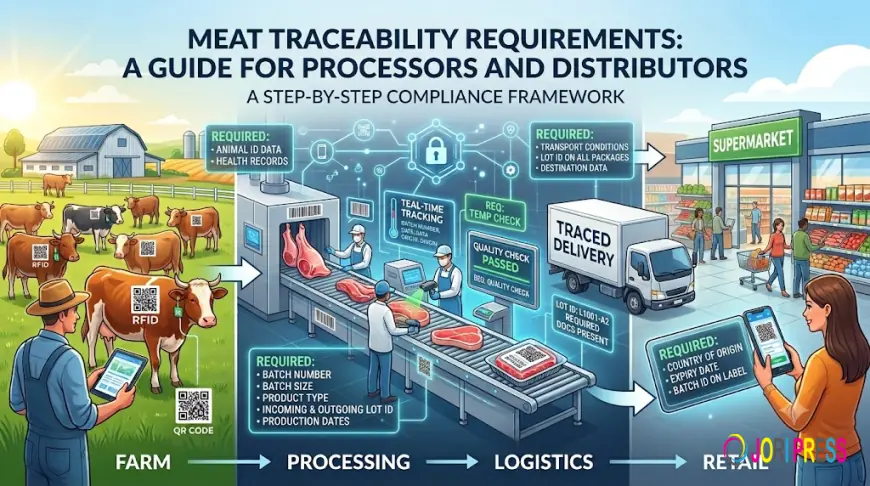
Meat traceability is an essential part of managing product safety, quality, and accountability across the meat supply chain. From livestock producers and slaughterhouses to meat processing facilities, distributors, and retailers, businesses need reliable records to establish where products originated, how they were handled, and where they were delivered. Meat traceability requirements help define the information businesses must maintain and the procedures they need to follow.
As meat products move between suppliers, facilities, and markets, maintaining consistent records can become challenging. Paper-based documentation and disconnected inventory systems may make it difficult to retrieve product histories during inspections, customer inquiries, or recall investigations. Digital meat traceability software can help organizations organize these records and connect information across different operational stages.
However, traceability requirements are not identical in every country or business environment. Obligations can depend on the type of meat, the activities performed by the business, the destination market, and the applicable food safety regulations.
Understanding these requirements helps meat processors and distributors develop suitable tracking procedures, select appropriate software, and improve the reliability of their supply chain documentation.
What Are Meat Traceability Requirements?
Meat traceability requirements are the rules, procedures, and recordkeeping obligations that help businesses identify meat products and establish their movement through the supply chain.
Depending on the applicable regulations and business activities, these requirements may involve identifying suppliers, maintaining receiving records, documenting processing activities, recording product batches, tracking shipments, and preserving information needed for investigations.
For example, a meat processing company may need to connect incoming raw material lots with finished products and customer shipments. If a safety concern arises, the company should be able to retrieve the relevant information and identify the products potentially affected.
Traceability can involve both backward and forward tracking. Backward traceability helps establish where a product or ingredient came from. Forward traceability helps determine where the product was sent after processing or distribution.
Some businesses also require internal traceability, which connects incoming materials with products created inside a facility. This is especially important when meat is cut, mixed, ground, repackaged, or otherwise transformed during production.
The precise records and retention periods required depend on the relevant legal framework. Businesses should identify their obligations before deciding how their traceability system will operate.
Why Are Meat Traceability Requirements Important?
Meat traceability requirements help establish accountability when product safety, quality, or identification concerns arise.
One of their most important purposes is supporting food safety investigations. If a product is suspected of contamination, businesses need information about its origin, production history, and distribution. Accurate records can help investigators determine which materials and products may be involved.
Traceability also helps businesses maintain consistent documentation across different operational stages. Receiving teams, production personnel, warehouse employees, and distributors may all handle information associated with the same product. Clear procedures help prevent records from becoming fragmented or inconsistent.
Another important purpose is regulatory oversight. Authorities may need access to relevant records when investigating a food safety concern or verifying compliance with applicable requirements. Businesses that organize their records effectively can retrieve information more efficiently.
Traceability also supports commercial relationships. Retailers, food service businesses, and other customers may require suppliers to provide batch information, product specifications, sourcing documentation, or other records as part of their purchasing arrangements.
A well-designed traceability process helps businesses respond to these needs without relying entirely on manual searches and disconnected files.
Key Records Required for Meat Traceability
The exact records required vary by jurisdiction, product category, and business activity. Nevertheless, several types of information commonly support effective meat traceability.
Supplier and Receiving Information
Supplier and receiving records establish where livestock or raw meat entered the supply chain. Depending on the operation, relevant details may include supplier identification, delivery information, product descriptions, lot numbers, dates, and supporting documentation.
Businesses should ensure that incoming materials can be distinguished from other deliveries. Where suppliers use different identification formats, agreed procedures can help employees record the necessary information consistently.
Accurate receiving records establish the starting point for tracking materials through processing and distribution.
Processing and Production Records
Meat processing can change the form and identity of a product. Cutting, deboning, grinding, mixing, and packaging may create new batches or combine materials from different sources.
Processing records should preserve the relationships needed to trace products through these transformations. Depending on the operation, records may include production dates, input lots, output batches, facility details, and relevant quality documentation.
This information helps businesses investigate which finished products were created from a particular incoming material.
Product Identification and Labeling Records
Meat products generally need suitable identification and labeling according to the applicable rules. Businesses should understand which product identifiers and label details are required for their products and markets.
Traceability records can connect identifiers such as lot codes and product numbers with production and packaging information. This allows employees to retrieve relevant records using the information available on a product or its packaging.
A digital tracking code does not replace mandatory label information. Businesses must confirm that their labels comply with the requirements applicable to each product.
Storage and Distribution Records
Storage and distribution records help establish where products moved after processing. Depending on the operation, they may include warehouse locations, inventory transactions, dispatch information, shipment identifiers, and customer destinations.
For products requiring controlled storage conditions, additional records may be needed to support the business's food safety procedures.
Connecting product batches with shipment information is particularly important for forward traceability. It helps businesses identify customers or destinations associated with a potentially affected product.
Recall and Investigation Documentation
Businesses should establish procedures for retrieving traceability records when a product safety or quality issue occurs.
Relevant documentation may include affected lot information, supplier records, production histories, distribution records, investigation findings, and corrective actions. The specific documentation required depends on the incident and applicable obligations.
Maintaining organized records helps responsible teams investigate the issue and coordinate the appropriate response.
Meat Traceability Requirements in the United States
In the United States, meat traceability obligations can involve several regulatory frameworks, depending on the product and the activities performed by the business.
The United States Department of Agriculture's Food Safety and Inspection Service (USDA FSIS) administers federal inspection and related requirements for covered meat and poultry products. Applicable requirements may address inspection, labeling, records, establishment responsibilities, and other aspects of meat and poultry operations.
Businesses should review the rules relevant to their particular products and establishments rather than assuming that a single traceability checklist applies to every meat business.
Animal identification and movement requirements may also be relevant at the livestock stage. These requirements are distinct from the recordkeeping obligations that apply to meat processing, packaging, and distribution.
Food businesses should also determine whether other federal, state, or local requirements apply to their operations.
A digital traceability system can help organize relevant information, but businesses must verify that their procedures and records satisfy the requirements applicable to them.
Meat Traceability Requirements in the European Union
Businesses operating in or supplying the European Union must consider the applicable food law and sector-specific requirements governing their activities.
EU food traceability rules generally establish the need for food businesses to identify the businesses from which products were supplied and the businesses to which products were supplied, subject to the applicable legal framework. Additional requirements may apply to specific food categories, including meat.
The information required for meat identification and labeling can vary by species and product type. Businesses involved in beef, pork, poultry, sheep, goat, or other meat supply chains should review the rules relevant to their products and activities.
Companies exporting meat into the EU should also confirm the applicable import conditions, documentation, establishment approvals, and product-specific requirements.
Because regulatory requirements can change, businesses should consult current official EU legislation and relevant national guidance before implementing a compliance process.
Meat Traceability Requirements in Other International Markets
International meat supply chains often involve several regulatory jurisdictions. A producer may operate in one country, process products in another, and supply retailers in a third market.
Each stage can introduce different requirements for animal identification, inspection, labeling, documentation, imports, exports, and record retention.
Exporters should identify the requirements applicable to the destination market and determine which records must be maintained by the exporter, importer, processor, and other responsible parties.
A traceability system used across several markets should support different product categories, documentation needs, and business procedures without creating unnecessary confusion for employees.
Businesses should not assume that compliance with one country's requirements automatically satisfies another country's rules. Reviewing official guidance and obtaining appropriate regulatory advice can help organizations avoid gaps.
How Meat Traceability Software Helps Businesses Manage Requirements
Meat traceability software helps businesses organize product information and connect records across different supply chain stages.
Instead of relying exclusively on paper documents or separate spreadsheets, businesses can use a centralized platform to associate incoming materials with processing batches, finished products, and shipments.
Centralized Digital Recordkeeping
A centralized system makes it easier for authorized employees to locate relevant records. Supplier information, product identifiers, processing details, and shipment records can be organized in a searchable environment.
This can reduce the administrative effort involved in preparing for audits or investigating product issues. The benefits depend on the quality of the information entered and the completeness of the system's coverage.
Backward and Forward Traceability
Backward traceability helps businesses identify the source of a product or material. Forward traceability helps identify the products and destinations associated with a particular batch.
For meat processors, internal traceability connects these two directions by documenting how incoming materials are transformed into finished products.
A suitable system should preserve these relationships when lots are split, combined, repackaged, or transferred between facilities.
Automated Data Capture
Barcode scanners and supported system integrations can help capture product information during receiving, processing, packaging, and shipping.
Automation can reduce repetitive data entry and improve consistency, but it does not eliminate the need for verification. Employees must ensure that identifiers are correct and that transactions are recorded at the appropriate time.
Reporting and Audit Support
Reporting features can help businesses retrieve relevant records for internal reviews, customer requests, and regulatory investigations.
Before selecting software, companies should confirm that reports can include the required data fields and that records can be retrieved within the timeframes applicable to their operations.
They should also evaluate access permissions, audit trails, retention controls, and the ability to correct inaccurate information appropriately.
Common Challenges in Meeting Meat Traceability Requirements
One common challenge is inconsistent identification. Suppliers and processing facilities may use different lot numbering systems, which can make records difficult to connect.
Businesses can address this by establishing consistent internal identifiers and clear procedures for linking external supplier codes with internal production batches.
Another challenge is incomplete documentation. If employees fail to record material movements or production transformations, the traceability history may contain gaps. Regular training and verification procedures help reduce this risk.
Integration difficulties can also affect traceability. When receiving, inventory, production, and shipping systems operate separately, employees may need to enter the same information more than once. Suitable integrations can reduce duplication and improve consistency.
International operations face additional complexity because requirements may differ between markets. Businesses need a clear understanding of which obligations apply to each product and destination.
Finally, some organizations assume that purchasing software automatically resolves compliance issues. In reality, technology must be supported by appropriate procedures, employee responsibilities, and regular reviews.
How to Build an Effective Meat Traceability Compliance Process
The first step is to identify the regulatory and commercial requirements applicable to the business. Meat processors should consider their products, locations, processing activities, customers, and target markets.
Next, map the information generated at each stage, including receiving, production, packaging, storage, and distribution. Identify the records required to connect incoming materials with finished products and shipment destinations.
The business should then establish procedures for assigning identifiers, recording transformations, maintaining documentation, and correcting errors. Employees should understand who is responsible for each activity.
When choosing traceability software, assess whether it supports the required records, reporting, integrations, permissions, and retention policies. The system should fit the operational workflow rather than forcing employees into unnecessary manual work.
Finally, conduct regular traceability exercises. Select a product batch and attempt to trace it backward to its source and forward to its distribution destinations. Document missing information, investigate the causes, and update procedures where needed.
This approach helps businesses identify weaknesses before they become more serious operational problems.
The Future of Meat Traceability Compliance
Digital technologies are creating new opportunities for meat businesses to improve documentation and supply chain visibility.
Cloud-based traceability platforms can make records more accessible across multiple facilities. Barcode and RFID technologies can support product identification, while integrations with warehouse and production systems can help connect operational data.
Temperature monitoring can provide additional information about storage and transportation conditions, and analytical tools may help identify incomplete records or unusual patterns.
However, technology should be selected according to the actual needs of the business. Blockchain, artificial intelligence, and other advanced tools do not automatically ensure accurate records or regulatory compliance.
The foundation of effective meat traceability remains consistent product identification, reliable data collection, appropriate controls, and well-defined responsibilities.
Conclusion
Meat traceability requirements help businesses establish product history, maintain accountability, and support investigations across the meat supply chain. The exact obligations depend on the relevant jurisdiction, product category, and business activity, making it important to review applicable official guidance.
For meat processors and distributors, reliable records should connect incoming materials, processing activities, finished products, and shipments. Meat traceability software can help organize these records, improve information retrieval, and support internal compliance procedures.
Businesses that combine appropriate technology with employee training, consistent data standards, and regular traceability testing can build a stronger foundation for product tracking and food safety management.
What's Your Reaction?
 Like
0
Like
0
 Dislike
0
Dislike
0
 Love
0
Love
0
 Funny
0
Funny
0
 Angry
0
Angry
0
 Sad
0
Sad
0
 Wow
0
Wow
0