































MBBS in Uzbekistan After NEET: Admission Options
Explore MBBS in Uzbekistan after NEET, including eligibility, admission process, fees, university selection and key requirements for Indian students.

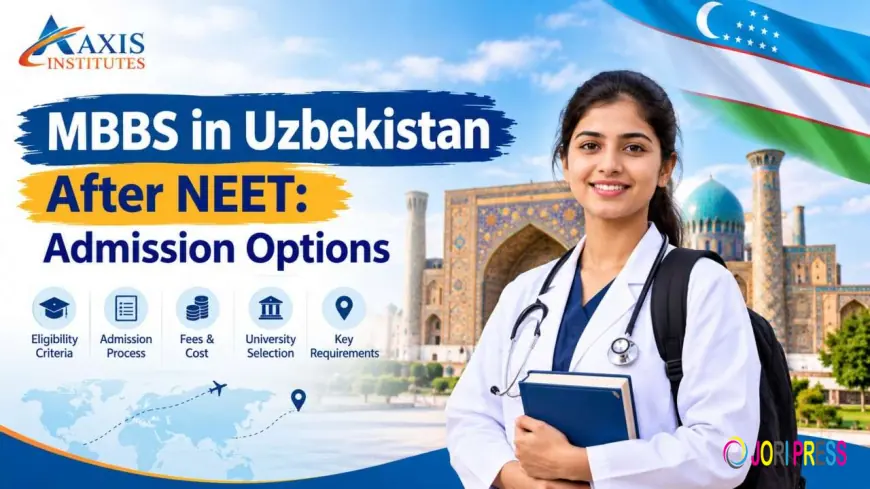
Not securing an MBBS seat in India can leave students wondering what to do next. For NEET-qualified students who want to pursue a medical degree without waiting another year, studying medicine overseas may be an option worth exploring. MBBS in Uzbekistan is one pathway Indian students consider because of its medical universities, English-medium programmes at selected institutions, and comparatively accessible admission routes.
However, qualifying NEET does not automatically guarantee admission to a foreign medical university or eligibility to practise medicine in India after graduation. Students must understand the admission process, university recognition, fee structure, academic requirements, and Indian medical licensing rules before making a decision.
This guide explains the available options after NEET, how to apply, what to verify, and how to determine whether studying medicine in Uzbekistan fits your academic and financial plans.
1. Can You Study MBBS in Uzbekistan After NEET?
Yes. Indian students who have qualified NEET can explore medical degree programmes in Uzbekistan, provided they meet the eligibility requirements of the selected university and applicable Indian regulations.
NEET qualification is particularly important for Indian students who intend to pursue their primary medical qualification abroad and later seek registration to practise in India. The admission requirements of individual universities may differ, so students should verify the latest criteria before applying.
Students generally consider this route in situations such as:
-
They qualified NEET but could not secure an MBBS seat in India.
-
They want to explore international medical education options.
-
They are comparing tuition fees and living expenses across countries.
-
They want to understand whether an overseas medical degree aligns with their long-term career plans.
Before deciding to study MBBS in Uzbekistan, remember that NEET qualification is only one part of the process. Academic eligibility, documentation, university-specific admission conditions, and future licensing requirements also matter.
2. What Admission Options Are Available After NEET?
Students can explore different admission pathways depending on their NEET result, academic background, budget, and preferred university.
Option 1: Apply for Direct University Admission
Eligible students can apply to a medical university in Uzbekistan through its official international admissions process. Depending on the institution, this may involve submitting academic documents, a passport, a NEET scorecard where applicable, and other required records.
Some universities may assess applications through document verification or additional procedures. Students should confirm the exact requirements directly with the institution rather than assuming that every university follows the same process.
Option 2: Apply Through an Education Consultancy
Students who need assistance with university selection, application documentation, admission communication, or travel preparation may choose to work with an overseas education consultancy.
Axis Institutes assists students exploring international medical education pathways. When evaluating any consultancy, students should ask for written information about the university, official fee details, admission conditions, and the services included in the agreement.
A consultant can help organise the process, but students should independently verify the university's credentials and ensure that all payments are properly documented.
Option 3: Compare Universities Before Applying
Students do not need to accept the first offer they receive. They can compare eligible universities based on:
-
Official recognition and applicable regulatory requirements.
-
Course duration and curriculum.
-
Language used for classroom teaching and clinical training.
-
Availability of clinical exposure and hospital-based learning.
-
Tuition fees, accommodation, and other expenses.
-
Student support, safety arrangements, and living conditions.
Comparing these factors before paying an admission deposit can reduce the risk of choosing an unsuitable programme.
3. Eligibility Criteria for MBBS in Uzbekistan
Eligibility requirements must be checked against current Indian regulations and the admission rules of the selected university.
The following are important points for Indian applicants.
Academic qualifications: Students generally need to complete Class 12 with Physics, Chemistry, Biology or Biotechnology, and English, subject to the applicable eligibility rules.
Minimum marks: The required marks in the qualifying examination depend on the applicable Indian regulatory requirements and the student's category. Students should verify the current rules rather than relying on a single percentage advertised by a consultancy.
NEET qualification: Indian students intending to pursue a foreign primary medical qualification and seek registration in India must satisfy the applicable NEET requirements. Confirm the relevant conditions for the intended admission year.
Age requirement: Applicants must meet the applicable minimum age requirement for the relevant admission cycle.
Passport and documents: A valid passport is generally required for international admission and travel. Students should also prepare academic records, photographs, and any additional documents requested by the university.
Meeting a university's admission criteria does not, by itself, establish eligibility for medical registration in India. Both requirements must be checked separately.
4. How to Apply for MBBS in Uzbekistan After NEET
A structured application process helps students avoid documentation errors and last-minute expenses.
Step 1: Review Your NEET Result
Check your NEET scorecard and confirm that you meet the relevant eligibility conditions. If you participated in Indian counselling, review your current admission status before making an overseas decision.
Step 2: Shortlist Suitable Universities
Identify universities that offer the intended medical qualification and assess their current eligibility, teaching language, curriculum, clinical training, and student support arrangements.
Do not select an institution solely because it advertises low fees or promises guaranteed admission.
Step 3: Verify Recognition and Licensing Requirements
For Indian students, this is one of the most important steps. Check the university and programme against the applicable requirements of the National Medical Commission (NMC), including the Foreign Medical Graduate Licentiate Regulations, 2021, and subsequent applicable directions.
Verify the course's duration, medium of instruction, clinical training, internship arrangements, and other requirements relevant to future registration in India. Do not rely solely on a university's marketing claims or an agent's verbal assurance.
Step 4: Prepare and Submit Documents
Commonly requested documents may include:
-
Class 10 and Class 12 certificates and marksheets.
-
NEET scorecard.
-
Passport.
-
Recent passport-size photographs.
-
Medical fitness documents, if required.
-
Other forms or supporting records specified by the university.
Document requirements vary, so obtain an official checklist before submitting the application.
Step 5: Obtain Written Admission Confirmation
Before paying substantial fees, obtain written confirmation of admission, the programme, the academic session, the fee schedule, refund terms, and the university's payment instructions.
Students should distinguish between an application acknowledgement, a provisional offer, and final admission confirmation.
Step 6: Arrange Visa and Travel
After the required admission documents are issued, follow the applicable student visa and immigration procedures. Confirm accommodation, insurance requirements, arrival arrangements, and university registration instructions before travelling.
Axis Institutes can be one of the sources students consult when organising their overseas education plans, but applicants should retain copies of all official correspondence and verify important details directly with the university.
5. What Is the Cost of Studying MBBS in Uzbekistan?
The total cost depends on the university, programme, accommodation, lifestyle, and current exchange rates. Students should avoid relying on a single advertised tuition figure as the complete cost of education.
A realistic budget should include:
|
Expense category |
What to check |
|
Tuition fees |
Annual fees and the full programme fee |
|
Accommodation |
Hostel charges, deposits, and facilities |
|
Food and daily expenses |
Monthly living budget |
|
Travel |
Flights and local transport |
|
Visa and documentation |
Applicable visa, translation, and administrative charges |
|
Insurance and medical expenses |
Mandatory cover and other applicable costs |
|
Additional university charges |
Registration, examination, and other fees |
Ask the university for a written, year-wise fee schedule. Confirm whether tuition is fixed or subject to revision and whether hostel fees are included.
Students should also calculate the total cost for the entire programme rather than comparing only the first year's expenses. Exchange-rate changes, travel home, and unexpected costs can affect the final budget.
6. How to Choose the Right Medical University
Choosing the right institution requires more than comparing admission offers.
Verify the institution: Confirm its legal identity, current status, and the programme it is authorised to offer. Check the relevant official sources for the countries and jurisdictions involved.
Understand the teaching language: A programme advertised in English may still involve local-language learning for patient interaction. Ask how clinical communication and practical training are conducted.
Review clinical exposure: Find out where students complete clinical rotations, how practical teaching is organised, and whether the arrangements meet applicable requirements.
Check the complete fee structure: Compare the written fee schedules of shortlisted universities and confirm payment and refund conditions.
Speak to current students: Where possible, obtain first-hand information about accommodation, academic support, classroom teaching, and clinical training.
Assess future registration requirements: Students intending to return to India should carefully review the applicable NMC rules and relevant licensing examinations. No university or consultancy can guarantee a future licence merely by securing admission.
Axis Institutes can help students navigate questions about international medical education, but students should make their final decision using independently verified information and written university documents.
7. What Happens After Completing MBBS in Uzbekistan?
Graduation is not necessarily the end of the process for Indian students who want to practise medicine in India.
Depending on the rules applicable when they graduate, foreign medical graduates may need to satisfy requirements relating to the degree, course duration, internship, registration, and licensing examinations. They should check the latest NMC regulations and National Board of Examinations in Medical Sciences (NBEMS) announcements relevant to their situation.
Students may also explore postgraduate medical education or other career pathways, subject to the relevant eligibility and licensing rules in the country where they intend to work.
Before enrolling, consider the entire journey: admission, medical education, clinical training, graduation, and the requirements for professional registration. This approach helps ensure that the degree supports your intended career rather than simply offering a route to begin medical studies.
Conclusion
For NEET-qualified Indian students who have not secured an MBBS seat in India, MBBS in Uzbekistan can be an option to investigate alongside other available pathways. The right decision depends on academic eligibility, university suitability, total cost, clinical training, and future licensing requirements.
Start by reviewing your NEET result, shortlisting universities, verifying the programme against applicable regulations, and requesting a complete written fee schedule. Avoid making payments based only on promotional claims or promises of guaranteed admission and registration.
Axis Institutes can be considered as a source of guidance while exploring overseas medical education. Ultimately, a careful comparison of verified information, transparent costs, and long-term career requirements will help students and parents make a more informed decision.
Frequently Asked Questions
1. Can I study MBBS in Uzbekistan after qualifying NEET?
Yes. Students who meet the university's admission criteria and the applicable requirements for Indian applicants can explore medical programmes in Uzbekistan. NEET qualification does not automatically guarantee admission.
2. Is NEET mandatory for MBBS in Uzbekistan for Indian students?
Indian students intending to pursue a foreign medical qualification and seek registration in India must satisfy the applicable NEET requirements. Confirm the rules for the relevant admission year before applying.
3. How much does it cost to study MBBS in Uzbekistan?
The cost varies by university, tuition structure, accommodation, travel, and living expenses. Request a written year-wise fee schedule and calculate the full programme cost before making a payment.
4. How do I choose a university for MBBS in Uzbekistan?
Check the university's current status, programme details, teaching language, clinical training, complete fees, accommodation, and compliance with applicable Indian medical education and registration requirements.
5. Can Axis Institutes help with MBBS admission in Uzbekistan?
Axis Institutes is an education consultancy students can consider when exploring international medical education. Before proceeding, confirm the specific services offered, obtain written fee and service details, and independently verify the university and admission documents.
What's Your Reaction?
 Like
0
 Dislike
0
 Love
0
 Funny
0
 Angry
0
 Sad
0
 Wow
0