











































Marble Temple for Home: How to Balance Traditional Craftsmanship With Modern Interiors?
Discover how a marble temple for home can blend traditional craftsmanship with modern interiors through elegant design, balanced proportions, lighting, and décor.

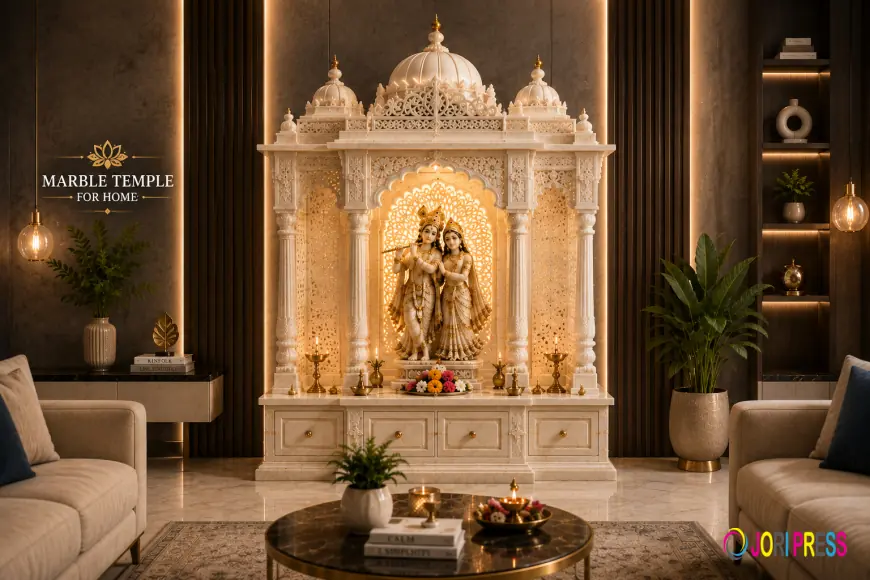
A home temple can preserve cultural traditions while still fitting naturally into a contemporary living space. The challenge is finding a design that feels spiritually meaningful without making the room appear disconnected from its modern surroundings. A thoughtfully designed marble temple for home can achieve this balance by combining traditional craftsmanship with clean proportions, practical features, and modern interior aesthetics.
Marble is particularly suitable for this purpose because it offers both traditional artistic possibilities and contemporary visual appeal. Intricate carvings can preserve the character of classical temple architecture, while simpler forms, subtle lighting, and carefully planned dimensions can help the mandir integrate into today's homes.
Why Combine Traditional Craftsmanship With Modern Design?
Traditional Indian craftsmanship carries artistic and cultural value, while modern interiors often emphasize simplicity, functionality, and clean visual lines.
Combining the two allows homeowners to create a prayer space that feels:
-
Culturally meaningful
-
Visually refined
-
Practical for everyday use
-
Compatible with contemporary interiors
-
Timeless rather than trend-driven
The objective is not to remove traditional elements but to use them thoughtfully. A modern home temple can retain its traditional identity while adapting to the visual language of the space around it.
What Makes Traditional Marble Temple Craftsmanship Special?
Traditional marble temples are often recognized by their architectural detailing. Skilled artisans can transform a plain piece of marble into an intricate devotional structure through careful carving and finishing.
Common traditional elements include:
-
Decorative arches
-
Carved pillars
-
Floral motifs
-
Jaali patterns
-
Bells
-
Leaf and vine designs
-
Ornamental borders
-
Traditional geometric patterns
These details can give a marble temple a distinctive identity and connect the prayer space with India's long tradition of stone craftsmanship.
How Can Modern Design Simplify a Traditional Marble Temple?
Modern design does not necessarily mean eliminating all decoration. Instead, it often focuses on selective detailing and clean proportions.
For example, a temple can retain a traditional carved arch while using:
-
A simpler overall structure
-
Minimal side detailing
-
Straight architectural lines
-
Integrated storage
-
Neutral surroundings
-
Contemporary lighting
This approach creates a temple that feels traditional at its core but visually appropriate for a modern home.
Can Intricate Carving Work in a Contemporary Home?
Yes, but proportion is important.
A heavily carved temple can become a strong focal point in a minimalist room. This can work beautifully when the surrounding décor is intentionally kept simple.
Alternatively, homeowners can choose a design with selective carving around the arch, pillars, or borders rather than covering every surface with decoration.
The secret is creating a hierarchy of details. Let one or two elements become the visual highlights while keeping the remaining structure relatively restrained.
How Does the Size of the Temple Affect Modern Interiors?
Contemporary homes often prioritize efficient use of space. A large temple may not be practical in a compact apartment, while a very small structure may feel lost in a spacious room.
Consider the relationship between:
Temple Size + Room Size + Ceiling Height + Available Floor Space
For smaller homes, compact proportions and efficient storage can make the mandir easier to integrate.
For larger homes, a more substantial freestanding structure can become an architectural focal point.
The temple should feel proportionate to its surroundings rather than dominating them unnecessarily.
What Marble Color Works Best With Modern Interiors?
Marble's natural appearance makes it relatively easy to coordinate with contemporary color schemes.
Light-colored marble can complement:
-
White interiors
-
Beige walls
-
Soft grey palettes
-
Natural wood
-
Neutral furniture
-
Warm metallic accents
A neutral marble temple can act as a bridge between traditional craftsmanship and modern décor.
Instead of choosing a design solely because it looks attractive on its own, consider how the marble will interact with the colors already present in your room.
How Can Lighting Modernize a Traditional Marble Temple?
Lighting is one of the simplest ways to bring a traditional temple into a contemporary interior.
Soft lighting can highlight:
-
The deity area
-
Carved arches
-
Pillars
-
Jaali work
-
Decorative borders
-
Marble texture
Concealed LED lighting can provide a modern appearance without changing the traditional structure itself.
Warm illumination is often particularly effective because it creates a calm atmosphere while emphasizing the natural character of the marble.
Can Traditional Marble and Modern Wood Be Combined?
Absolutely. Marble and wood can create a balanced material combination.
The brightness and solidity of marble can be softened by the warmth of wood. This works particularly well in interiors featuring wooden flooring, cabinets, furniture, or wall panels.
For example, a carved marble temple against a subtle wooden backdrop can create a sophisticated contrast.
Traditional stone craftsmanship and modern natural materials can complement each other without competing for attention.
How Can Brass Details Add a Modern-Traditional Balance?
Brass has long been associated with Indian devotional spaces, making it a natural companion for marble.
Small brass elements such as:
-
Diyas
-
Bells
-
Decorative accessories
-
Pooja vessels
can add warmth and traditional character.
In a contemporary interior, using brass selectively can prevent the space from appearing overly ornate while still maintaining its cultural identity.
Should You Choose an Ornate or Minimal Marble Temple?
There is no single answer because the right choice depends on the room.
Choose More Ornate Detailing If:
-
Your interior has traditional elements.
-
You have sufficient space.
-
You want the temple to be a strong focal point.
-
You appreciate detailed craftsmanship.
Choose Minimal Detailing If:
-
Your home follows a contemporary aesthetic.
-
Space is limited.
-
You prefer clean visual lines.
-
The temple needs to blend subtly with existing décor.
A third option is a transitional design, combining traditional carving with a simpler architectural structure.
What Is a Transitional Marble Temple Design?
A transitional temple brings together classic and contemporary design principles.
It might feature:
-
A traditional arch with clean side panels
-
Minimal pillars with subtle carving
-
Classic motifs in simplified forms
-
Traditional marble craftsmanship with modern storage
-
Decorative details balanced by open space
This style is particularly useful for homeowners who want the spiritual and artistic character of a traditional mandir without creating an overly formal appearance.
How Can Storage Improve a Modern Marble Temple?
Modern interiors often emphasize organization and clutter-free spaces. Integrated storage can help achieve this while maintaining the traditional appearance of the temple.
Useful features can include:
-
Small drawers
-
Lower cabinets
-
Side shelves
-
Dedicated compartments
-
Spaces for पूजा books and accessories
Storage should be incorporated carefully so that it does not make the temple look like ordinary furniture.
Good functionality should remain visually subtle.
How Can You Keep the Surrounding Area Minimal?
Even an intricately carved temple can look contemporary when the area around it is clean and uncluttered.
Consider:
-
Limiting unnecessary decorative objects
-
Keeping पूजा accessories organized
-
Using a simple background
-
Maintaining clear floor space
-
Choosing complementary lighting
-
Avoiding too many competing colors
A quieter environment allows the craftsmanship of the marble temple to become the primary visual feature.
Can a Marble Temple Work in an Apartment?
Yes. Apartments can accommodate marble temples when the design is appropriately scaled.
Compact options can be placed in:
-
Dedicated prayer corners
-
Living room niches
-
Hallway alcoves
-
Designed wall spaces
-
Small private prayer areas
The important consideration is not simply the size of the temple but how efficiently it uses the available space.
How Does Craftsmanship Influence the Final Look?
When combining traditional craftsmanship with modern interiors, the quality of the carving becomes especially important.
In a minimalist environment, every visible detail has greater visual impact. Uneven patterns, rough finishing, or poorly proportioned elements can become more noticeable.
Look for:
-
Precise carving
-
Smooth finishing
-
Balanced proportions
-
Consistent patterns
-
Clean edges
-
Well-defined decorative details
High-quality craftsmanship allows traditional details to look refined rather than visually excessive.
How Can You Make the Temple Feel Like Part of the Architecture?
One of the best approaches is to think of the temple as part of the home's architecture rather than as an isolated decorative object.
You can coordinate it with:
-
Wall finishes
-
Flooring
-
Ceiling lighting
-
Wooden elements
-
Furniture proportions
-
Room colors
For example, a marble temple with subtle carving can echo architectural details already present in the room.
This creates a sense of visual continuity between the sacred space and the rest of the home.
Why Is Balance More Important Than Following Trends?
Interior trends change quickly, but a home temple may remain in place for many years. Choosing a design solely because it is fashionable today may make it feel dated later.
Instead, focus on:
-
Timeless proportions
-
Quality craftsmanship
-
Appropriate scale
-
Functional design
-
Traditional character
-
Complementary materials
A balanced marble temple can continue to look relevant even when other elements of the interior change.
What Should You Consider Before Choosing a Marble Temple?
Before making a decision, evaluate the temple from both devotional and design perspectives.
1. Available Space
Measure the installation area carefully.
2. Interior Style
Identify whether your home is traditional, contemporary, minimalist, or transitional.
3. Level of Carving
Choose decorative details that suit the room.
4. Marble Appearance
Consider how the stone's color and finish interact with your existing palette.
5. Lighting
Plan how the temple will be illuminated during both daytime and evening.
6. Functionality
Ensure enough room for idols, पूजा materials, and daily rituals.
7. Storage
Consider whether integrated storage would help keep the prayer area organized.
8. Long-Term Appeal
Choose a design that combines current preferences with timeless craftsmanship.
Why Is Marble a Strong Bridge Between Tradition and Modernity?
Marble naturally occupies an interesting position between traditional and contemporary design.
Its use in devotional architecture connects it with centuries of artistic tradition, while its clean surface and neutral appearance make it equally suitable for modern interiors.
This versatility allows homeowners to create a temple that feels:
Traditional in craftsmanship.
Modern in proportion.
Practical in functionality.
Timeless in appearance.
That combination is what makes marble particularly effective for today's home prayer spaces.
Conclusion
A marble temple for home can successfully balance traditional craftsmanship with modern interiors when its design, proportions, materials, lighting, and decorative details are carefully considered. The goal is not to choose between tradition and modernity but to allow both to complement each other.
Traditional arches, carved pillars, jaali work, and handcrafted motifs can preserve the cultural character of the mandir, while clean lines, practical storage, subtle lighting, and appropriate proportions help it fit naturally into contemporary homes.
For homeowners who want to bring authentic craftsmanship into their prayer space, working with an experienced marble murti manufacturer in Jaipur can help in exploring handcrafted marble designs that combine traditional artistry with lasting quality.
Frequently Asked Questions
Can a traditional marble temple look good in a modern home?
Yes. A traditional temple can work beautifully in a modern home when its size, carving, colors, and surrounding décor are carefully balanced.
What is a transitional marble temple?
A transitional marble temple combines traditional elements such as carved arches and motifs with cleaner forms, practical features, and contemporary proportions.
Is an ornate marble temple suitable for a minimalist interior?
It can be, especially when the temple is treated as the room's main focal point and the surrounding décor is kept simple.
How can lighting make a marble temple look modern?
Soft or concealed lighting can highlight traditional carvings while creating a clean and contemporary visual effect.
Can marble and wood be used together in a home temple?
Yes. The natural warmth of wood can complement the brightness and refined appearance of marble, creating a balanced traditional-modern aesthetic.
What's Your Reaction?
 Like
0
Like
0
 Dislike
0
Dislike
0
 Love
0
Love
0
 Funny
0
Funny
0
 Angry
0
Angry
0
 Sad
0
Sad
0
 Wow
0
Wow
0