



































Kitchen Fire Extinguisher: A Complete Guide to Types, Benefits, and Fire Safety
Fire Extinguishers India offers kitchen fire extinguishers for homes, restaurants, hotels, and commercial kitchens. Learn about extinguisher types, their uses, selection tips, and essential fire safety practices to help protect people, equipment, and property from kitchen fire hazards.

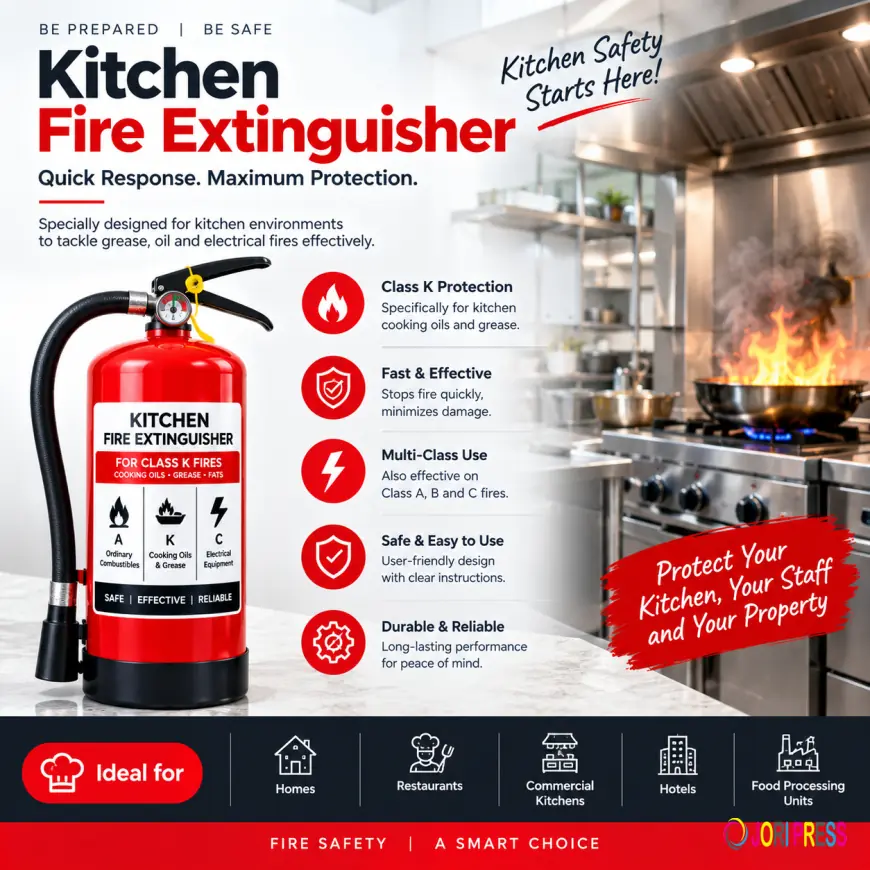
Kitchen safety is important in every home, restaurant, hotel, cafeteria, and commercial food preparation area. Cooking equipment, gas stoves, electrical appliances, hot oils, and grease can create serious fire hazards if they are not handled carefully. A small kitchen fire can spread quickly, putting people at risk and causing significant damage to property and equipment. Installing a suitable kitchen fire extinguisher is an essential step toward improving fire preparedness.
Fire Extinguishers India provides fire protection products for residential, commercial, and industrial applications. Choosing the right extinguisher depends on the type of fire that may occur, the cooking equipment being used, and the surrounding environment. This guide explains the different types of kitchen fire extinguishers, their benefits, selection criteria, and practical safety measures.
What Is a Kitchen Fire Extinguisher?
A kitchen fire extinguisher is a portable fire safety device designed to control specific types of fires that may occur during cooking and food preparation. Depending on its extinguishing agent and fire rating, it may be suitable for fires involving cooking oils, ordinary combustible materials, certain flammable liquids, or electrical equipment.
Different fires require different extinguishing methods. For example, a fire involving burning cooking oil needs a different response from a fire involving paper, cardboard, or an electrical appliance. Using an unsuitable extinguisher can increase the danger rather than control the fire.
A suitable kitchen fire extinguisher should be easy to access, properly maintained, and appropriate for the hazards present. People working in the kitchen should also know how to respond during an emergency and when to evacuate.
Types of Kitchen Fire Extinguishers
Understanding the available extinguisher types helps homeowners and commercial kitchen operators select appropriate fire protection equipment.
1. Wet Chemical Fire Extinguisher
Wet chemical fire extinguishers are commonly recommended for commercial kitchens where deep-fat fryers and hot cooking oils are used. Their specially formulated extinguishing agent helps cool burning oil and creates a surface layer that helps prevent reignition.
These extinguishers are frequently considered for restaurants, hotels, catering facilities, and commercial food preparation areas. When purchasing a wet chemical extinguisher, check its fire rating, capacity, certification, and suitability for the equipment being protected.
2. ABC Dry Powder Fire Extinguisher
ABC dry powder fire extinguishers are designed for certain fires involving ordinary combustible materials, flammable liquids, and flammable gases, depending on the product's rating and applicable requirements.
They may be useful for some hazards found in kitchens. However, dry powder can contaminate food, affect visibility, and damage sensitive electrical equipment. It should not automatically be selected as the primary extinguisher for deep-fat fryer or burning cooking oil fires.
3. Carbon Dioxide (CO2) Fire Extinguisher
A carbon dioxide fire extinguisher is commonly used for suitable fires involving electrical equipment and certain flammable liquids. It may be appropriate near approved electrical installations, control panels, and other equipment where the fire rating and surrounding conditions permit its use.
However, CO2 extinguishers are not the preferred option for deep-fat fryer fires because they may not cool hot cooking oil sufficiently to prevent reignition. Always choose an extinguisher based on the specific fire hazard.
4. Water-Based Fire Extinguisher
Water-based extinguishers may be suitable for fires involving ordinary combustible materials such as paper, cardboard, and certain wooden items, provided the product is appropriately rated.
Never use an ordinary water extinguisher on burning cooking oil or grease. Water can cause hot oil to splatter violently and spread the fire. Water-based extinguishers must also be selected carefully around electrical hazards.
Why Is a Kitchen Fire Extinguisher Important?
Helps Protect People and Property
A suitable fire extinguisher can help control a small, manageable fire when it is safe to respond. This may reduce the risk of injuries and property damage. However, extinguishers should never replace emergency evacuation procedures or professional fire service assistance.
Reduces Potential Equipment Damage
Kitchen fires can damage cooking ranges, fryers, ovens, refrigerators, ventilation systems, and electrical appliances. Appropriate fire protection equipment can help limit damage when used correctly and for the fire type it is designed to handle.
Supports Commercial Kitchen Safety
Restaurants, hotels, cafeterias, and catering businesses need suitable fire protection arrangements. Correctly selected extinguishers, clear emergency procedures, and staff training help improve preparedness and support compliance with applicable fire safety requirements.
Improves Emergency Readiness
A properly installed extinguisher provides a potential first-response option for certain small fires. Regular inspections, accessible equipment, and appropriate training help ensure that kitchen occupants understand how to respond during an emergency.
How to Choose the Right Kitchen Fire Extinguisher
Selecting the correct extinguisher requires an assessment of the kitchen layout, equipment, and possible fire hazards.
Identify the Main Fire Risks
Review the cooking equipment and materials present, including deep-fat fryers, gas stoves, cooking oils, electrical appliances, packaging, and storage areas. Domestic kitchens may have different requirements from restaurants and large commercial kitchens.
Check the Fire Rating
Choose an extinguisher rated for the expected fire hazards. For cooking oils and fats, a suitable wet chemical extinguisher is commonly recommended. Other rated extinguishers may be needed for electrical equipment and ordinary combustible materials.
Select an Appropriate Capacity
The extinguisher's capacity should match the identified risks and the size of the protected area. Commercial kitchens may require several extinguishers or additional fire suppression equipment. A qualified fire safety professional can help determine the correct arrangement.
Consider Installation and Accessibility
Place extinguishers in visible, accessible locations along appropriate escape routes. Avoid locations where a fire could prevent people from reaching the equipment. Follow the manufacturer's instructions and applicable local fire safety regulations.
Verify Product Quality and Maintenance
Before purchasing, check the product's certification, applicable standards, operating instructions, and servicing requirements. Regular inspection and professional maintenance help ensure that the extinguisher remains ready for use.
Essential Kitchen Fire Prevention Tips
Preventing fires is just as important as having suitable fire extinguishers. The following practices can help reduce kitchen fire hazards:
· Keep cooking surfaces, fryers, and extraction systems clean and free from excessive grease.
· Never leave cooking unattended, particularly when heating oil.
· Keep paper products, towels, packaging, and other combustible materials away from heat sources.
· Inspect gas connections and electrical appliances regularly.
· Avoid overloading electrical sockets and extension boards.
· Keep fire extinguishers visible, accessible, and properly maintained.
· Train kitchen employees to recognise fire hazards and follow emergency procedures.
· Keep emergency exits and escape routes clear.
· Consider suitable fixed kitchen fire suppression systems where recommended by a risk assessment.
What to Do During a Kitchen Fire
If a kitchen fire starts, alert nearby people and activate the appropriate alarm or emergency procedure. If flames are spreading, smoke is heavy, or the escape route is uncertain, evacuate immediately and contact the fire service.
For a small cooking oil fire, turn off the heat only if it is safe to do so. Never pour water onto burning oil or carry a burning pan. Avoid taking unnecessary risks to protect equipment or property.
Use an extinguisher only when it is appropriate for the fire, you know how to operate it, the fire is still small, and you have a clear escape route. If the fire cannot be controlled safely, leave the area and follow emergency instructions.
Why Choose Fire Extinguishers India?
Fire Extinguishers India offers fire protection products for residential, commercial, and industrial applications. Its product range includes Wet Chemical K-Type Fire Extinguishers, ABC Fire Extinguishers, CO2 Fire Extinguishers, and other fire safety equipment for different hazards.
Customers can explore available products according to their kitchen equipment, fire risks, and safety requirements. For restaurants, hotels, and commercial kitchens, professional guidance can help determine the appropriate extinguisher types, placement, and any additional suppression equipment needed.
Selecting suitable equipment, arranging regular maintenance, and training kitchen staff are important steps toward a safer cooking environment.
Contact Fire Extinguishers India
· Business Name: Fire Extinguishers India
· Phone: +91-98111-41246
· Address: 102-A, Jaina Tower-III, A-1, Janak Puri, New Delhi
Contact Fire Extinguishers India to enquire about available fire extinguishers and fire protection products for your kitchen safety requirements.
Conclusion
A kitchen fire extinguisher is an important part of a complete fire safety plan for homes, restaurants, hotels, and commercial kitchens. The right choice depends on the type of cooking equipment, the materials present, and the potential fire hazards. Wet chemical extinguishers are particularly relevant for deep-fat fryer and cooking oil fires, while other extinguisher types may be required for additional risks.
By choosing appropriately rated equipment, maintaining extinguishers, training staff, and following safe emergency procedures, kitchen operators can improve preparedness and help protect people and property. Fire Extinguishers India offers fire protection products to help customers explore suitable solutions for their kitchen fire safety needs.
Frequently Asked Questions (FAQs)
1. Which fire extinguisher is best for a kitchen?
A suitable wet chemical fire extinguisher is commonly recommended for kitchens with deep-fat fryers and cooking oil hazards. The final choice should depend on the fire risks, equipment, extinguisher rating, and applicable safety requirements.
2. Can an ABC fire extinguisher be used on cooking oil fires?
An ABC dry powder extinguisher is not the preferred solution for deep-fat fryer or burning cooking oil fires. A suitably rated wet chemical extinguisher is generally recommended for these hazards.
3. Can water be used to extinguish a kitchen fire?
Water may be suitable for certain ordinary combustible material fires when used with appropriately rated equipment. Never pour water onto burning cooking oil or grease because it can cause violent splattering and spread the fire.
4. Where should a kitchen fire extinguisher be installed?
Install the extinguisher in a visible, accessible location where it can be reached without approaching the likely fire hazard or obstructing an escape route. Follow product instructions, professional placement guidance, and applicable regulations.
What's Your Reaction?
 Like
0
Like
0
 Dislike
0
Dislike
0
 Love
0
Love
0
 Funny
0
Funny
0
 Angry
0
Angry
0
 Sad
0
Sad
0
 Wow
0
Wow
0