




































Industrial Rubber Mats: Uses, Benefits and Key Features
A rubber mat is a flexible flooring product manufactured from rubber compounds that provide durability and resilience

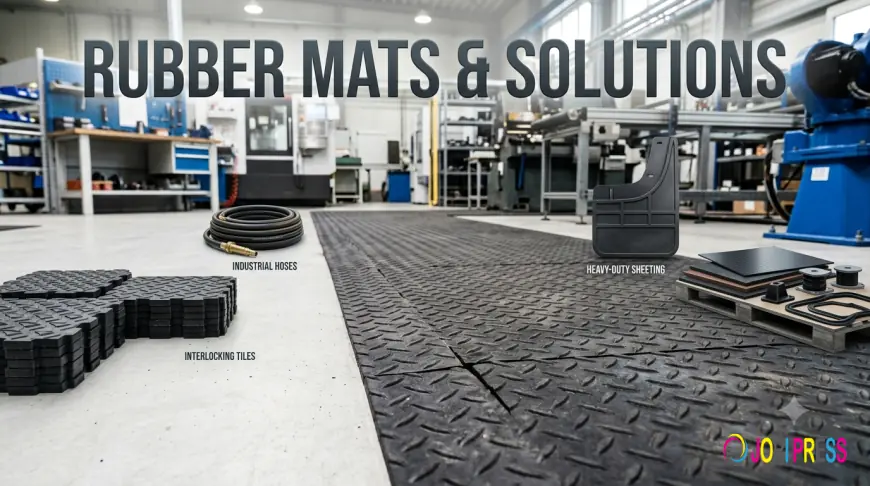
A rubber mat is a practical flooring solution used to improve safety, comfort, and surface protection in workplaces, commercial areas, workshops, gyms, and industrial environments. Unlike ordinary floor coverings, rubber mats are designed to handle regular foot traffic, impact, moisture, and demanding working conditions.
The right mat can also help reduce slipping, protect the underlying floor, and provide a more comfortable surface for people who spend long hours standing. Depending on the application, rubber mats are available in different thicknesses, textures, sizes, and rubber compounds.
What Is a Rubber Mat?
A rubber mat is a flexible flooring product manufactured from rubber compounds that provide durability and resilience. It creates a protective layer between people, equipment, and the floor surface.
Rubber mats can be used in areas where flooring needs additional grip and cushioning. For example, factories may use them around workstations and machinery, while commercial kitchens can benefit from mats that provide better traction in areas exposed to water or spills.
The performance of a mat depends on factors such as material quality, thickness, surface pattern, hardness, and the environment where it will be installed.
Benefits of Using Rubber Mats
1. Improved Slip Resistance
One of the main reasons businesses choose rubber flooring is improved traction. A textured surface can provide better grip when floors become wet, oily, or dusty.
An anti-slip rubber mat can therefore be useful in workshops, industrial areas, entrances, kitchens, and other locations where maintaining stable footing is important.
2. Excellent Durability
A quality rubber mat is designed to withstand repeated use. It can handle regular foot traffic, minor impacts, and general workplace wear without requiring frequent replacement.
For demanding environments, a heavy-duty rubber mat may provide additional resistance to mechanical stress and everyday abrasion.
3. Floor Protection
Industrial equipment, tools, trolleys, and heavy objects can gradually damage concrete and other hard flooring surfaces. Rubber matting provides a protective layer that helps reduce direct impact on the floor.
This makes rubber mats useful around machinery, production areas, workshops, storage spaces, and maintenance stations.
4. Better Comfort for Standing Work
Standing on concrete for several hours can become uncomfortable. Rubber provides cushioning underfoot and can make standing workstations more comfortable.
This is particularly useful for employees working at production lines, counters, workshops, assembly stations, and service areas.
5. Easy Maintenance
Most rubber flooring products can be maintained through routine cleaning. Dust, dirt, and surface debris can generally be removed by sweeping or wiping, while deeper cleaning can be carried out according to the rubber compound and application.
Regular cleaning also helps maintain the mat's appearance and surface grip.
Where Are Rubber Mats Used?
The versatility of rubber makes these mats suitable for many environments.
Industrial facilities: Rubber mats can be placed around machines, production lines, workstations, and maintenance areas to provide additional floor protection and traction.
Workshops and garages: Workshops frequently deal with tools, oil, grease, and mechanical equipment. A suitable rubber floor mat can create a more practical working surface.
Gyms and fitness areas: Rubber flooring is commonly selected for exercise areas because it provides cushioning and helps protect floors from equipment and impact.
Commercial spaces: Shops, offices, service areas, and other commercial environments can use rubber matting in entrances, corridors, workstations, and high-traffic areas.
Kitchens and wet areas: Rubber mats with suitable surface patterns can help improve footing in areas where water or other liquids may be present.
How to Choose the Right Rubber Mat
Choosing a rubber mat should start with the application rather than simply selecting the thickest or cheapest option.
First, consider the environment. Indoor and outdoor applications may require different material characteristics. Next, look at the traffic level. Areas with heavy pedestrian or equipment traffic may require a more durable construction.
Thickness is another important consideration. A thicker mat can provide greater cushioning and protection, but the ideal thickness depends on the intended use.
Surface design also matters. Grooved, textured, or patterned surfaces may offer improved traction compared with a completely smooth surface.
Finally, consider exposure to substances such as oils, chemicals, moisture, sunlight, and temperature variations. The rubber compound should be selected according to these operating conditions.
Why Quality Matters
Not all rubber mats provide the same level of performance. Material quality, manufacturing consistency, thickness, hardness, and surface finish can influence how long a mat performs effectively.
For industrial and commercial applications, choosing a reliable rubber products manufacturer can help businesses select a product suited to their actual requirements. DeePee Rubber has been involved in the rubber industry since 1965 and supplies a broad range of industrial rubber products and flooring-related solutions.
Conclusion
A rubber mat is more than a simple floor covering. It can provide improved traction, cushioning, floor protection, and durability in demanding environments. From factories and workshops to gyms and commercial spaces, the right rubber mat can make flooring safer and more practical.
Before purchasing, consider the application, traffic level, required thickness, surface pattern, environmental exposure, and maintenance requirements. Selecting the right specification ensures that the mat delivers dependable performance and long-term value.
For businesses looking for durable rubber products, working with an experienced manufacturer can make it easier to identify the appropriate solution for specific flooring and industrial requirements.
What's Your Reaction?
 Like
0
Like
0
 Dislike
0
Dislike
0
 Love
0
Love
0
 Funny
0
Funny
0
 Angry
0
Angry
0
 Sad
0
Sad
0
 Wow
0
Wow
0