




































Hurricane Straps: Protecting Your Jacksonville Roof

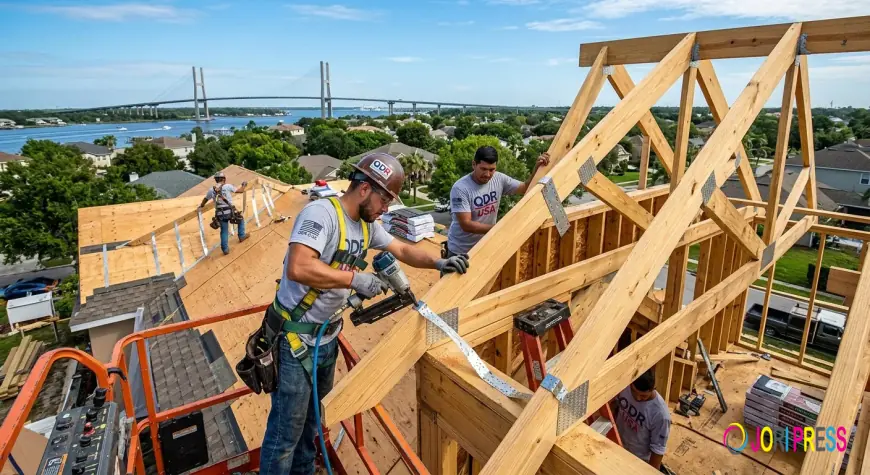
In Northeast Florida, we aren't just bracing for a "chance" of summer storms—we’re preparing for a way of life. For homeowners in Jacksonville, St. Augustine, and down through Daytona, the most critical line of defense isn't just the shingles on top, but how your roof is anchored to your home
As we look toward the 2026 Florida Building Code updates, understanding hurricane straps is no longer just for contractors; it’s essential knowledge for every homeowner looking to protect their investment and lower their insurance premiums.
What are Hurricane Straps?
Commonly known as hurricane clips or ties, these are specialized metal connectors made of galvanized or stainless steel. Their primary job is to create a "continuous load path." This means they physically anchor your roof trusses or rafters to the wall plates of your home.
Without these straps, a roof sits on the house primarily held by gravity and a few nails. During a high-wind event—like those we see during hurricane season—the "uplift" pressure can literally peel a roof off a structure. Hurricane straps ensure that the wind's force is transferred from the roof, down through the walls, and into the foundation.
Why Jacksonville Homeowners Need to Check Their Straps Now
The Florida Building Code is one of the strictest in the nation, and it continues to evolve. Here is why you should prioritize a roof-to-wall connection inspection:
- Mandatory Retrofits in 2026: Under current and upcoming 2026 mandates, if you are performing a full roof replacement on a home valued over $300,000, you are often required to upgrade your roof-to-wall connections to meet modern standards.
- Significant Insurance Savings: Florida law requires insurance companies to offer "Wind Mitigation Credits."Having certified hurricane straps can often save you 10% to 25% on your annual homeowners insurance premiums.
- The 2002 Benchmark: If your home was built before March 1, 2002, there is a high chance it does not meet the current uplift requirements. Older homes often used "toenails" instead of metal straps, which are significantly more likely to fail in a storm.
Types of Connectors
Depending on your home's structure, different connectors might be used:
- Twist Straps: These wrap over the top of the rafter, providing the strongest connection for high-wind zones.
- H-Clips: These are U-shaped brackets that slide over the truss and nail into the wall plate.
- Gable End Bracing: Specific kits designed to reinforce the most vulnerable part of a roof—the gable end.
Professional Installation is Key
“Can hurricane straps make your Jacksonville roof stronger? Discover how these critical connections can help protect your home during severe storms .Read more on qdrusa.com
What's Your Reaction?
 Like
0
Like
0
 Dislike
0
Dislike
0
 Love
0
Love
0
 Funny
0
Funny
0
 Angry
0
Angry
0
 Sad
0
Sad
0
 Wow
0
Wow
0