




































How to Plan a Wedding Rehearsal and Ceremony Processional for a Multi-Day Indian Wedding in Bahrain?
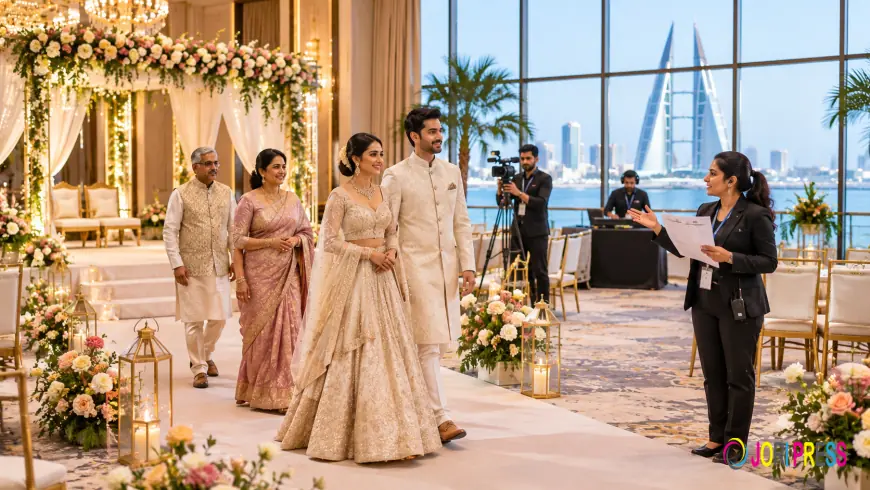
The right setting can make every wedding entrance feel organised and memorable. When comparing Bahrain Wedding Venues, couples should check whether the ceremony space supports the planned family entrances, bridal processional, music arrangements and guest movement.
A wedding ceremony brings together several people who may have different responsibilities, traditions and expectations. From the groom's arrival and family entrances to the bridal processional and the first ritual, every movement needs to happen in the right sequence.
A well-organised rehearsal helps the couple, families, wedding planner, priest or officiant, musicians and photography team understand their roles before the actual ceremony. This becomes especially important during a multi-day Indian wedding, where guests and family members may be moving between different venues and celebrations.
The purpose of a rehearsal is not to make the ceremony feel mechanical. It is to remove uncertainty, avoid unnecessary delays and allow everyone to participate comfortably.
Here is how to plan the rehearsal and ceremony processional for a smooth Indian wedding celebration in Bahrain.
1. Prepare the Ceremony Sequence Before Scheduling the Rehearsal
A rehearsal is useful only when the ceremony's basic structure has already been agreed upon. Before gathering everyone for practice, prepare a sequence showing how the ceremony will begin and what happens next.
Discuss the order with both families and the priest or officiant. Indian wedding traditions differ between communities and families, so the sequence should reflect the actual ceremony rather than follow a generic template.
The ceremony plan should identify:
-
Groom's arrival and entrance arrangements.
-
Family members participating in the processional.
-
Bridal entry and accompanying family members.
-
Musicians or performers involved in the entrances.
-
The priest or officiant's position.
-
The beginning of the main wedding rituals.
-
Important transitions during the ceremony.
-
The expected conclusion and exit arrangements.
Once the sequence is agreed upon, share it with the wedding planner and relevant participants. Any changes should be communicated before the rehearsal begins.
2. Decide Who Needs to Participate in the Rehearsal
Not every wedding guest needs to attend the rehearsal. Including too many people can make it difficult to explain movements and may turn a short practice session into a lengthy gathering.
Focus on the people who have a role in the ceremony.
The rehearsal group may include:
-
Bride and groom.
-
Parents and immediate family members involved in entrances.
-
Bridesmaids, groomsmen or other attendants, if included.
-
People carrying ceremonial items.
-
Priest or officiant, where available.
-
Wedding planner and ceremony coordinator.
-
Musicians or performers responsible for entrance cues.
-
Photography and videography representatives.
Ask the wedding planner to maintain a participant list with contact details and assigned responsibilities.
If elderly relatives, children or guests with mobility requirements are part of the processional, include their needs in the planning. They may require a different walking pace, additional assistance or a suitable route.
3. Create a Clear Processional Order for Both Families
One of the most common sources of confusion during a wedding ceremony is uncertainty about who enters first.
Rather than making decisions while guests are waiting, prepare a written entrance order.
An example of a processional structure could be:
-
Ceremony coordinator confirms that the entrance area is ready.
-
Musicians or performers take their designated positions.
-
Groom and accompanying family members enter according to the agreed plan.
-
Immediate family members and other participants take their places.
-
Bridesmaids, groomsmen or attendants enter, if included.
-
Bride makes her entrance with the people chosen by the family.
-
Participants move to their assigned positions around the ceremony area.
This is only a planning example. The final order should follow the couple's traditions, family preferences and ceremony format.
For some Indian weddings, the groom's Baraat may take place before the formal ceremony processional. In other celebrations, the entrance sequence may be simpler. Keep these movements separate in the schedule so everyone understands when and where each entrance takes place.
4. Walk Through the Actual Venue and Processional Route
A processional may appear straightforward on a floor plan but feel different when people walk through the actual venue.
Before the rehearsal, inspect the route from the entrance point to the ceremony stage or mandap.
Check:
-
Available walking width.
-
Steps, slopes and changes in floor level.
-
Carpet edges and loose cables.
-
Seating arrangements near the entrance.
-
Space for photographers and videographers.
-
Movement of guests around the processional route.
-
Access for elderly guests and people with mobility requirements.
-
Any venue restrictions on decorations or temporary structures.
For a hotel ballroom in Bahrain, confirm the approved movement routes with the venue's event team. For an outdoor or waterfront setting, also consider the walking surface, lighting and available shelter.
Do not finalise the processional route using photographs alone. Walk the complete route with the ceremony coordinator and identify potential obstacles before the wedding day.
5. Schedule the Rehearsal at the Right Time
The rehearsal should take place early enough for participants to understand their responsibilities and for the planner to correct any problems.
For a multi-day celebration, consider scheduling it on the day before the wedding ceremony, subject to venue availability and family schedules.
If the wedding includes several major ceremonies, a short separate walkthrough may also be useful after an earlier function.
A practical rehearsal schedule could include:
-
First 10 minutes: Explain the ceremony order and participant positions.
-
Next 15 minutes: Practise individual entrances and walking routes.
-
Next 15 minutes: Practise the complete processional in sequence.
-
Next 10 minutes: Test music cues, microphones and important transitions.
-
Final 10 minutes: Confirm positions, timings and any corrections.
These timings are a planning example rather than a fixed requirement. A large ceremony or a complex Baraat arrangement may need additional preparation.
Avoid scheduling the rehearsal immediately after a demanding function when key participants are likely to be tired or unavailable.
6. Coordinate Music, Announcements and Entrance Cues
Music helps create the atmosphere of an Indian wedding processional, but it also needs to support the movement of participants.
The DJ, live musicians or sound technician should know exactly when each entrance begins.
Prepare a cue sheet containing:
|
Processional moment |
Required cue |
|
Guests are ready |
Coordinator confirms the entrance route is clear |
|
Groom's entrance |
Agreed music begins |
|
Family procession |
Music continues or changes as planned |
|
Bridal entry |
Dedicated bridal entrance track begins |
|
Bride reaches the ceremony area |
Music fades at the agreed point |
|
Ceremony begins |
Priest or officiant takes the lead |
During rehearsal, test the actual music files and sound equipment where possible. Confirm who is responsible for starting and stopping each track.
Also decide what happens if a music cue fails. The coordinator should have a simple backup signal so the processional can continue without confusion.
7. Plan the Baraat and Groom's Arrival Separately
The Baraat may involve a larger group, live music, dancing and movement from one location to another. It therefore requires more planning than a simple entrance into the ceremony space.
Before the event, confirm:
-
Where the Baraat will begin.
-
The route approved by the venue.
-
Where the procession will end.
-
How the groom will reach the ceremony area.
-
Where guests should wait.
-
Who will guide the group.
-
Whether musicians and sound equipment are included.
-
How the wedding planner will communicate timing changes.
If the arrangement includes a vehicle, animal or other special entrance feature, confirm the venue's permission, safety conditions and operating arrangements well in advance. Never assume that a hotel or outdoor property will automatically permit every type of procession.
A separate briefing for the Baraat coordinator, musicians and family representatives can prevent confusion before the main ceremony.
8. Coordinate the Bridal Entry With the Photography Team
The bridal entrance is often one of the most anticipated moments of the wedding. It deserves careful coordination without unnecessary repetition or delays.
Discuss the entry route and timing with the bride and photography team before the rehearsal.
Confirm:
-
Where the bride will wait before entering.
-
Who will accompany her.
-
Whether the entrance involves a traditional ritual or performance.
-
Where photographers will stand.
-
Whether guests will be asked to remain seated.
-
Where the bride should pause, if required.
-
How she will reach the mandap or ceremony stage.
Photographers need enough room to capture the entrance without blocking the route. Ask the planner to reserve suitable positions for camera operators and avoid placing guests or equipment in their working area.
The bridal entry should also allow sufficient time for the bride to walk comfortably, especially when the outfit has a long train, heavy embroidery or other decorative elements.
9. Rehearse Positions Around the Mandap or Ceremony Stage
Reaching the stage is only one part of the processional. Participants also need to know where to stand or sit once they arrive.
Prepare a simple position plan showing:
-
Bride and groom's designated places.
-
Priest or officiant's position.
-
Parents and immediate family seating.
-
Attendants and other participants.
-
Musicians or performers, if required.
-
Photography and videography working areas.
-
Access routes for anyone who needs assistance.
Discuss the arrangement with the priest or officiant so that traditional rituals can be performed without unnecessary movement or interruptions.
If ceremonial items are required, assign someone to bring them to the correct location before the ceremony begins. Do not depend on family members to locate missing items while guests are waiting.
10. Make the Processional Comfortable for Elderly Guests and Children
A processional should reflect the family's preferences while remaining practical for everyone taking part.
Elderly relatives may need additional time to walk or may prefer to be seated close to the ceremony area. Children may become distracted or nervous when asked to follow a particular entrance sequence.
Plan accordingly.
For elderly participants:
-
Use the shortest suitable walking route.
-
Check whether ramps or step-free access are available.
-
Arrange assistance from a family member or designated attendant.
-
Provide seating near the entrance or ceremony area.
-
Allow extra time instead of rushing the procession.
For children:
-
Explain their role in simple language.
-
Practise the entrance once or twice.
-
Identify an adult who can guide them.
-
Keep the route clear and manageable.
-
Have a backup arrangement if a child becomes uncomfortable.
The aim is to make participation enjoyable rather than turn every entrance into a strict performance.
11. Prepare a Backup Plan for Delays and Venue Changes
Destination weddings may involve guests arriving from different countries, multiple events and several teams working together. A late transfer or unexpected venue change can affect the ceremony schedule.
Prepare a simple contingency plan before the wedding day.
Consider what will happen if:
-
A key family member arrives late.
-
The Baraat takes longer than expected.
-
The previous function overruns.
-
The planned entrance route becomes unavailable.
-
A musician or sound technician is delayed.
-
Outdoor conditions make the planned route unsuitable.
-
A participant needs assistance at the last minute.
The wedding planner should identify which parts of the processional can be adjusted without changing the essential ceremony traditions.
For outdoor functions, discuss an alternative indoor route or sheltered arrangement with the venue. Confirm the decision-making contact so that changes can be communicated quickly.
12. Share a Final Processional Sheet With Everyone Involved
Once the rehearsal is complete, prepare one final version of the processional plan.
It should contain:
-
Ceremony date and location.
-
Participant names and responsibilities.
-
Entrance sequence.
-
Meeting point and reporting time.
-
Processional route.
-
Music and announcement cues.
-
Assigned positions around the mandap.
-
Photography and videography instructions.
-
Contact details of the ceremony coordinator.
-
Agreed backup arrangements.
Share the relevant information with participants rather than sending everyone a large planning document they may not need.
The final sheet should have one version owner, usually the wedding planner or ceremony coordinator. This prevents families, musicians and photographers from working with different versions of the schedule.
13. Assign One Person to Manage the Ceremony on the Wedding Day
A well-planned rehearsal can still become difficult if nobody is responsible for calling the next entrance.
Appoint one ceremony coordinator or trusted family representative to manage the processional.
This person should:
-
Confirm participant attendance.
-
Check that the entrance route is ready.
-
Coordinate with the DJ or musicians.
-
Give the agreed entrance signals.
-
Keep family members informed about delays.
-
Coordinate with the photography team.
-
Confirm that participants have reached their positions.
-
Inform the priest or officiant when the ceremony is ready to begin.
Avoid having several family members give instructions at the same time. One clearly identified person keeps communication organised and helps the couple remain focused on the celebration.
Frequently Asked Questions
1. When should a wedding rehearsal take place in Bahrain?
A rehearsal can be scheduled on the day before the main ceremony, depending on venue availability and the participants' schedules. For complex ceremonies, a short earlier walkthrough may also be useful.
2. Who should attend an Indian wedding ceremony rehearsal?
The bride, groom, relevant family members, attendants, ceremony coordinator, priest or officiant where available, and key members of the music and photography teams should attend. General guests usually do not need to participate.
3. How long should an Indian wedding processional rehearsal take?
A simple rehearsal may take around 30 to 60 minutes. A large Baraat, multiple family entrances or a complex ceremony sequence may require additional time.
4. Should the Baraat be included in the ceremony rehearsal?
The Baraat should have its own route and coordination plan. If it involves a large group, musicians or a special entrance arrangement, conduct a separate briefing or walkthrough with the relevant participants.
5. How can the wedding planner avoid delays during the bridal entry?
Prepare the entrance route, confirm the music cue, position the photographers in advance and identify the person who will signal the bride to begin walking. Allow enough time for the bridal outfit and accompanying family members.
6. What should be included in a wedding processional sheet?
Include the entrance order, participant names, meeting points, reporting time, route, music cues, assigned positions, coordinator contacts and backup arrangements.
Final Thoughts
A smooth wedding processional is the result of preparation, clear communication and consideration for everyone taking part. A rehearsal gives families an opportunity to understand the ceremony sequence, correct practical difficulties and feel more confident about their roles.
For couples planning Bahrain weddings, the key is to coordinate the processional with the venue, priest or officiant, family representatives, musicians and photography team before the actual ceremony. With a clear entrance order, a tested route and one person managing the cues, the ceremony can unfold naturally while preserving the traditions and emotions that make the occasion meaningful.
What's Your Reaction?
 Like
0
 Dislike
0
 Love
0
 Funny
0
 Angry
0
 Sad
0
 Wow
0