








































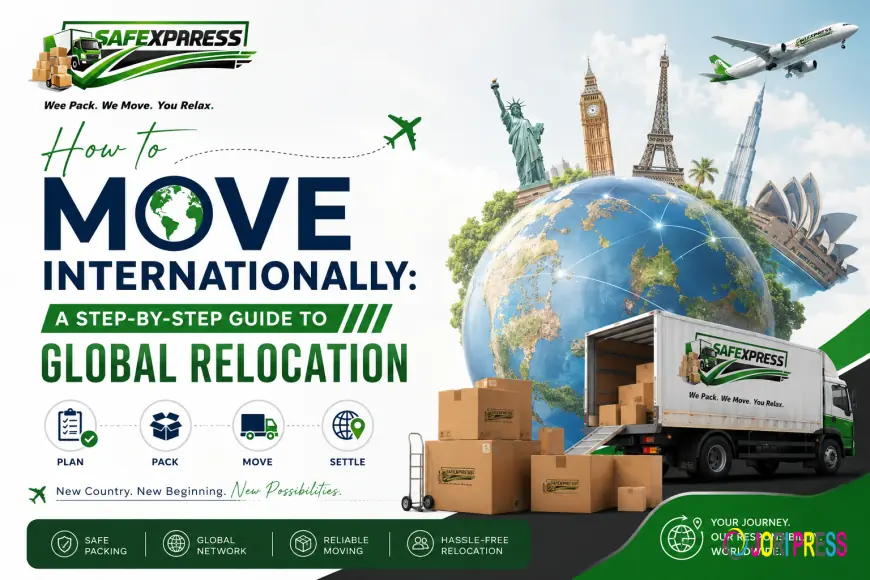
How to Move Internationally: A Step-by-Step Guide to Global Relocation
Relocating to a new country is an exhilarating milestone. The promise of a new career, a different lifestyle, and fresh cultural experiences is highly rewarding. However, transitioning across global borders requires immaculate logistics, adherence to international customs rules, and flawless execution. Without a strategic plan, the excitement of moving abroad can easily turn into administrative chaos.
To help you seamlessly cross borders, we have compiled the definitive step-by-step roadmap for global relocation. Whether you are moving from India to Europe, the US, or the Middle East, this guide ensures your assets, documents, and peace of mind stay intact.
Step 1: Secure Legal Clearance & Documentation
Long before the physical packing begins, your primary focus must be on legal compliance. Every sovereign nation enforces strict entry and residency regulations.
-
Visas and Permits: Ensure your work, student, or residency visas are formally stamped. Check the validity of passports for all moving family members—most nations require at least six months of validity remaining from your date of entry.
-
Document Attestation: Gather vital documents, including birth certificates, marriage licenses, medical records, and educational degrees. Depending on your destination country, these records may require an Apostille or embassy attestation to be legally recognized.
Step 2: Choose Your Moving Strategy (Air vs. Sea Freight)
International shipping is structurally different from domestic transportation. You must categorize your inventory based on urgency and volume.
-
Air Freight: Best suited for high-value essentials, immediate clothing, and critical business electronics. While fast (typically 3 to 7 days), it is priced by weight and can become expensive for large volumes.
-
Sea Freight: The ideal choice for full household setups, heavy furniture, and large appliances. It operates via Full Container Load (FCL) or Less than Container Load (LCL) shared containers. While highly cost-effective, sea transit can take anywhere from 3 to 12 weeks depending on the trade routes.
Step 3: Partner with Specialized Global Movers
You cannot rely on standard local transporters for a cross-border transition. International moving demands specialized knowledge of maritime laws, customs documentation, and global supply chains.
If you are starting your journey from Maharashtra's major hubs, you need a partner with trusted local accountability and global reach. Hiring top-tier packers and movers in Nashik bridges the gap between your Indian residence and your international destination.
This is where Safe Shifting Packers steps in. As a seasoned expert among movers and packers in Nashik, we don't just shift boxes; we manage the complex logistical pipeline of global transit. Our team provides specialized international relocation services, taking care of everything from custom multi-layer marine crating to booking container freight and managing custom declarations.
Step 4: Declutter, Inventory, and Value Your Goods
International freight rates are strictly calculated by volume (Cubic Feet/Meters) or weight. Shipping items that can be easily replaced abroad will inflate your relocation costs unnecessarily.
Relocation Strategy: High Volume = High Costs.
Action: Purge items, catalog essentials, and secure a written pre-move survey.
-
The Rule of Utility: If you haven’t used an appliance or garment in the past year, do not pay to ship it across oceans. Electrical standards (voltage and plug types) also vary globally, making many domestic Indian appliances incompatible abroad.
-
Create an Itemized Packing List: International customs authorities require a meticulous, itemized inventory sheet. Every box must be numbered, with its contents explicitly declared for port clearance.
-
Transit Insurance: Ensure your chosen local shifting services in Nashik or international freight provider offers comprehensive marine transit insurance. Safe Shifting Packers provides clear, transparent insurance options to cover your goods against unpredictable maritime risks.
Step 5: Master the Art of International Standard Packing
Standard cardboard boxes will not survive weeks on a container ship exposed to changing humidity, maritime temperatures, and ocean turbulence. International transit demands ruggedized, industrial-grade packaging.
1.Primary Protective Wrapping:Layer 1: Shock Absorption.
Wrap delicate items, glassware, and precision electronics in thick, premium bubble wrap and anti-static foam sheets to isolate them from vibrations.
2.Corrugated Structural Shielding:Layer 2: Edge Protection.
Place the wrapped goods inside heavy-duty, double-walled or triple-walled corrugated fiberboard boxes. Use edge guards for heavy wooden or metal furniture.
3.Moisture & Marine Sealing:Layer 3: Environmental Defense.
Seal the entire pallet or outer box with industrial-grade stretch film or waterproof tarps. This protects your belongings from sea moisture, humidity, and dust during port storage.
4.Wooden Crating for Valuables:Layer 4: Heavy-Duty Security.
For high-value items, artwork, or delicate musical instruments, build custom, ISPM-15 certified wooden crates to prevent external crushing forces.
By booking professional home shifting services in Nashik, you gain access to skilled packers who are specifically trained in these international packing protocols, ensuring your items remain scratch-free.
Step 6: Navigate Customs Clearance & Port Logistics
Every household shipment entering a foreign country must clear customs. This is often the most stressful phase for expats, as incorrect paperwork can lead to severe port delays, expensive demurrage charges (port storage fees), or outright confiscation.
-
Unaccompanied Baggage Declarations: Most countries allow expats to import used household goods duty-free under specific visas, provided the items have been owned for at least 6 to 12 months.
-
Prohibited Items: Carefully review your destination country’s prohibited items list. Agricultural products, certain seeds, plants, unsterilized wood, and specific medications are heavily restricted or banned globally.
When you hire Safe Shifting Packers, our network handles the complex custom documentation loops at both the departure port in India and the arrival port abroad, keeping your transition fully legal and compliant.
Step 7: Arrival, Unloading, and Local Delivery
Once your container clears the destination port, the final leg of your journey begins. A trusted destination agent will receive your cargo, clear it through the local terminal, and arrange for an enclosed container truck to transport it directly to your new international residence.
If your new home is not completely ready, ensure your moving partner provides secure warehouse and storage services. Storing your goods in a secure, climate-controlled facility gives you the breathing room to finalize your lease without rushing.
Why Choose Safe Shifting Packers for Your Global Move?
Relocating worldwide from Nashik requires a balanced approach: deep local trust combined with international logistics expertise. As premium packers and movers in Nashik, Safe Shifting Packers provides an end-to-end relocation platform.
|
Service Feature |
Domestic Shifting |
International Relocation |
|
Packaging Level |
2-Layer Standard |
4-Layer Heavy Duty Marine Grade |
|
Tracking Systems |
Local Fleet GPS Tracking |
Ocean Freight Bill of Lading & Airway Tracking |
|
Customs Management |
Not Required (Interstate Permits) |
Full Customs Clearance & Port Documentation |
|
Insurance Coverage |
Road Transit Policy |
Comprehensive Marine Cargo Insurance |
From providing competitive packers and movers in Nashik charges to managing complex ocean freight logistics, we ensure your valuable possessions cross borders safely. Don't leave your global transition to chance or unverified brokers.
Contact Safe Shifting Packers today for a transparent, no-obligation pre-move survey and a custom international moving quote tailored exactly to your budget.
What's Your Reaction?
 Like
0
Like
0
 Dislike
0
Dislike
0
 Love
0
Love
0
 Funny
0
Funny
0
 Angry
0
Angry
0
 Sad
0
Sad
0
 Wow
0
Wow
0