








































How to Choose the Right Custom ERP Development Company for Your Business
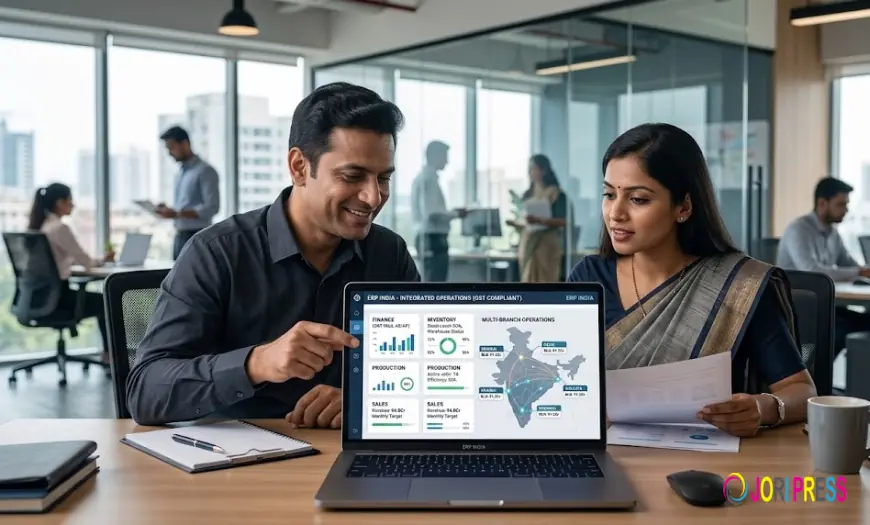
Choosing an ERP provider is an important business decision.
ERP software affects finance, sales, inventory, purchasing, production, reporting, and other business functions. A poor implementation can create additional work instead of reducing it.
This is why businesses considering custom ERP development should evaluate providers carefully.
The right development company should understand both technology and business processes.
What Does a Custom ERP Development Company Do?
A custom ERP development company helps businesses design, develop, customize, implement, and support ERP systems.
Its work may include:
- Requirement analysis
- Process mapping
- ERP design
- Software development
- ERP customization
- Integrations
- Data migration
- Testing
- Deployment
- Training
- Support
The exact responsibilities depend on the project.
Why Provider Selection Matters
ERP is not simply another software application.
It becomes part of daily business operations.
The provider needs to understand how information moves between departments.
For example, a sales order may affect:
Sales → Inventory → Purchasing → Production → Dispatch → Finance
If these workflows are not properly understood, the ERP system may create gaps between departments.
8 Things to Check Before Choosing a Custom ERP Company
1. Industry Experience
Check whether the provider understands your industry.
Manufacturing businesses may need knowledge of:
- BOM
- MRP
- Production planning
- Quality control
- Inventory
- Shop-floor operations
A service company may have completely different requirements.
2. ERP Customization Experience
Ask how the provider handles customized workflows.
The provider should be able to explain what can be configured and what requires development.
3. Integration Capabilities
Modern businesses rarely use only one software system.
Your ERP may need to connect with:
- CRM
- Accounting systems
- Payment gateways
- E-commerce platforms
- Banking systems
- Government or tax systems
- Other business applications
Ask the provider about previous integration projects.
4. Implementation Process
A reliable ERP project should follow a structured process.
A typical process includes:
- Requirement analysis
- Process mapping
- System design
- Development or customization
- Testing
- Data migration
- UAT
- Deployment
- Training
- Support
Avoid providers that cannot clearly explain how implementation will be managed.
5. Data Migration
Moving existing data is often one of the most difficult parts of an ERP project.
Ask how the provider handles:
- Data cleaning
- Duplicate records
- Data mapping
- Validation
- Migration testing
- Backup
6. Security and Access Control
ERP systems contain important business information.
Ask about:
- User permissions
- Role-based access
- Data security
- Backup
- Authentication
- Audit trails
The exact security requirements depend on the organization.
7. Training and Support
Employees need time to understand a new ERP system.
Check whether the provider offers:
- User training
- Documentation
- Technical support
- Issue resolution
- System updates
- Ongoing maintenance
8. Scalability
Your ERP should not become a limitation as the business grows.
Consider whether the system can support:
- More users
- New branches
- Additional warehouses
- New products
- Additional modules
- New integrations
Questions to Ask an ERP Development Company
Before signing a project, ask:
- What ERP modules do you recommend?
- Which requirements need customization?
- Which functions can be configured?
- How will the project be implemented?
- How will data migration work?
- How will integrations be handled?
- What testing process will you follow?
- What training is included?
- What support is available after launch?
- How will future customization be managed?
These questions can help businesses compare providers based on more than price.
How to Evaluate Custom ERP Development Cost
Avoid comparing ERP providers only by their initial quotation.
A lower price may not include important components such as:
- Data migration
- Integrations
- Training
- Testing
- Support
- Future development
Instead, compare the complete project scope.
Look at:
- Modules included
- Number of users
- Integrations
- Custom workflows
- Deployment model
- Implementation services
- Training
- Support
- Maintenance
Custom ERP for Indian Businesses
Indian businesses may have additional requirements related to:
- GST
- Multi-state operations
- Branch management
- Local reporting
- Manufacturing
- Inventory
- Tax processes
- Banking integrations
A provider working with Indian businesses should understand these operational requirements.
Why Business Process Understanding Matters
A software provider should not begin development without understanding how the business operates.
For example, if a manufacturer has a unique production approval process, simply adding a generic approval button may not solve the real problem.
The provider should understand:
- Who creates the request
- Who approves it
- What conditions apply
- What happens after approval
- What data is required
- Which department receives the information
This process-level understanding leads to better ERP design.
Choosing the Right Custom ERP Development Company
The right provider should offer a balance of:
- Business understanding
- ERP expertise
- Technical capability
- Industry experience
- Clear communication
- Structured implementation
- Training
- Support
BizSol Technologies is an ERP provider that works with businesses looking to align ERP systems with their operational workflows, including manufacturing, inventory, production, reporting, and business automation requirements.
FAQs
How do I choose a custom ERP development company?
Compare providers based on industry experience, ERP capabilities, implementation process, integrations, support, security, and project scope.
How long does custom ERP development take?
The timeline depends on the number of modules, integrations, users, workflows, and customization requirements.
Should I choose a local ERP development company?
Location is only one factor. Industry experience, technical capability, communication, implementation process, and support are also important.
What should be included in an ERP proposal?
The proposal should clearly explain the modules, customization, integrations, implementation, testing, training, support, timeline, and costs.
Conclusion
Choosing a custom ERP development company requires more than comparing software features.
Businesses should evaluate how well the provider understands their workflows and whether it can support the full ERP lifecycle.
A structured implementation process, clear scope, proper testing, employee training, and ongoing support can make the ERP project easier to manage and more useful over time.
For businesses considering custom ERP development, the first step is to document current processes and identify the areas where existing software is creating problems.
What's Your Reaction?
 Like
0
Like
0
 Dislike
0
Dislike
0
 Love
0
Love
0
 Funny
0
Funny
0
 Angry
0
Angry
0
 Sad
0
Sad
0
 Wow
0
Wow
0