
































How to Build a High-Performance University Admissions Strategy
Learn how to build a high-performance university admissions strategy using digital marketing, SEO, CRM automation, and student recruitment techniques to improve enquiries, applications, and enrolment growth.
University admissions are no longer just about attracting student enquiries. Institutions must build trust, communicate their value, and guide prospective students from their first interaction to final enrolment. A well-planned university admissions strategy connects marketing, counselling, technology, and data to create a smoother experience for students and more predictable results for institutions.
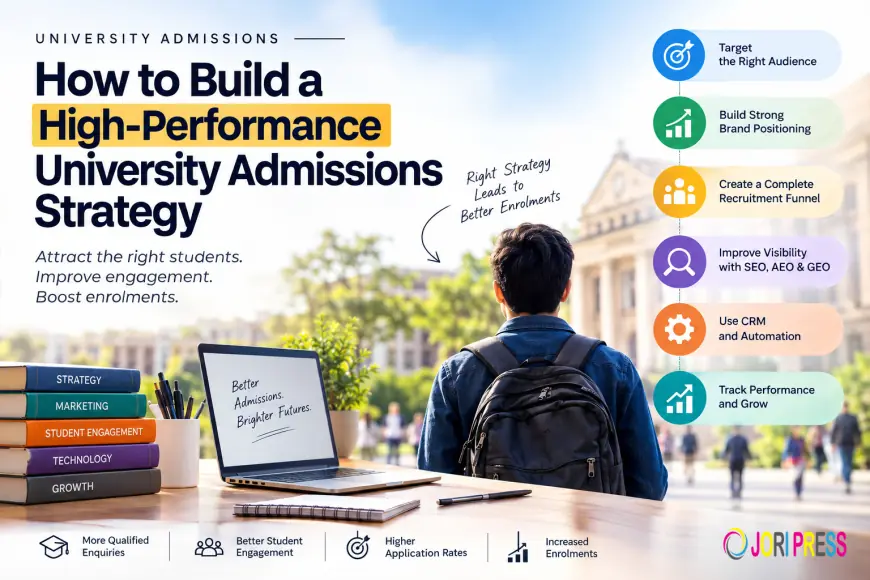
1. Understand Your Target Students
Every student has different priorities. Some focus on career opportunities, others compare fees, faculty, campus facilities, industry exposure, or placement support. Universities should identify their ideal student segments before investing in campaigns.
Research student preferences, analyse previous admissions data, and understand the questions students and parents ask most often. This helps institutions create relevant messages instead of relying on generic advertisements.
2. Strengthen Your University’s Positioning
Students have many institutions to consider. Your university must clearly explain why it deserves their attention.
Highlight genuine strengths, such as academic programmes, experienced faculty, practical learning, industry partnerships, and verified career outcomes. Consistent messaging across the website, social media, and admission materials helps build credibility.
A strong education marketing strategy communicates real value rather than making exaggerated promises.
3. Build a Complete Student Recruitment Funnel
Generating enquiries is only the beginning. An effective university student recruitment strategy covers the entire admissions journey.
Start with search visibility, social media, educational content, and targeted advertising. Then provide useful programme information, virtual campus tours, webinars, and student testimonials. Once a student enquires, timely counselling and clear application guidance can help them make an informed decision.
Each stage should have a defined goal, from awareness and enquiry to application, offer acceptance, and enrolment.
4. Use SEO, AEO, and GEO to Improve Visibility
Prospective students increasingly research universities online before contacting an admissions team. Search engine optimisation (SEO) helps programme pages appear in relevant search results, while answer engine optimisation (AEO) makes information easier to retrieve for direct-answer queries. Generative engine optimisation (GEO) focuses on visibility in AI-generated responses.
Create dedicated programme pages, answer common admission questions, publish useful guides, and maintain accurate information about eligibility, fees, deadlines, and application processes. Clear headings and concise answers also improve accessibility for students and search systems.
5. Improve Lead Management with CRM and Automation
Slow follow-ups can cause interested students to lose confidence or explore alternatives. A customer relationship management (CRM) system helps admissions teams organise enquiries, record interactions, assign counsellors, and track application progress.
Use email, calls, and WhatsApp appropriately to share relevant updates and reminders. Automation can improve response times, but personal counselling remains important when students need individual guidance.
6. Measure What Actually Matters
A high-performance admissions strategy depends on meaningful data, not enquiry volume alone. Track qualified leads, enquiry-to-application conversion, application completion, offer acceptance, cost per enrolled student, and overall enrolment numbers.
Review performance regularly to identify where prospective students disengage. If enquiries are strong but applications remain low, investigate programme information, counselling quality, fees communication, or application complexity before increasing advertising spend.
Conclusion
Building a successful university admissions strategy requires coordination, consistent communication, and continuous improvement. By combining clear positioning, digital visibility, responsive counselling, CRM technology, and data-driven decisions, universities can create a more student-focused recruitment process and support sustainable enrolment growth.
The objective is not simply to generate more leads. It is to help the right students discover the right programmes and confidently complete their admission journey.
What's Your Reaction?
 Like
0
Like
0
 Dislike
0
Dislike
0
 Love
0
Love
0
 Funny
0
Funny
0
 Angry
0
Angry
0
 Sad
0
Sad
0
 Wow
0
Wow
0