









































How Professional Web Design Can Help Small UK Businesses Compete Online
Professional web design can help small UK businesses compete online by building trust, improving user experience, supporting SEO, increasing mobile accessibility and making it easier for visitors to become customers. A fast, well-structured and responsive website not only strengthens a business’s online presence but also provides a foundation for long-term digital growth.
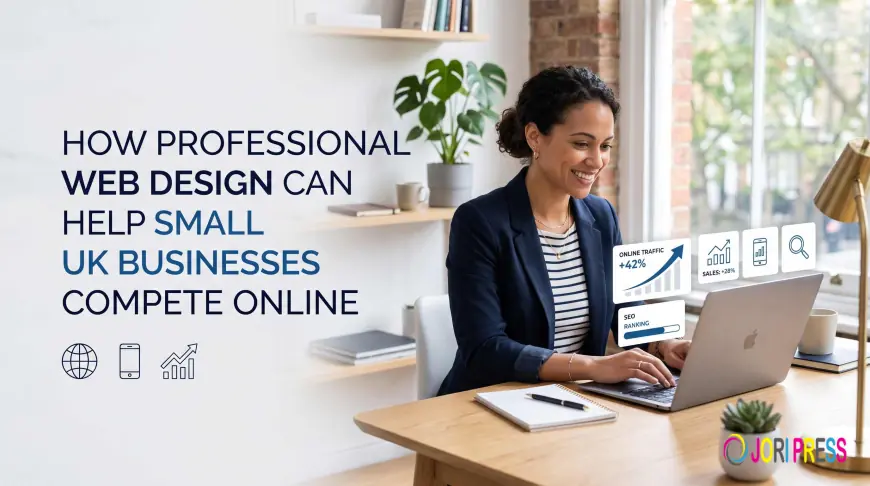
How Professional Web Design Can Help Small UK Businesses Compete Online
For small businesses in the UK, having a website is no longer enough. Customers expect websites to load quickly, work smoothly on mobile devices, provide clear information and make it easy to take the next step. A poorly designed website can make even a reliable business appear less trustworthy, while a professional website can help a smaller company compete with much larger brands.
Professional web design is about more than choosing attractive colours or adding images to a homepage. It combines usability, performance, structure, mobile responsiveness and visual presentation to create a better experience for visitors. When these elements work together, a website can attract potential customers, communicate credibility and support long-term business growth.
Why Web Design Matters for Small UK Businesses
Large companies often have significant marketing budgets, established reputations and dedicated teams. Small businesses may not have the same resources, but a well-designed website can help reduce that gap.
A website is often one of the first places where a potential customer interacts with a business. Before making contact or purchasing a service, people may look at the company's website to understand what it offers, where it operates and whether it appears trustworthy.
Professional web design helps businesses make that first interaction more positive.
A clear layout, consistent branding, readable content and straightforward navigation allow visitors to find important information without unnecessary effort. This can be particularly valuable for small businesses competing in crowded UK markets.
1. A Professional Website Builds Trust
Trust plays an important role in online decision-making. Visitors are more likely to investigate a company further when its website looks reliable, current and professionally maintained.
Several elements can contribute to this impression, including:
-
Clear business information
-
Professional images and graphics
-
Consistent branding
-
Easy-to-find contact details
-
Customer reviews or testimonials
-
Secure browsing
-
Well-written and organised content
-
Clear service or product descriptions
A professional appearance does not guarantee conversions, but it can remove unnecessary doubts that might prevent someone from contacting a business.
For a small company without the recognition of a major brand, this credibility can be particularly important.
2. Mobile-Friendly Design Reaches More Customers
People do not only browse websites from desktop computers. Smartphones and tablets are an important part of everyday internet use, meaning a website needs to work effectively across different screen sizes.
Responsive web design allows a website's layout and content to adapt to the device being used.
A mobile visitor should not have to zoom in to read text, struggle to click buttons or scroll sideways to view a page. Navigation should remain simple, important information should be easy to access and forms should be comfortable to complete.
For small businesses, improving the mobile experience can help prevent potential customers from leaving a website simply because it is difficult to use.
3. Good Website Structure Improves User Experience
User experience, often referred to as UX, describes how easily and comfortably visitors can interact with a website.
Good UX starts with simple questions:
- Can visitors understand what the business does?
- Can they find the information they need?
- Can they contact the company without confusion?
- Can they complete an action without unnecessary steps?
A well-structured website answers these questions through clear navigation and logical page organisation.
For example, a service-based business may benefit from separate pages for its main services, about information, contact details and frequently asked questions. Instead of placing everything on one crowded page, information can be organised according to what visitors are looking for.
This makes the website easier to understand and creates a smoother journey from discovering a business to making an enquiry.
4. Website Speed Can Affect Customer Experience
Website performance is another important part of professional web design.
Visitors generally expect pages to load quickly. If a website takes too long to display its main content, users may leave before they have had an opportunity to understand the company's services.
Several factors can affect website performance, including:
-
Large image files
-
Unnecessary scripts
-
Poor hosting configuration
-
Excessive plugins
-
Unoptimised code
-
Heavy website elements
Professional development can help identify and reduce these issues.
Performance also matters because search engines consider page experience and technical factors when evaluating websites. While no single design element guarantees higher rankings, creating a fast, accessible and useful website provides a stronger foundation for both users and search visibility.
5. Professional Web Design Supports SEO
Search engine optimisation and web design are closely connected.
SEO is not simply about adding keywords to pages. Search engines need to understand a website's content, structure and purpose. A technically sound website makes it easier for search engines to crawl and interpret its pages.
Good web design can support SEO through:
-
Logical website architecture
-
Descriptive page titles
-
Proper heading structure
-
Mobile responsiveness
-
Fast-loading pages
-
Accessible content
-
Internal linking
-
Search-friendly URLs
-
Optimised images
The website should ultimately be designed for people first. When visitors can easily navigate and understand the content, the website has a stronger foundation for organic search growth.
6. Clear Calls to Action Can Generate More Enquiries
A website should have a purpose.
For many small UK businesses, that purpose may be generating enquiries, phone calls, bookings or sales. A visitor should not have to search through several pages to discover what to do next.
Clear calls to action can guide users towards the appropriate step.
Examples include:
-
Request a Quote
-
Contact Us
-
Book a Consultation
-
View Our Services
-
Shop Now
-
Get Started
The call to action should be relevant to the page and should clearly communicate what happens when the visitor clicks it.
This small detail can make the customer journey more straightforward.
7. Strong Branding Helps Small Businesses Stand Out
Professional web design also provides an opportunity to communicate a company's identity.
Colours, typography, imagery, logos and page layouts can work together to create a consistent visual identity. When the same branding is used across a website and other digital channels, customers can begin to recognise the business more easily.
For small businesses, this consistency can help create a more established appearance and differentiate the company from competitors offering similar products or services.
The objective is not simply to make a website look attractive. Design choices should support the company's message and make the brand easier to remember.
8. A Website Can Support Long-Term Growth
A professional website should not only meet today's requirements. It should also provide room for future improvements.
As a business grows, it may need additional service pages, new products, online booking, ecommerce functionality, customer resources or new marketing campaigns.
Building a website with scalability in mind can make these changes easier.
This is particularly useful for small businesses that are gradually expanding their online presence. Instead of treating the website as a one-time project, businesses can view it as a long-term digital asset.
How Small Businesses Can Improve Their Websites
A complete redesign is not always necessary. Businesses can start by reviewing the most important parts of their current website.
Consider these questions:
-
Is the website easy to use on a mobile phone?
-
Can visitors understand the main service within a few seconds?
-
Are contact details easy to find?
-
Do important pages load quickly?
-
Are calls to action clear?
-
Is the content easy to read?
-
Does the branding look consistent?
-
Are service pages structured logically?
-
Can search engines understand the website?
-
Does the website reflect the quality of the business today?
These questions can highlight areas that need improvement.
Conclusion
Professional web design can give small UK businesses a stronger foundation for competing online. A well designed website can build trust, improve the user experience, support SEO, work effectively across mobile devices and guide visitors towards meaningful actions.
The most effective approach is not to design a website purely for search engines or visual appearance. It is to create a useful digital experience that helps real people find information, understand a business and take the next step.
For small businesses competing against larger companies, that combination of credibility, usability and performance can make a significant difference. A professional website is therefore more than an online brochure it can become an important part of a company's long-term digital strategy.
What's Your Reaction?
 Like
0
Like
0
 Dislike
0
Dislike
0
 Love
0
Love
0
 Funny
0
Funny
0
 Angry
0
Angry
0
 Sad
0
Sad
0
 Wow
0
Wow
0