






































How Is Veterinary Healthcare Influencing Vietnam Medicated Feed Additives Market?
This article explores the role of veterinary healthcare in Vietnam’s medicated feed additives industry, covering animal health monitoring, nutritional products, livestock-specific requirements, responsible veterinary practices, and opportunities for manufacturers.

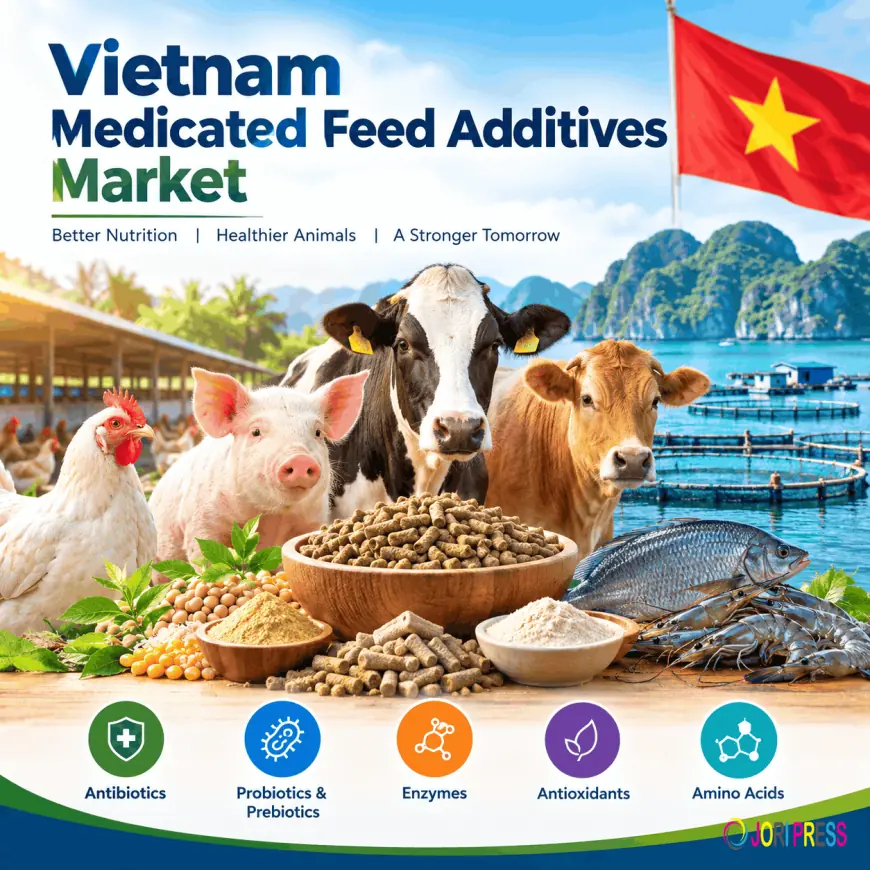
Animal health management is an important consideration for livestock and aquaculture producers seeking consistent production and better farm management. As Vietnam's agricultural sector develops, farmers are paying greater attention to disease monitoring, nutritional planning, and veterinary support. The Vietnam Medicated Feed Additives Market is influenced by these changing priorities, as feed manufacturers and suppliers explore specialized products that address animal nutrition and healthcare requirements.
Veterinary healthcare and animal nutrition are closely connected, but they serve different purposes. Nutritional additives such as probiotics, enzymes, vitamins, and minerals support dietary requirements, while veterinary medicinal products are used for specific treatment purposes under appropriate professional guidance. Understanding this distinction is important for manufacturers, distributors, and farmers selecting suitable feed-related solutions.
Why Is Veterinary Healthcare Important for Livestock Production?
Livestock producers need effective management practices to maintain animal health and support production activities. Veterinary professionals help farmers identify health concerns, recommend suitable interventions, and establish appropriate management procedures.
Several factors contribute to the importance of veterinary healthcare:
-
Disease Monitoring: Regular observation helps identify changes in animal behaviour and health.
-
Nutritional Management: Balanced feeding programmes help address the dietary requirements of different livestock categories.
-
Veterinary Guidance: Professional advice supports appropriate diagnosis and treatment decisions.
-
Farm Hygiene: Clean housing, suitable sanitation, and biosecurity measures help manage disease risks.
-
Production Management: Health monitoring can help farmers make informed decisions about feeding and farm operations.
These practices encourage greater coordination between feed suppliers, veterinarians, and livestock producers.
How Do Feed Additives Support Animal Health Management?
Feed additives are included in animal diets for different nutritional and functional purposes. Their applications depend on the ingredient, formulation, species, and production requirements.
1. Probiotics
Probiotics contain selected beneficial microorganisms and are used in certain animal nutrition formulations. They may support digestive function and help maintain microbial balance when included appropriately in feeding programmes.
2. Enzymes
Feed enzymes help break down specific components of animal feed. Their application can support nutrient availability and improve the flexibility of feed formulation.
3. Vitamins and Minerals
Vitamins and minerals contribute to essential physiological functions. Suitable supplementation can help address nutritional requirements that may not be adequately met through basic feed ingredients.
4. Organic Acids
Organic acids are used in some feed formulations for their functional properties. Their selection and application depend on feed composition, animal requirements, and product specifications.
5. Veterinary Medicinal Feed Products
Certain veterinary medicines may be administered through feed where permitted and under appropriate veterinary supervision. These products must be distinguished from ordinary nutritional additives and used according to applicable requirements.
Which Livestock Segments Require Specialized Healthcare Approaches?
Vietnam's livestock and aquaculture industries include several production categories, each with different health and nutritional considerations.
Poultry
Broiler and layer farms require structured health and nutrition programmes. Veterinary monitoring, appropriate feeding practices, hygiene, and suitable nutritional formulations can contribute to better flock management.
Swine
Pig production involves different management requirements during breeding, farrowing, weaning, and finishing. Veterinary supervision and stage-specific nutrition are important considerations for commercial farms.
Aquaculture
Fish and shrimp farming require attention to water quality, stocking conditions, feed management, and animal health monitoring. Specialized aquatic feed formulations can support the nutritional requirements of different species.
Cattle
Cattle nutrition programmes must account for digestive characteristics, age, and production objectives. Veterinary professionals and nutrition specialists can help producers coordinate feeding and health management.
How Is Disease Prevention Changing Farm Management?
Farmers increasingly need to consider prevention as part of an overall animal healthcare strategy. Preventive management involves more than selecting feed additives; it also includes suitable housing, sanitation, vaccination programmes where appropriate, biosecurity, and regular veterinary observation.
Important practices include:
-
Maintaining clean feeding and watering equipment.
-
Monitoring animals for unusual behaviour or reduced feed intake.
-
Following suitable vaccination and veterinary health programmes.
-
Managing animal movement and farm access.
-
Maintaining records of health observations and veterinary interventions.
These practices can help farmers identify potential concerns and respond through appropriate professional guidance.
What Challenges Affect Veterinary Healthcare Adoption?
Despite growing awareness, several challenges can affect the adoption of structured animal healthcare practices.
Cost Considerations: Veterinary services, laboratory testing, quality feed products, and farm improvements can increase operating expenses.
Access to Expertise: Some producers may have limited access to qualified veterinary professionals and technical support.
Awareness Gaps: Farmers may require additional guidance to understand product differences and appropriate applications.
Responsible Medicine Use: Veterinary medicinal products require careful selection and use according to applicable rules and professional advice.
Farm Infrastructure: Smaller farms may face limitations in sanitation facilities, monitoring equipment, and storage arrangements.
Addressing these challenges requires cooperation among farmers, veterinarians, feed manufacturers, distributors, and agricultural institutions.
How Can Feed Manufacturers Support Better Healthcare Practices?
Manufacturers can contribute by developing suitable nutritional products and providing clear product information. Their responsibilities extend beyond product availability to quality assurance, customer education, and responsible communication.
Businesses can focus on:
-
Maintaining consistent ingredient and finished-product quality.
-
Developing formulations for specific animal nutrition requirements.
-
Providing clear instructions for storage and application.
-
Working with qualified veterinary and nutrition professionals.
-
Supporting farmer education through technical programmes.
-
Following relevant product registration, safety, and labeling requirements.
For veterinary medicinal products, manufacturers and suppliers should ensure that product information clearly communicates permitted uses and applicable restrictions.
What Is the Future Outlook for Veterinary Healthcare?
Veterinary healthcare is expected to remain an important consideration for Vietnam's livestock and aquaculture industries. Greater attention to animal welfare, farm biosecurity, nutritional management, and responsible veterinary practices may influence demand for specialized feed-related products.
Developments in microbial ingredients, enzyme formulations, laboratory testing, and digital farm monitoring could create further opportunities for the industry. Businesses that combine reliable product quality with technical support and responsible practices may be better positioned to serve producers.
Conclusion
Veterinary healthcare is an important influence on the Vietnam Medicated Feed Additives Market. Animal health monitoring, specialized nutrition, responsible product use, and professional veterinary guidance are shaping the requirements of modern livestock and aquaculture operations. As producers strengthen their farm management practices, manufacturers and suppliers that provide suitable formulations, dependable quality, and clear technical information can support the industry's development.
Who We Are
About 6Wresearch: 6Wresearch is a commercial strategy and growth advisory firm founded in 2011 and headquartered in New Delhi, India, with partners across Southeast Asia and the Middle East & Africa. The firm has delivered over 20,000 commercial engagements for over 2,000 organizations, including Fortune 500 companies, government agencies, and multilateral institutions such as the World Bank and the Asian Development Bank. Backed by proprietary market research and advanced analytics, 6Wresearch combines sector expertise with data-driven intelligence to help organizations navigate market complexity and drive sustainable growth. These capabilities explain why organizations trust 6Wresearch Global Market Research & Consulting Firm for reliable commercial insights and confident decision-making.
Our Proprietary Platform: 6W Export GTM
6W Export GTM is 6Wresearch's proprietary trade intelligence and go-to-market platform, built on UN Comtrade data and enhanced with 6Wresearch's in-house analytical and simulation models, including system dynamics-based forecasting. Unlike broad, sector-level market sizing tools, 6W Export GTM operates at the individual product level down to specific HS codes and micro-segments to identify precise, actionable export opportunities by country and product pair, including markets where trade currently does not exist. This granular, simulation-driven approach allows 6W Export GTM to surface opportunities that sector-wide analysis typically misses, positioning it among a small number of platforms globally offering this depth of product-and-country-specific export intelligence.
What's Your Reaction?
 Like
0
 Dislike
0
 Love
0
 Funny
0
 Angry
0
 Sad
0
 Wow
0