





































How Do Mobile Application Developers Improve App Performance and Security?
Partner with Code Regime, a top mobile app development company in India, to build innovative Android and iOS apps that boost your business.

Introduction
A mobile app must do more than offer useful features. It should load quickly, respond smoothly, and protect user information. Slow screens, crashes, or weak data protection can frustrate customers and damage a business’s reputation. Skilled Mobile Application Developers make performance and security priorities from planning through maintenance.
Early planning also helps teams define measurable goals, such as screen load time, crash rates, and acceptable response times. A threat assessment can identify valuable data, likely attack paths, and controls needed before development begins. These steps make quality easier to evaluate and improve over time.
1. Choosing the Right Technology
Technology affects an app’s speed, stability, and ability to grow. Developers assess features, audience, budget, and target devices before choosing a framework. Swift can support iOS-specific experiences, while Flutter and React Native help teams build for multiple platforms with shared code. The right choice depends on project needs, not trends.
2. Writing Efficient Code
Clean, well-structured code helps applications run reliably and makes updates easier. Developers reduce unnecessary operations and ensure heavy tasks do not block the interface. They review third-party libraries and dependencies to avoid components that slow the app or introduce risks. Efficient coding improves responsiveness and maintainability.
3. Optimizing Speed and Resource Use
Users expect screens to open quickly and actions to respond without delay. Developers optimize images, reduce unnecessary network requests, and use caching where appropriate. They improve database queries and load content in stages, so users need not wait for every element. Monitoring memory, battery consumption, and processor use helps identify features that cause lag or excessive resource usage.
4. Protecting User Data
Security starts with collecting only information an app genuinely needs. Developers use encrypted connections to protect data in transit and suitable encryption for sensitive stored information. They avoid hardcoding passwords, secret keys, or access tokens in application code. Secure authentication, careful session handling, and multi-factor verification where suitable reduce unauthorized access. Permissions should be requested only when necessary and explained clearly.
5. Securing APIs and Access Controls
Mobile apps often communicate with servers to retrieve accounts, process orders, or store information. Developers protect these connections through secure API design, server-side validation, rate limits, and careful error handling. Authorization checks must happen on the server, not just inside the app, because a modified client should not access another user’s data. Role-based permissions ensure each account can use only its permitted features and records.
6. Testing Before and After Launch
Testing helps teams find defects before customers encounter them. Developers and quality assurance specialists test different devices, operating system versions, network conditions, and user journeys. Performance tests reveal slow responses or failures under heavy traffic, while security reviews uncover weak authentication, unsafe storage, and outdated dependencies. Automated tests and code reviews help catch problems when features change.
7. Monitoring and Maintaining the App
Launching an app is not the end of the work. Real-world usage can reveal crashes, unusual traffic, compatibility issues, or bottlenecks. Monitoring tools, crash reports, and user feedback help teams prioritize fixes. Regular updates address vulnerabilities, operating system changes, and business requirements. A maintenance plan keeps the app dependable as its audience grows.
Conclusion
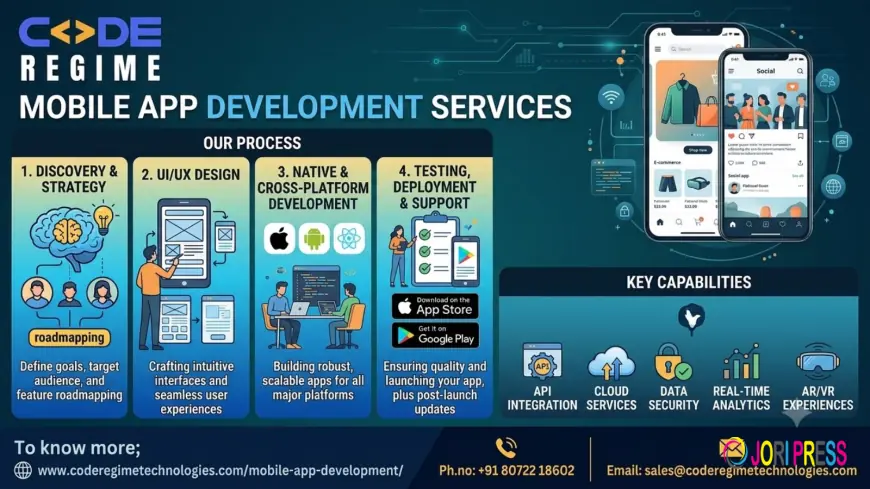
Mobile Application Developers improve performance and security through suitable technology, efficient code, optimized resource use, secure data handling, thorough testing, and maintenance. Businesses should treat these areas as essential requirements, not last-minute additions. Code Regime Technologies provides mobile app development services using Flutter, React Native, and Swift, with testing and technical support throughout development. An experienced team can help businesses deliver smoother app experiences and protect customer trust.
What's Your Reaction?
 Like
0
 Dislike
0
 Love
0
 Funny
0
 Angry
0
 Sad
0
 Wow
0