





































How Do I Figure Out My Target Audience?
Struggling to define your target audience? Here's a practical process — from studying existing customers to using surveys and Facebook targeted ads — to find and validate your real audience before spending your marketing budget.
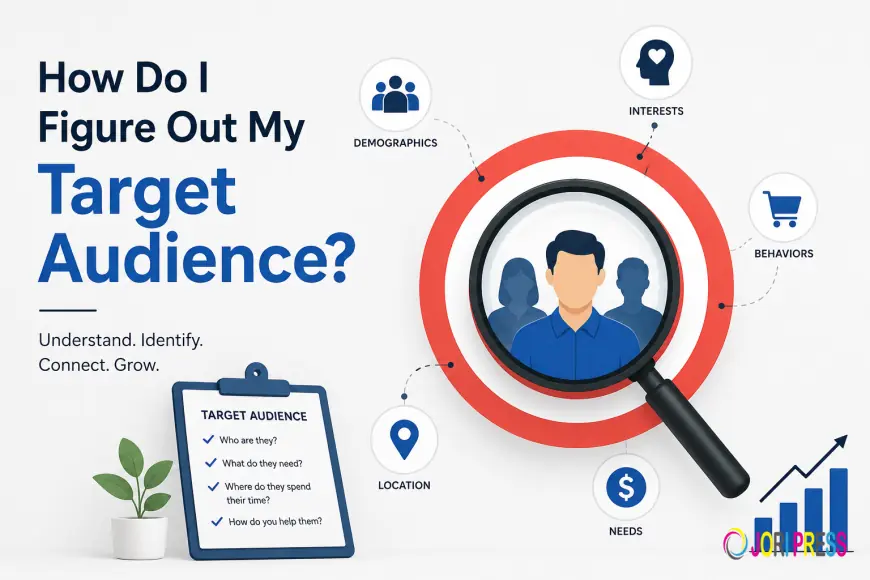
This is one of the first questions I ask every founder I work with, and it's surprising how often the answer is vague — "everyone who needs our product" or "small businesses" without any real specificity. If you can't describe your target audience precisely, no marketing channel will perform the way it should, no matter how much you spend.
Here's how I actually walk through this process.
Start With Who's Already Buying, Not Who You Imagine Buying
The biggest mistake I see is founders defining their target audience based on who they think should want their product, instead of looking at who's already converting. If you have even a handful of paying customers, study them first — their age, profession, problem they were solving, how they found you. Your existing customers are the most honest data you have.
If you're pre-launch with no customers yet, look at competitors' reviews and customer complaints. What people love or hate about similar products tells you a lot about the real audience and their actual priorities.
Ask Directly Instead of Guessing
This is where an online survey becomes genuinely useful. A short, well-designed survey sent to your existing email list, social followers, or even paid online surveys distributed through a research platform can surface patterns you'd never guess on your own — what problem they actually care about most, what almost stopped them from buying, what alternatives they considered.
Keep it short (5-7 questions max) and ask about problems and behavior, not just demographics. "What almost stopped you from buying?" tells you more than "What's your age range?"
Test Your Assumptions With Small, Cheap Experiments
Once you have a hypothesis about your target audience, don't just commit a big budget based on a guess. Facebook targeted ads are useful here specifically because you can test narrow audience segments cheaply — run small budgets against 3-4 different audience hypotheses and see which one actually engages and converts, before scaling spend into any single segment.
This turns audience definition from a one-time guessing exercise into an ongoing, data-backed process. The segment that performs best in a small test is usually a much better bet than the one that "feels right" based on assumptions.
Common Mistakes That Waste Time and Budget
Defining audience too broadly. "Women aged 25-45" isn't a target audience, it's a demographic bucket. A real target audience includes their specific problem, their buying triggers, and where they spend time online.
Ignoring behavior in favor of demographics. Two people with identical age, income, and location can have completely different buying behavior. Psychographics — what they value, what frustrates them, what they've already tried — usually predict conversion better than demographics alone.
Never revisiting the definition. Your audience can shift as your product evolves or as you expand into new markets. What worked at launch may not be who's actually buying two years later.
When It's Worth Bringing In Outside Help
I'll be honest — figuring this out alone, without outside perspective, often takes founders much longer than it needs to, mostly because it's hard to be objective about your own product and your own assumptions about who wants it. This is exactly the kind of problem a growth consultant helps compress — bringing structured audience research, survey design, and ad-testing frameworks that would otherwise take months of trial and error to figure out alone.
If you're working through this yourself and want a second opinion on your target audience definition or your testing approach, you can find more of my work and reach out through ashishsinghsomvanshi.com — I work with founders on exactly this kind of audience and growth strategy work.
The Bottom Line
Your target audience isn't something you decide once in a brainstorming session — it's something you discover through data, refine through direct feedback like surveys, and validate through small, cheap tests like targeted ads before committing real budget. The businesses that get this right treat audience definition as an ongoing practice, not a one-time checkbox.
What's Your Reaction?
 Like
0
Like
0
 Dislike
0
Dislike
0
 Love
0
Love
0
 Funny
0
Funny
0
 Angry
0
Angry
0
 Sad
0
Sad
0
 Wow
0
Wow
0