



































How Do Heavy-Lift Cranes Improve Wind Turbine Erection?
Discover how heavy-lift cranes support wind turbine erection through crane selection, project logistics, and safe, efficient installation.
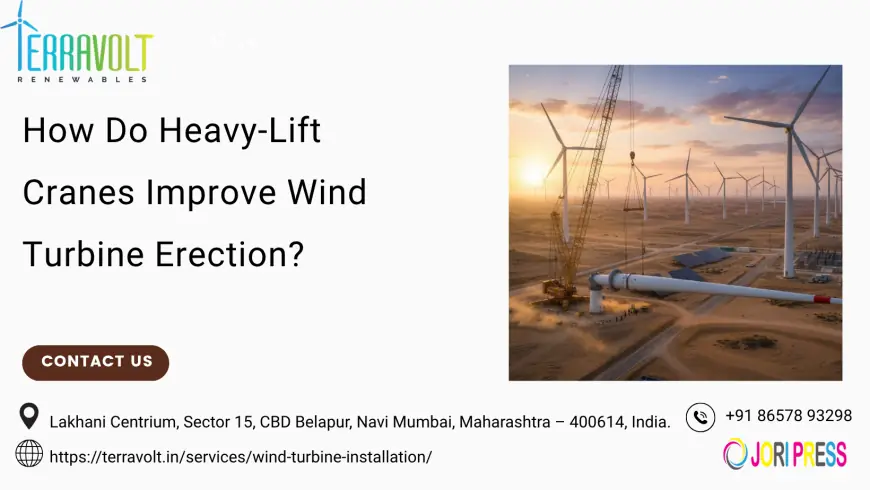
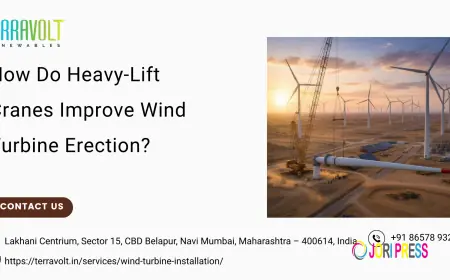
Wind energy projects involve the installation of large and heavy components, including tower sections, nacelles, hubs, and rotor blades. Lifting these components to significant heights requires specialised equipment, experienced operators, and carefully planned lifting operations. Heavy-lift cranes play an important role in wind turbine installation by supporting the safe positioning and assembly of turbine components.
The selection of suitable cranes depends on turbine specifications, component weight, hub height, site conditions, lifting radius, and project requirements. Proper crane planning also requires coordination between wind EPC contractors, transportation teams, installation specialists, and site supervisors.
Why Are Heavy-Lift Cranes Important for Wind Turbine Erection?
Wind turbines are installed in multiple stages, and each stage involves lifting components with different dimensions and weights. Standard lifting equipment may not have the capacity or reach required for utility-scale turbines.
Heavy-lift cranes provide the lifting capacity and boom configurations needed to handle tower sections, nacelles, and rotor assemblies. Their use helps installation teams position components according to approved engineering and lifting plans.
During wind turbine erection, crane selection must consider:
-
Turbine capacity and hub height
-
Weight and dimensions of components
-
Required lifting radius and hook height
-
Ground conditions and crane platform strength
-
Wind speed and weather conditions
-
Equipment configuration and mobilisation requirements
These factors help determine the appropriate crane for each installation activity.
How Do Crane Packages Support Wind Turbine Installation?
Crane packages involve planning and arranging the lifting equipment and related resources required for turbine erection. Depending on project requirements, a package may include main cranes, assist cranes, rigging equipment, mobilisation, operators, and lifting supervision.
Before mobilisation, engineering teams review turbine specifications and lifting requirements. They assess site accessibility, crane assembly areas, working platforms, and equipment positioning.
During wind turbine installation in India, site conditions can vary between flat terrain, hilly regions, and locations with restricted access. Crane configuration must therefore match the actual site and turbine requirements.
Proper planning helps reduce equipment waiting time and supports an organised erection schedule.
What Should Contractors Check Before Crane Mobilisation?
Crane mobilisation requires preparation before heavy-lifting operations begin. Project teams must confirm that the site can accommodate the selected crane and its supporting equipment.
Important checks include:
-
Access roads and transportation routes
-
Ground-bearing capacity and soil stability
-
Crane platform dimensions and preparation
-
Equipment inspection and certification
-
Lifting plans and risk assessments
-
Operator and rigging team qualifications
-
Weather monitoring arrangements
Wind EPC contractors coordinate these requirements with civil contractors, crane providers, turbine manufacturers, and installation teams.
How Do Wind EPC Companies in India Coordinate Crane Operations?
Wind EPC companies in India coordinate engineering, procurement, and construction activities throughout wind projects. Crane operations must align with foundation completion, component transportation, site readiness, and turbine installation schedules.
Their coordination responsibilities may include equipment planning, crane availability, manpower scheduling, lifting sequence reviews, and progress monitoring.
A reliable crane supplier near me should be evaluated based on equipment capacity, technical suitability, operator experience, safety procedures, and availability. The nearest supplier is not necessarily the best choice for a specific turbine project.
Clear communication between crane operators, lifting supervisors, engineers, and installation teams helps maintain safe working conditions.
How Does Project Logistics Support Heavy-Lift Crane Operations?
Crane operations depend on the timely delivery of turbine components and lifting equipment. Project logistics connects transportation planning with site readiness and erection schedules.
Turbine blades, tower sections, and nacelles require specialised vehicles. Blade trailers are used to transport long turbine blades, while other specialised vehicles carry tower sections and heavy components.
Before delivery, transportation teams assess road width, bridge capacity, turning radius, gradients, and overhead restrictions.
Coordinating WTG transportation with crane mobilisation ensures that components arrive when the lifting area and installation teams are ready. This reduces unnecessary waiting time and helps maintain project schedules.
What Is the Role of Electrical BOP and EBOP After Turbine Erection?
Crane operations support mechanical installation, but a wind turbine also requires electrical infrastructure before it can generate and deliver power.
Electrical BOP (Balance of Plant) includes supporting systems such as internal cables, transformers, substations, switchgear, earthing, and power evacuation infrastructure.
EBOP refers to Electrical Balance of Plant. Its activities may include cable installation, termination, electrical connections, protection system checks, inspections, and testing.
Electrical work is coordinated with mechanical installation so that the project can progress towards pre-commissioning and commissioning.
How Does Wind Farm Management Improve Crane Utilisation?
Wind farm management involves monitoring equipment availability, manpower, installation progress, safety, quality inspections, and project documentation.
For large Wind Energy Projects, turbines may be erected in phases. Planning crane movement between turbine locations, coordinating component deliveries, and scheduling lifting activities can improve equipment utilisation.
Effective coordination also helps reduce unnecessary crane mobilisation and demobilisation.
These practices contribute to efficient Green Energy Solutions and organised wind project execution.
Frequently Asked Questions
1. I want to understand: What type of crane is used for wind turbine erection?
Heavy-lift crawler cranes and other high-capacity crane configurations may be used, depending on turbine specifications, lifting height, component weight, and site conditions.
2. I want to know: Why are crane packages important for wind turbine installation?
Crane packages help organise suitable lifting equipment, operators, rigging resources, mobilisation, and lifting supervision for planned installation activities.
3. I want to find out: What should I check when choosing a crane supplier near me?
Check lifting capacity, equipment condition, operator qualifications, safety records, technical experience, and availability.
4. I want to understand: How do blade trailers support crane operations?
Blade trailers transport turbine blades to the project site and help ensure that components are available when the lifting team is ready.
5. I want to know: What affects crane selection for wind energy projects?
Turbine hub height, component weight, lifting radius, ground conditions, crane configuration, and weather restrictions influence crane selection.
Conclusion
Heavy-lift cranes are essential for installing large wind turbine components safely and efficiently. Their successful use depends on suitable equipment selection, prepared crane platforms, approved lifting plans, and coordination with transportation and installation teams.
From crane packages and project logistics to electrical BOP, EBOP, and wind farm management, every activity contributes to the successful execution of Wind Energy Projects. Careful planning and coordination among wind EPC contractors and crane specialists help maintain safety, quality, and project schedules.
What's Your Reaction?
 Like
0
 Dislike
0
 Love
0
 Funny
0
 Angry
0
 Sad
0
 Wow
0