




































How Artificial Intelligence is Revolutionizing Supply Chain Management and Business Intelligence
Artificial intelligence (AI) is transforming how companies manage their supply chains and make business decisions. By using AI technologies, businesses can improve efficiency, reduce costs, and respond faster to market changes. This post explores how AI is reshaping supply chain management and business intelligence, with practical examples and insights into the benefits it offers.


Artificial intelligence (AI) is transforming how companies manage their supply chains and make business decisions. By using AI technologies, businesses can improve efficiency, reduce costs, and respond faster to market changes. This post explores how AI is reshaping supply chain management and business intelligence, with practical examples and insights into the benefits it offers.
AI in Supply Chain Management
Supply chains involve many complex steps, from sourcing raw materials to delivering finished products. Managing these steps manually or with traditional software often leads to delays, errors, and higher costs. AI helps solve these problems by analyzing large amounts of data and making smart predictions.
Improving Demand Forecasting
One of the biggest challenges in supply chain management is predicting customer demand accurately. AI models analyze historical sales data, market trends, weather patterns, and even social media signals to forecast demand more precisely. This helps companies avoid overstocking or running out of products.
For example, a retailer using AI-powered demand forecasting can adjust inventory levels in real time, reducing waste and improving customer satisfaction. This approach is far more reliable than relying on past sales alone.
Enhancing Inventory Management
AI systems track inventory across multiple locations and predict when stock will run low. They can automatically trigger replenishment orders, ensuring shelves stay stocked without excess inventory. This reduces storage costs and minimizes the risk of stockouts.
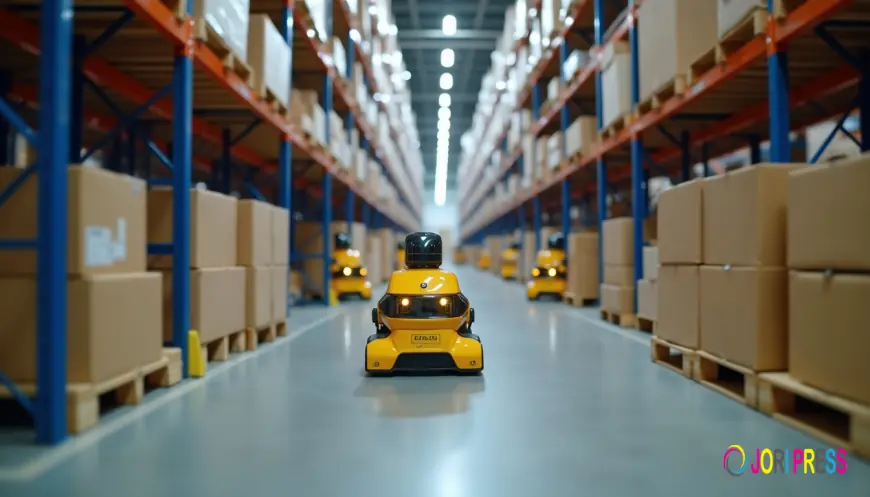
Some companies use AI to optimize warehouse layouts and automate picking processes. Robots guided by AI can navigate warehouses efficiently, speeding up order fulfillment and reducing errors.
Optimizing Transportation and Logistics
AI analyzes traffic data, weather conditions, and delivery schedules to plan the fastest and most cost-effective routes. This reduces fuel consumption and delivery times. AI can also predict potential disruptions, such as delays at customs or port congestion, allowing companies to adjust plans proactively.
By integrating artificial intelligence in supply chain operations, businesses gain greater visibility and control over their logistics networks.
AI in Business Intelligence
Business intelligence (BI) involves collecting and analyzing data to support decision-making. AI enhances BI by automating data processing and uncovering patterns that humans might miss.
Automating Data Analysis
AI tools can process vast amounts of data from sales, marketing, finance, and operations quickly. They identify trends, anomalies, and correlations without manual effort. This speeds up reporting and helps decision-makers focus on strategy rather than data crunching.
For instance, AI can detect early signs of declining sales in a product line and suggest actions to address the issue before it impacts revenue.
Enabling Predictive Insights
Beyond describing what happened, AI-powered BI predicts future outcomes. It can forecast sales, customer churn, or market shifts based on current data. These insights allow companies to plan more effectively and allocate resources wisely.
Supporting Personalized Decision-Making
AI can tailor reports and dashboards to individual users, highlighting the most relevant information. This personalization helps managers and teams make faster, more informed decisions aligned with their goals.
Practical Examples of AI Impact
- A global manufacturer reduced supply chain costs by 15% after implementing AI for demand forecasting and inventory management.
- An e-commerce company improved delivery times by 20% using AI to optimize routes and predict delays.
- A retailer increased sales by 10% by using AI-driven business intelligence to identify customer preferences and adjust marketing strategies.
These examples show how AI delivers measurable improvements across industries.
How to Get Started with AI in Supply Chain and BI
Companies interested in adopting AI should start by identifying key pain points in their supply chain or decision-making processes. Partnering with experts who specialize in AI solutions for supply chain optimization and business intelligence can accelerate implementation.
For those looking for tailored AI solutions, platforms like MinedxAI’s supply chain optimization offer tools designed to improve forecasting, inventory, and logistics. Their business intelligence AI solutions help companies turn data into actionable insights.
What's Your Reaction?
 Like
0
Like
0
 Dislike
0
Dislike
0
 Love
0
Love
0
 Funny
0
Funny
0
 Angry
0
Angry
0
 Sad
0
Sad
0
 Wow
0
Wow
0