


































Fast Track Programs: Complete Guide for Students & Professionals
Explore Fast Track programs, Fast Track Courses, and fast track degree options. Learn their benefits, flexibility, career opportunities, and how to choose the right program.
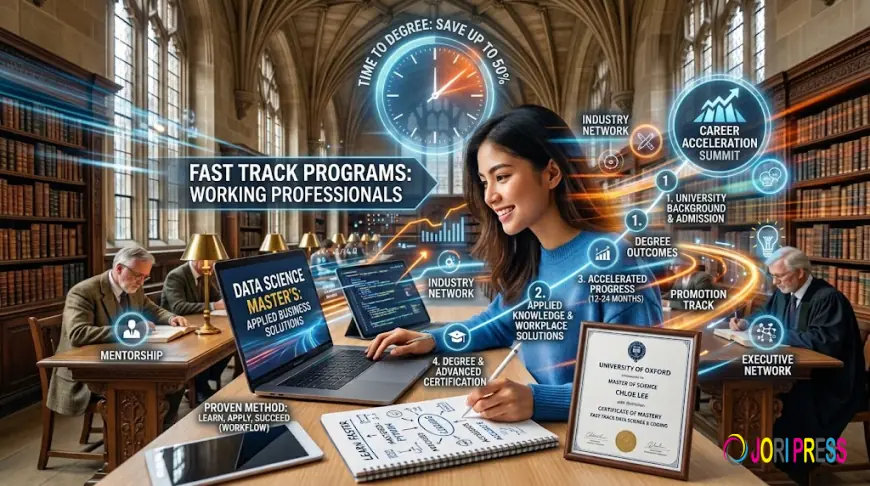
Education and professional development are changing rapidly. Students and working professionals are increasingly looking for flexible ways to gain new knowledge, develop practical skills, and move toward their career goals without spending several years in a traditional program.
This is where Fast Track programs can offer an alternative approach to learning. These accelerated programs are designed to help learners complete their studies or develop specific skills in a shorter and more focused timeframe. Depending on the institution and subject, they can range from professional training and certifications to accelerated academic programs and a fast track degree.
But what exactly are Fast Track programs, who can benefit from them, and how should you choose the right option? This guide covers the key things students and professionals should know before getting started.
What Are Fast Track Programs?
Fast Track programs are accelerated education or training options that allow students to complete learning requirements in less time than a traditional program.
The structure can vary significantly. Some programs concentrate on a particular professional skill, while others provide a broader academic curriculum. For example, you may find Fast Track Courses in areas such as business, information technology, digital marketing, project management, finance, healthcare administration, and other career-focused fields.
The goal is to provide focused learning while reducing unnecessary delays. Instead of following a conventional timeline, students may study a concentrated curriculum or use flexible scheduling to complete their education more efficiently.
However, "fast track" should not mean sacrificing quality. Before choosing a program, learners should always consider the curriculum, institution, accreditation or recognition, learning outcomes, and overall value.
Why Are Fast Track Programs Becoming Popular?
One of the biggest reasons for the growing interest in accelerated education is the changing job market.
Technology continues to influence almost every industry. Employers increasingly need people who can adapt to new tools, processes, and business practices. At the same time, professionals may need additional qualifications or skills to remain competitive.
Traditional education can be valuable, but it may not suit everyone. A working professional may not be able to leave a full-time job for several years. Similarly, a student may want to enter the workforce sooner.
Fast Track programs can provide a more concentrated learning experience for people who want to make progress within a shorter timeframe.
Benefits of Fast Track Courses
Fast Track Courses can provide several potential benefits depending on the program and learner's goals.
Faster Skill Development
A focused course can help you concentrate on the skills that matter most to your career. Instead of spending a long period covering unrelated subjects, you may be able to focus on practical knowledge that can be applied directly to your work.
Career Advancement
Learning new skills can help professionals prepare for additional responsibilities or new roles. For example, a person working in administration might take a project management course to prepare for a project coordinator or management position.
Career Change
Fast Track Courses can also support career transitions. If you want to move into a different field, an accelerated course may help you gain foundational knowledge and understand the skills required in your target industry.
Flexible Learning
Many Fast Track programs offer online, blended, part-time, evening, or weekend learning options. This flexibility can make education easier to manage alongside work or personal responsibilities.
Fast Track Programs for Students
Students who have clear career goals may find accelerated programs particularly useful.
For example, a student interested in business may choose a program focused on management, entrepreneurship, finance, or marketing. Someone interested in technology might explore software development, data analytics, cybersecurity, or cloud-related subjects.
The important thing is to choose a program based on long-term career objectives rather than simply selecting the shortest option.
Students should also research admission requirements, course duration, assessment methods, tuition fees, and whether the qualification is recognized for future employment or education.
Fast Track Programs for Working Professionals
For working professionals, time is often the biggest challenge when considering further education.
A full-time traditional program may not be realistic for someone who already has a demanding job. Fast Track programs can offer an alternative by providing concentrated learning and, in some cases, flexible study schedules.
Professionals can choose courses that complement their existing experience. For instance, a marketing professional might learn data analytics, while an IT professional might develop project management or leadership skills.
This type of targeted learning can help professionals expand their capabilities without completely stepping away from their careers.
What Is a Fast Track Degree?
A fast track degree is an accelerated degree pathway that may allow eligible students to complete a formal academic qualification faster than through a conventional program.
The availability and structure of fast track degrees vary by institution. Some may use intensive semesters, additional coursework, flexible scheduling, or other accelerated approaches.
If you are considering a fast track degree, do not focus only on the shorter completion period. Research whether the institution and qualification are properly accredited or recognized and whether the degree meets the requirements of your intended career.
You should also check whether the degree can be used for further education if you later decide to pursue postgraduate study.
How to Choose the Right Fast Track Program
Choosing the right program requires careful research.
Start by identifying your objective. Ask yourself what you want to achieve after completing the program. Are you looking for a promotion, a career change, a professional skill, or an academic qualification?
Then examine the curriculum. Look for subjects and learning outcomes that are relevant to your goals.
It is also useful to compare:
-
Course duration
-
Tuition and additional fees
-
Online or classroom learning options
-
Entry requirements
-
Assessment methods
-
Accreditation or recognition
-
Instructor experience
-
Student support
-
Career services
-
Opportunities for practical learning
Do not choose a course simply because it promises the quickest completion. A quality program should provide meaningful learning and useful skills.
Online Fast Track Programs
Online education has made accelerated learning more accessible. Many Fast Track Courses can now be completed partly or entirely online.
Online programs can be particularly useful for professionals who need flexibility. Learners can often access course materials from home and organize study time around their work schedule.
However, online learning requires self-discipline. Accelerated courses may involve intensive assignments and deadlines, so students should have a realistic plan for managing their time.
Before enrolling, check whether the program provides adequate instructor interaction, technical support, learning resources, and opportunities to ask questions.
Are Fast Track Programs Right for Everyone?
Although Fast Track programs offer advantages, they may not be suitable for every learner.
Accelerated study can require a significant commitment. Completing a large amount of material within a shorter period may feel demanding, particularly for people balancing full-time work and family responsibilities.
Some careers may also require extensive academic or practical training that cannot simply be shortened. Therefore, learners should understand the requirements of their chosen profession before deciding on an accelerated route.
The best choice depends on your personal circumstances, learning style, career goals, and available time.
Make Your Learning Investment Count
Education is an investment, so it is important to consider the long-term value of a program.
Think about what skills you will have when you finish and how those skills can be applied in the workplace. Research current job descriptions in your target industry and identify the qualifications employers commonly request.
Practical projects, case studies, internships, industry-based assignments, and career support can also add value to a program.
The objective should be more than simply completing a certificate or degree quickly. You should finish with knowledge and skills that can support your next career step.
Final Thoughts
Fast Track programs provide students and working professionals with an opportunity to pursue education and develop career-focused skills within an accelerated timeframe. From specialized Fast Track Courses to a formal fast track degree, there are options for learners with different goals and backgrounds.
However, speed should never be the only factor when choosing an educational program. Consider the quality of the curriculum, recognition, institution, cost, flexibility, career relevance, and long-term opportunities.
For students, the right program can provide a focused path toward entering the workforce. For working professionals, it can offer a practical way to develop new skills while continuing their careers.
With careful research and a clear understanding of your goals, a well-designed Fast Track program can become a valuable part of your education and career development journey.
What's Your Reaction?
 Like
0
Like
0
 Dislike
0
Dislike
0
 Love
0
Love
0
 Funny
0
Funny
0
 Angry
0
Angry
0
 Sad
0
Sad
0
 Wow
0
Wow
0