








































MoboReels-Style Drama Catalog vs Short-Video Creator Feed: Choosing the Right Content Strategy
Compare drama catalogs and short-video feeds, including content management, monetization, discovery, and growth strategies for entertainment apps.

The success of a video entertainment platform depends on more than attractive interfaces and smooth playback. Behind every engaging experience is a content management strategy that determines how videos are organized, discovered, monetized, and delivered to audiences.
Two increasingly relevant approaches are catalog-based short-drama platforms and creator-driven short-video applications.
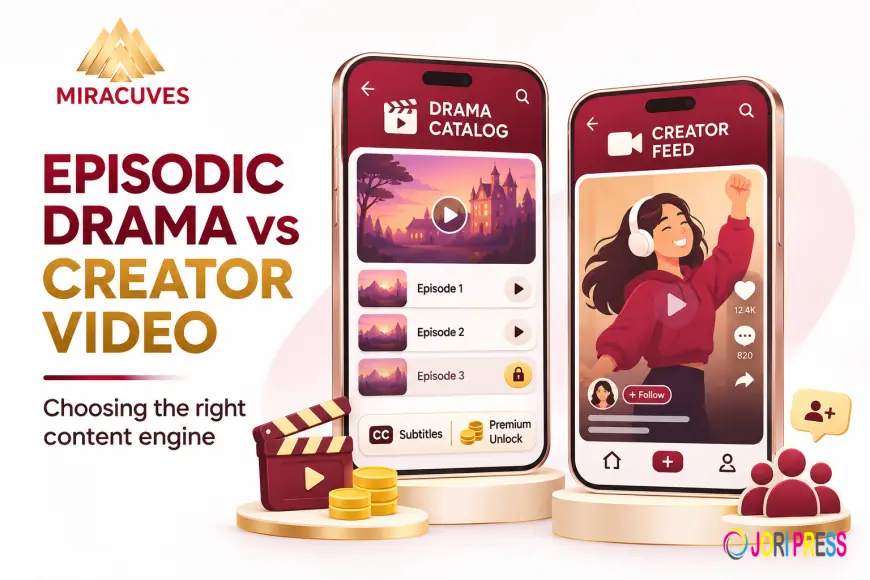
A MoboReels-style short-drama platform focuses on structured series, numbered episodes, subtitles, and premium viewing access. Meanwhile, a white-label short-video app emphasizes creator uploads, personalized feeds, social engagement, and community participation.
Both models offer commercial opportunities, but their content operations differ significantly.
Understanding these differences can help entertainment startups choose a platform architecture that supports their audience and long-term business objectives.
Why Content Architecture Matters for Video Platforms
Content architecture refers to the systems used to organize, classify, publish, and distribute videos.
In traditional streaming services, content is commonly organized into movies, series, seasons, and episodes.
Short-video applications often organize content around creators, hashtags, interests, and recommendation signals.
These structures influence everything from user navigation to analytics and monetization.
For example, a viewer watching a romantic drama expects the next episode to appear in the correct sequence.
A user browsing a creator feed expects a continuous stream of relevant videos from different publishers.
Attempting to serve both audiences through identical content workflows can create unnecessary friction.
How a MoboReels-Style Drama Catalog Works
A MoboReels-style platform uses a structured content library designed around serialized entertainment.
The platform operator manages the relationship between genres, titles, episodes, and premium viewing rules.
Series and Episode Organization
Each drama has a dedicated title containing its episodes, artwork, descriptions, and availability settings.
Episodes are arranged sequentially so viewers can follow the narrative without confusion.
This approach is particularly useful for publishers managing multiple serialized productions.
Episode Reordering
Drama publishers sometimes need to modify episode sequences after publication.
A catalog management system can provide tools for reordering episodes while maintaining consistent numbering and access rules.
Proper handling is important because unexpected changes could interrupt playback or affect previously purchased content.
Subtitle Management
International distribution often requires subtitles in multiple languages.
Attaching subtitle files directly to specific episodes reduces the risk of displaying incorrect captions.
Supported subtitle formats may include SRT and VTT, depending on the implementation.
These capabilities form part of the catalog-focused approach described on Miracuves' MoboReels solution page.
How Creator-Driven Short-Video Feeds Work
Creator-focused applications operate through a different publishing structure.
Instead of relying primarily on a centrally managed drama catalog, they allow participating creators to produce and distribute videos.
Creator Publishing Tools
Creators need accessible tools for recording, uploading, editing, and publishing content.
Depending on the platform, these tools may include filters, audio libraries, trimming, captions, and drafts.
A streamlined publishing experience can reduce barriers to content creation.
Personalized Content Discovery
Many short-video applications rely on recommendation systems to organize feeds.
These systems may consider engagement signals, viewing preferences, content categories, and creator relationships.
The objective is to help viewers discover relevant videos without requiring them to search manually.
Social Interaction
Likes, comments, shares, follows, and video responses encourage participation.
These interactions can strengthen creator communities and provide useful feedback about content preferences.
However, increased engagement also creates moderation and trust requirements.
Catalog Management vs Algorithmic Discovery
The central difference between these models is how viewers find content.
In a catalog-based drama platform, operators typically control how titles appear across sections such as trending dramas, new releases, genres, and promotional collections.
This gives publishers greater editorial control over content visibility.
A creator-led feed often uses behavioral recommendations to determine which videos appear next.
This allows discovery to change dynamically according to user activity.
Neither method is universally better.
Editorial organization works well when viewers want to locate specific stories.
Personalized discovery is useful when audiences prefer browsing different creators and subjects.
Founders should choose based on how their target audience expects to consume entertainment.
Monetization: Episode Unlocks vs Creator Revenue
Both models support paid entertainment, but their revenue mechanisms differ.
Drama-Based Monetization
Short-drama platforms commonly use:
-
Free introductory episodes.
-
Coin-based premium episode unlocking.
-
VIP memberships.
-
Rewarded advertisements.
-
Promotional viewing rewards.
Each paid interaction is connected to content access.
For instance, viewers may watch several episodes before deciding whether to purchase additional installments.
Creator-Based Monetization
Creator platforms may generate revenue through advertising, virtual gifts, subscriptions, and commercial partnerships.
These approaches depend on creator participation and audience engagement.
For example, an established creator might offer exclusive videos or receive payments through an approved gifting system.
Founders should consider payment processing costs, refund policies, and revenue-sharing obligations before selecting a monetization model.
The Role of Content Rights and Regional Availability
Video distribution businesses must understand which content they are legally permitted to publish.
Drama platforms often distribute professionally produced or licensed stories.
Licensing agreements may restrict where specific titles can be viewed.
Region-based catalog controls help operators manage these restrictions.
Creator platforms face different challenges, including unauthorized music, copyrighted footage, impersonation, and user-generated content violations.
They require reporting mechanisms, takedown workflows, and clear publishing policies.
Content rights management should be part of the platform's operational design rather than an afterthought.
Analytics That Matter for Each Model
Analytics allow entertainment businesses to evaluate whether their content strategy is producing meaningful results.
For drama catalogs, important indicators include episode completion rates, continuation rates, premium unlock conversion, and revenue per series.
These measurements help operators identify which stories attract paying audiences.
Creator platforms may prioritize creator retention, repeat viewing, meaningful interactions, content discovery performance, and advertising effectiveness.
Comparing these metrics without considering the underlying business model can lead to poor decisions.
A highly engaging creator video may generate substantial viewing activity without producing direct purchases.
Meanwhile, a short-drama episode may generate fewer total views but stronger paid continuation.
Technical Requirements for Sustainable Growth
Both models depend on reliable video infrastructure.
Essential components include secure media storage, video playback, account management, administrative controls, and performance monitoring.
However, different content structures create additional technical requirements.
Drama platforms need dependable episode ordering, subtitle association, access entitlements, and coin transaction records.
Creator platforms require scalable upload workflows, content processing, recommendation capabilities, and moderation systems.
For higher traffic volumes, businesses may also need adaptive streaming, content delivery networks, and additional security controls.
These capabilities should be evaluated individually rather than assumed to be included in every ready-made application.
Should Startups Combine Both Models?
Combining professionally produced drama catalogs with creator-driven content can create additional discovery opportunities.
For example, creators could publish drama reactions, character discussions, and promotional clips that direct viewers toward complete series.
However, launching both models simultaneously introduces additional technical, financial, and operational complexity.
A smaller startup may benefit from validating one content experience first.
Once the platform demonstrates consistent retention and sustainable economics, the business can evaluate additional creator or drama-focused features.
This approach reduces the risk of investing in capabilities that audiences do not meaningfully use.
How White-Label Platforms Support Content Businesses
White-label solutions can provide a starting point for entertainment businesses that want to avoid developing every software component independently.
Miracuves offers solutions addressing both structured short-drama catalogs and creator-focused short-video applications.
The appropriate choice depends on the startup's publishing model, monetization strategy, and operational needs.
Before adopting a solution, founders should evaluate source-code access, infrastructure requirements, payment integrations, content moderation, security, and customization responsibilities.
Technology should simplify the execution of a clearly defined entertainment strategy.
Conclusion
MoboReels-style drama catalogs and creator-driven short-video platforms represent two distinct approaches to digital entertainment.
Drama catalogs prioritize structured storytelling, episode management, content access, and series-level monetization.
Creator-focused platforms emphasize publishing freedom, social engagement, personalized discovery, and community growth.
Both approaches can support sustainable businesses when aligned with audience expectations and realistic operational capabilities.
The most effective strategy is to build around how audiences discover, consume, and value content—not simply around the features offered by competing applications.
What's Your Reaction?
 Like
0
 Dislike
0
 Love
0
 Funny
0
 Angry
0
 Sad
0
 Wow
0