































Consent for Operation (CFO): Complete Process, Documents, Fees & Compliance Guide
Learn the complete Consent for Operation (CFO) process, required documents, fees, and compliance requirements for industries and businesses to operate legally and meet pollution control regulations.
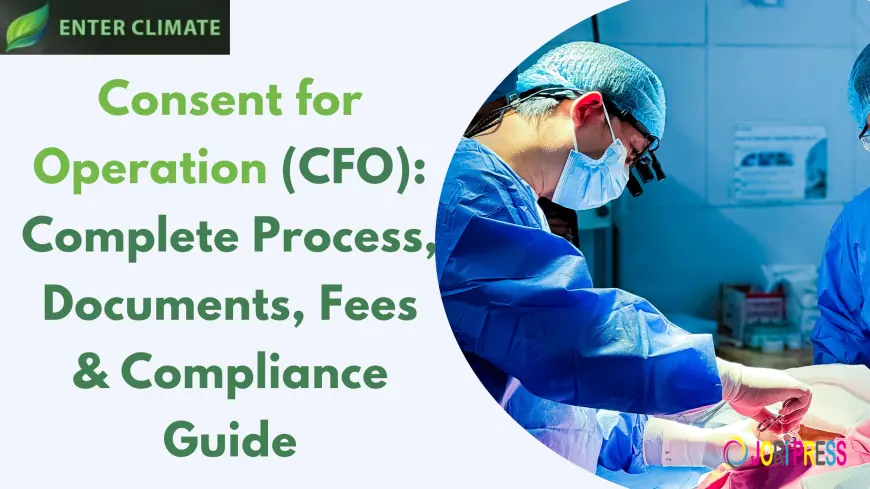
Starting a factory, manufacturing unit, warehouse, or any industrial business in India requires following environmental rules. One of the most important approvals is the Consent for Operation (CFO). Without this permission, a business may face penalties, legal action, or even closure.
What is Consent for Operation (CFO)?
Consent for Operation (CFO) is a permission granted by the State Pollution Control Board (SPCB) or Pollution Control Committee (PCC) that allows an industry to start its commercial operations.
Before receiving CFO, a business must first obtain Consent for Establishment (CFE). CFE allows the business to set up the project, while CFO allows it to operate after installation and completion of pollution control measures.
In simple terms:
-
Consent for Establishment (CFE) = Permission to build and set up the industry.
-
Consent for Operation (CFO) = Permission to start running the industry.
Why is Consent for Operation Important?
The government wants industries to operate without harming the environment. CFO ensures that the company has installed proper pollution control systems and follows environmental laws.
Benefits of obtaining CFO include:
-
Legal operation of the business
-
Avoidance of penalties and notices
-
Better environmental compliance
-
Improved business reputation
-
Easier approvals from authorities and financial institutions
Who Needs Consent for Operation?
Many industries and businesses require CFO, such as:
-
Manufacturing units
-
Food processing industries
-
Chemical industries
-
Textile factories
-
Packaging units
-
Warehouses
-
Recycling facilities
-
Engineering industries
The requirement depends on the pollution category and nature of the business.
Documents Required for CFO
The following documents are generally required:
-
Consent for Establishment (CFE) copy
-
PAN card of the company
-
Company incorporation documents
-
Site layout plan
-
Manufacturing process flow chart
-
Details of machinery installed
-
Water and electricity bills
-
Pollution control equipment details
-
Air and water pollution management plan
-
Environmental compliance reports
-
Production capacity details
-
Authorization letter, if applicable
Different states may ask for additional documents.
Process to Obtain Consent for Operation
Step 1: Prepare Required Documents
Collect all technical, legal, and environmental documents related to the project.
Step 2: Online Application Submission
Submit the CFO application through the State Pollution Control Board portal.
Step 3: Payment of Applicable Fees
The fee depends on the industry category, investment amount, and state regulations.
Step 4: Inspection by Authorities
The Pollution Control Board may inspect the site to verify compliance and pollution control measures.
Step 5: Approval and Certificate Issuance
After successful verification, the authority issues the Consent for Operation certificate.
Consent for Operation Fees
The CFO fee varies from state to state. Common factors affecting the fee include:
-
Industry category (Red, Orange, Green, White)
-
Capital investment
-
Production capacity
-
Location of the unit
-
Type of manufacturing activity
Businesses should check the latest fee structure with the concerned Pollution Control Board.
Relation Between CFO and CPCB Approvals
The Central Pollution Control Board (CPCB) is the national authority responsible for environmental pollution control in India.
While CFO is generally issued by State Pollution Control Boards, businesses must comply with guidelines issued under various CPCB Approvals and environmental regulations.
Industries handling waste, emissions, hazardous materials, or recycling activities may need additional approvals under CPCB rules.
CPCB Certification and Environmental Compliance
Many industries also require specific CPCB Certification or registration depending on their activities.
Examples include:
-
EPR Registration
-
Plastic Waste Management Registration
-
Battery Waste Management Registration
-
Hazardous Waste Authorization
-
E-Waste Registration
These certifications help businesses comply with environmental regulations and demonstrate responsible operations.
Common Reasons for CFO Rejection
Applications may be rejected due to:
-
Incomplete documentation
-
Incorrect information
-
Missing pollution control equipment
-
Non-compliance with environmental norms
-
Failure during site inspection
Proper planning and expert guidance can help avoid these issues.
Conclusion
Obtaining Consent for Operation (CFO) is a crucial step for running an industrial business legally in India. Before applying for CFO, businesses must secure Consent for Establishment (CFE) and ensure compliance with applicable environmental laws.
Following the requirements related to CPCB Approvals, CPCB Certification, pollution control measures, and documentation helps industries operate smoothly while protecting the environment. Proper compliance not only prevents legal problems but also builds trust with customers, investors, and government authorities.
About Enterclimate
Enterclimate is a leading environmental compliance and business consulting platform that helps organizations obtain regulatory approvals, environmental registrations, licenses, certifications, and sustainability-related compliance services across India. The company supports businesses in navigating complex environmental regulations through expert guidance and end-to-end compliance solutions.
Author Profile
Upendra Sharma is an Environmental Compliance Consultant with extensive experience in environmental approvals, pollution control regulations, sustainability compliance, and industrial licensing across India. He has assisted numerous businesses in obtaining Consent for Establishment (CFE), Consent for Operation (CFO), CPCB registrations, EPR authorizations, waste management approvals, and other regulatory certifications. His practical approach helps industries achieve environmental compliance efficiently while minimizing operational risks.
What's Your Reaction?
 Like
0
Like
0
 Dislike
0
Dislike
0
 Love
0
Love
0
 Funny
0
Funny
0
 Angry
0
Angry
0
 Sad
0
Sad
0
 Wow
0
Wow
0