










































Dressing the Tommy: A Guide to the British World War 1 Uniform
Discover the history, design, and key components of the classic British World War 1 uniform. Learn how Replicamilitary brings history to life with museum-grade reproductions for reenactors and collectors.
When the British Expeditionary Force crossed the English Channel in August 1914, they marched into history wearing what was arguably the most practical field gear of any army at the time. Unlike the French, who initially marched into battle in bright blue jackets and vibrant red trousers, the British soldier—affectionately known as the "Tommy"—was outfitted from head to toe in drab, utilitarian khaki.
Today, whether you are a dedicated historical reenactor, a theater production costume designer, or a passionate military history collector, finding an authentic, historically accurate british world war 1 uniform can be a challenge. That is where high-quality reproduction specialists like Replicamilitary come into play, meticulously recreating these iconic garments to museum standards.
Let’s break down the core components that made up the iconic British service dress during the Great War.
1. The Service Dress (SD) Tunic
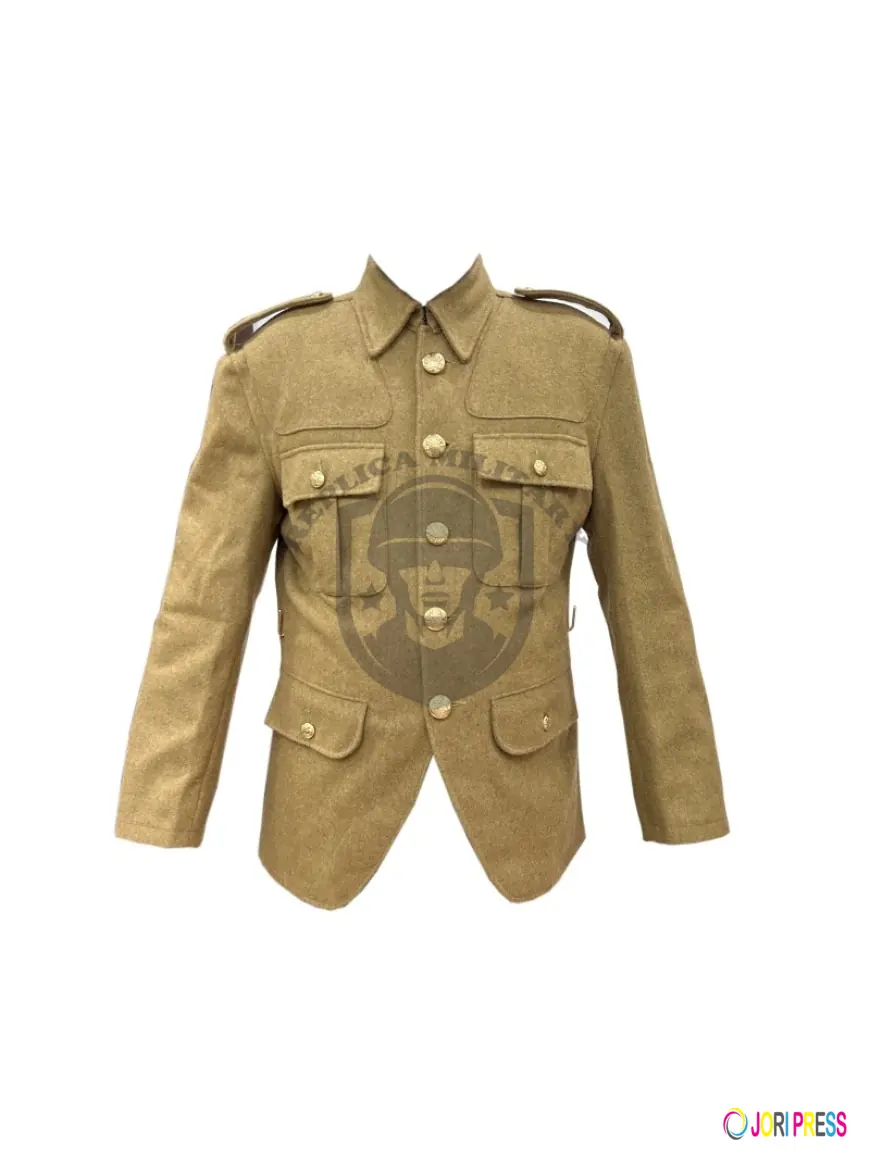
The backbone of the british world war 1 uniform was the Pattern 1902 Service Dress tunic. Made from thick, heavy khaki serge wool, this jacket was designed to withstand the brutal dampness and chill of European trenches.
Key features included:
-
A stand-and-fall collar.
-
Four large pleated pockets with button-down flaps to store rations, ammunition, and personal items.
-
Distinctive brass General Service buttons featuring the royal coat of arms.
Did You Know? The wool was heavily oiled during production, which provided a natural, much-needed layer of water resistance during torrential downpours on the Western Front.
2. Service Dress Trousers & Puttees
Matching the tunic, the trousers were made of the same heavy serge wool. They featured a high-waisted design meant to be worn with braces (suspenders).
Instead of tall leather boots, which were expensive and difficult to manufacture in mass quantities, the British Army utilized puttees. Puttees were long strips of wool cloth wrapped tightly around the lower leg from the ankle to just below the knee. They provided crucial ankle support, kept rocks and mud out of the boots, and helped keep the lower legs warm and dry in flooded trenches.
3. The 1908 Pattern Web Infantry Equipment
While continental armies favored heavy leather load-bearing gear, the British Army revolutionized field equipment by introducing woven cotton webbing. The P08 Webbing system was a masterpiece of engineering. It consisted of a waist belt, shoulder straps, ammunition pouches capable of holding 150 rounds for the Lee-Enfield rifle, a bayonet frog, an entrenching tool, a water bottle, and a large haversack. It was lighter than leather, didn't crack when wet, and distributed weight evenly across the soldier's torso.
4. Headgear: From Soft Cap to Brodie Helmet
Early in the war, British soldiers wore the 1905 Pattern Service Dress cap—a soft, peaked wool hat that offered zero protection against shrapnel. By 1915, the terrifying reality of industrial artillery fire forced a change.
Enter the Brodie Helmet (or "Steel Helmet, Pattern 1915"). Recognizable by its wide, shallow brim, it was designed specifically to protect the wearer's head and shoulders from deadly shrapnel raining down from above.
Bringing History to Life with Replicamilitary
Owning an original piece of Great War history is becoming increasingly rare and fragile. For those looking to feel the weight of history firsthand, modern reproductions are the ideal path forward.
Replicamilitary specializes in crafting highly accurate, ruggedly durable reproductions of the british world war 1 uniform. By sourcing the correct weight of khaki wool serge, replicating the exact weave of the 1908 pattern webbing, and ensuring historical accuracy down to the stitching patterns and brass hardware, Replicamilitary provides reenactors and history enthusiasts with gear they can rely on.
When you strap on a historically accurate uniform, you aren't just wearing clothes—you are stepping into the shoes of the generation that endured the crucible of the Great War
What's Your Reaction?
 Like
1
Like
1
 Dislike
0
Dislike
0
 Love
0
Love
0
 Funny
0
Funny
0
 Angry
0
Angry
0
 Sad
0
Sad
0
 Wow
0
Wow
0