










































Cheap vs. Quality Dental Fillings in Dubai: Why Choosing the Lowest Price Can Cost You More
Compare cheap vs. high-quality tooth filling costs in Dubai. Learn about filling materials, procedure steps, risks, and long-term value at Queen’s Elite Medical in Dubai Marina.

When dealing with a cavity or a chipped tooth, your main goal is to restore your smile quickly and comfortably. However, searching for a tooth filling cost in dubai often reveals a wide variation in prices across different clinics.
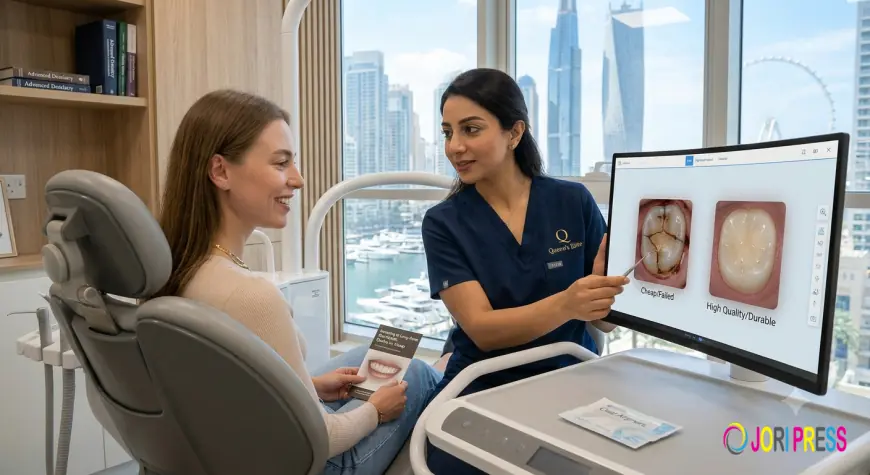
While opting for the absolute lowest price can be tempting, selecting a dental filling based solely on cheap rates can often lead to higher long-term costs due to premature failure, secondary tooth decay, or improper placement. Investing in high-quality materials and expert placement ensures your restoration lasts for years while preserving your natural tooth structure.
At Queen’s Elite Medical, located in Dubai Marina, we focus on providing durable, aesthetically pleasing restorations using advanced composite materials and precise clinical techniques.
Direct Answer: How Much Does a Tooth Filling Cost in Dubai?
On average, the tooth filling cost in dubai ranges from AED 350 to AED 1,200+ per tooth, depending on several key factors:
-
Type of Filling Material: Composite resin (tooth-colored) vs. porcelain or gold inlays/onlays.
-
Extensiveness of the Cavity: Single-surface fillings cost less than complex restorations involving multiple surfaces or deep decay.
-
Clinical Expertise & Technology: High-precision placement under magnification using modern adhesive protocols.
-
Clinic Location: Facilities operating in areas like Dubai Marina maintain international hygiene standards and advanced diagnostic equipment.
Choosing quality over a low upfront cost prevents recurring dental problems and saves money over time.
Understanding Dental Fillings
What is a Dental Filling?
A dental filling is a restorative treatment used to repair teeth damaged by decay, fractures, or wear. The procedure involves removing the decayed portion of the tooth, cleaning the affected area, and filling the space with a biocompatible material to restore the tooth’s structural integrity and function.
Main Types of Dental Filling Materials
| Material Type | Appearance | Typical Durability | Best Suited For |
| Composite Resin | Matches natural tooth color | 5 – 10+ years | Visible front teeth and moderate posterior (back) fillings |
| Glass Ionomer (GIC) | Natural shade, releases fluoride | 3 – 5 years | Non-chewing surfaces, near gum lines, or pediatric care |
| Ceramic / Porcelain (Inlays/Onlays) | Custom-stained, highly aesthetic | 10 – 15+ years | Large cavities requiring maximum strength |
| Dental Amalgam | Silver/metallic appearance | 10 – 15+ years | Back molars (less common in modern cosmetic practices) |
Cheap vs. High-Quality Fillings: The Real Difference
While a lower-cost filling might look identical to a quality one initially, the long-term performance differs significantly.
1. Material Integrity and Biocompatibility
Budget restorations frequently use low-grade resins or older bonding agents. These materials are prone to shrinking, staining, and micro-leakage over time. High-quality micro-hybrid or nano-filled composites mimic natural tooth enamel, expand and contract similarly under thermal changes, and offer superior resistance to wear.
2. Precise Cavity Preparation and Moisture Isolation
The durability of a tooth-colored filling relies heavily on isolation. If saliva or moisture contaminates the cavity during bonding, the adhesive bond fails prematurely. Quality care involves meticulous isolation (often using a rubber dam), careful etching, and layered composite application.
3. Edge Sealing and Secondary Decay Risk
Improperly contoured or poorly bonded fillings leave tiny gaps along the margin. Bacteria seep into these micro-gaps, leading to recurrent decay underneath the filling—often requiring more aggressive treatments like a root canal or crown down the road.
Benefits of Quality Dental Fillings
-
Preserves Natural Tooth Structure: Modern composite bonding techniques require minimal removal of healthy enamel.
-
Natural Aesthetics: Custom-matched to your tooth shade, rendering the restoration virtually invisible.
-
Restores Full Chewing Function: High-strength resins withstand daily biting forces.
-
Prevents Further Decay: Seals vulnerable inner tooth layers (dentin and pulp) from bacterial infection.
Limitations to Consider
-
Not for Extremely Damaged Teeth: Teeth with extensive structural damage may require a full dental crown or inlay/onlay instead of a standard filling.
-
Gradual Wear: All filling materials wear down over time and will eventually require replacement or touch-ups.
-
Staining: Composite resins can absorb stains over many years from coffee, tea, or smoking if oral hygiene is neglected.
Who is Suitable (and Unsuitable) for a Filling?
Suitable Candidates
-
Individuals with mild to moderate tooth decay (cavities).
-
Patients with small chips, minor wear, or gaps between teeth.
-
Individuals looking to replace old, worn-out amalgam fillings with tooth-colored alternatives.
Unsuitable Candidates
-
Severe Pulp Infection: If decay has reached the tooth nerve, a root canal treatment is necessary before placing a restoration.
-
Extensive Enamel Loss: Teeth missing more than half of their visible structure generally need structural support from a crown.
-
Severe Bruxism (Teeth Grinding): Patients who grind heavily may require a nightguard to protect composite restorations from cracking.
Step-by-Step Procedure
-
Clinical Assessment & X-rays: Digital radiography is used to evaluate the depth of the decay and ensure the nerve is healthy.
-
Local Anesthesia: The tooth and surrounding gum tissue are numbed for a completely comfortable, pain-free experience.
-
Decay Removal: The dentist removes the compromised tooth structure and cleans the cavity thoroughly.
-
Etching and Bonding: An acid-etch gel prepares the enamel, followed by applying a clinical-grade adhesive agent.
-
Layering the Composite: The filling material is placed in thin layers and cured (hardened) using a specialized light.
-
Shaping & Polishing: The dentist shapes the filling to match your natural bite alignment and polishes it to a smooth finish.
Expected Results and Long-Term Maintenance
Immediately After Procedure
You may experience mild temperature sensitivity for a few days following treatment. This is normal and subsides as the tooth tissue adjusts.
Maintenance Tips
-
Daily Hygiene: Brush twice daily with fluoridated toothpaste and clean between teeth with dental floss.
-
Routine Checkups: Visit your dentist every 6 months to evaluate filling margins and overall oral health.
-
Protect Your Teeth: Avoid biting down on hard objects like ice, pens, or hard candy, and wear a nightguard if you grind your teeth.
Frequently Asked Questions (FAQs)
Why does tooth filling cost vary so much in Dubai?
Prices vary based on the clinic's location, dentist's expertise, diagnostic tools used, complexity of the cavity, and the quality of the bonding materials applied.
How long does a composite tooth filling last?
With good oral hygiene and regular dental checkups, a high-quality composite filling typically lasts between 5 and 10+ years.
Is getting a tooth filling painful?
No. The procedure is performed under local anesthesia, ensuring you remain comfortable throughout the process.
Can a filling fall out?
A filling can dislodge if new decay forms underneath it, if you bite on an abnormally hard object, or if the original adhesive bond breaks down over time.
Are white fillings better than silver amalgam fillings?
Composite (white) fillings bond directly to the tooth structure, preserving more natural enamel and providing a seamless aesthetic appearance compared to metal amalgam.
What happens if I delay getting a small cavity filled?
Unchecked decay gradually spreads deeper into the dentin and pulp, turning a simple filling requirement into a complex root canal or extraction.
Can I eat immediately after a tooth filling?
Composite fillings are fully hardened before you leave the chair. However, it is advisable to wait until the local anesthesia wears off to prevent accidentally biting your cheek or tongue.
Does insurance cover tooth filling cost in Dubai?
Many standard health and dental insurance plans in Dubai cover direct restorative procedures like fillings when medically necessary to treat decay.
Visit Queen’s Elite Medical in Dubai Marina
Choosing quality dental care protects your long-term health and prevents unnecessary secondary treatments. At Queen’s Elite Medical, we prioritize patient comfort, structural precision, and natural aesthetics for every restoration.
-
Location: Dubai Marina - Dubai - United Arab Emirates
-
Phone: +971 4 399 0402
-
Email: Info@queenselitemedical.com
-
Website:
Queen's Elite Medical - Tooth Filling Dubai
What's Your Reaction?
 Like
0
 Dislike
0
 Love
0
 Funny
0
 Angry
0
 Sad
0
 Wow
0