
































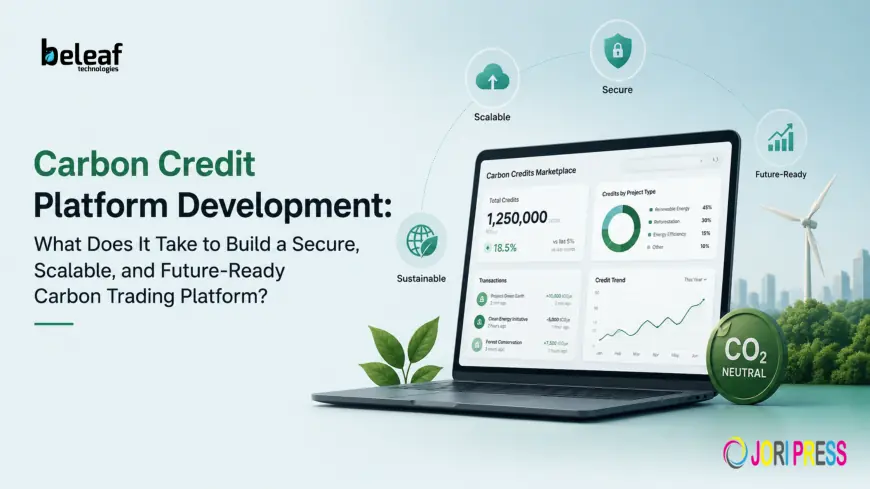
Carbon Credit Platform Development: What Does It Take to Build a Secure, Scalable, and Future-Ready Carbon Trading Platform?
Build a secure, scalable, and future-ready carbon credit platform for transparent, compliant, and efficient carbon trading.

Ask a sustainability officer what keeps them up at night, and "finding credible carbon credits" comes up more often than you'd expect. Companies have made public promises about cutting emissions, and when the numbers don't add up on their own, they turn to the carbon market to close the gap. The problem is, that market is still messy in a lot of places with scattered listings, unclear ownership, credits that get "sold" more than once. A platform that fixes even part of that mess isn't just useful software. It's the thing that lets two strangers trade something as abstract as a tonne of avoided emissions and both walk away confident it was real.
That's a harder problem than most people assume when they start building.
The Market Isn't Cooling Off
A few years ago, carbon credits were something environmental teams dealt with quietly, off to the side of the main business. That's not true anymore. Emissions targets show up in investor decks, annual reports, and sometimes even in loan terms.
Here's what's driving the shift:
-
Net-zero pledges now come with actual deadlines attached, not vague ambitions
-
Investors are quietly screening companies on their environmental follow-through
-
Regulators in several regions are tightening what counts as a legitimate offset
-
Buyers are tired of trading credits through email threads and PDFs
-
Money is still flowing into climate tech, even when other sectors slow down
None of this points to a fad. It looks a lot more like the early days of digital payments clunky now, standard infrastructure later.
Trust Has to Come Before the Code
A lot of founders start with the tech stack question. Wrong starting point. In carbon trading, the platform's real product is confidence that what someone bought was actually retired, actually verified, actually theirs.
Skip this, and it doesn't matter how clean your interface looks.
-
Know exactly who you're onboarding, not just an email and a password
-
Tie every listing back to a recognized registry, not a claim on a webpage
-
Keep transaction records that can't quietly be altered later
-
Make ownership unambiguous no gray areas, no disputes
-
Write project documentation that reads like due diligence, not a sales pitch
Features Users Actually Notice
Plenty of platforms try to launch with every feature imaginable. Most of them would've been better off nailing five things instead of attempting fifteen.
What people care about once they're actually using the thing:
-
Onboarding that doesn't feel like filling out a loan application
-
A marketplace where comparing projects takes minutes, not hours
-
Buying and selling that doesn't require a support call to figure out
-
Reports that generate themselves instead of living in someone's spreadsheet
-
Retirement tracking, so a credit can't be claimed twice by two different buyers
-
An admin view that shows your team what's actually happening, in real time
-
Notifications that keep people in the loop without flooding their inbox
Tech Choices That Won't Bite You Later
Some platforms work great with fifty users and fall apart at five thousand. That's rarely a coding problem; it's usually a decision made too early that nobody revisited.
Worth locking down from the start:
-
Cloud infrastructure built to grow, not patched together for launch day
-
Security that treats financial data and environmental claims with equal seriousness
-
APIs that talk cleanly to registries and financial partners
-
A mobile experience that isn't an afterthought
-
Uptime you're comfortable putting in a contract
-
An architecture that lets you bolt on new features without tearing down old ones
Some teams look at blockchain here, mostly because it makes tampering with records much harder to pull off quietly. It's not mandatory, it depends on what your buyers actually expect from you.
Making It a Business, Not Just a Marketplace
A platform that only earns money one way is one bad quarter away from trouble. The ones that hold up over time usually stack a few revenue sources instead of betting everything on transaction fees alone.
Worth considering:
-
A cut of every completed trade
-
Paid tiers for businesses that want deeper reporting
-
Featured placement for project listings that want more visibility
-
Portfolio management for buyers trading at scale
-
Market data and analytics as a standalone product
-
Enterprise deals for large corporate clients
-
Integration support for companies plugging this into their own systems
Why Starting Small Actually Works Better
New founders often think they need broad market coverage from day one. In reality, the platforms that stick around usually picked one lane first forestry, renewable energy, industrial emissions and got good at that before expanding.
-
Choose a market you can actually understand, not just one that sounds big
-
Build partnerships with verification bodies that mean something, not just logos
-
Make it easy for both buyers and project developers to get started
-
Listen to what early users complain about, and actually fix it
-
Invest in support before scale forces your hand
-
Expand once you've earned a reputation worth building on
Security and Compliance Aren't a Checkbox
Nobody trades carbon credits on a platform they don't trust with their financial and operational data. And in this industry, the rules keep shifting, so compliance isn't something you set once and forget.
-
Encrypt data properly, not just where it's convenient
-
Require multi-factor authentication, no exceptions
-
Give people access to only what they need, nothing more
-
Monitor systems continuously, not just after something goes wrong
-
Test your own defenses regularly, before someone else does it for you
-
Stay current with whatever standards apply to your users
-
Be upfront about how the platform actually operates
Staying Relevant When the Market Shifts
What works today won't automatically work in three years. Standards get revised, buyer expectations move, and the platforms still standing are the ones built with room to adapt.
-
Architecture that welcomes new integrations without a rebuild
-
Space to add AI-assisted reporting or analysis later, without forcing it in now
-
Small, steady improvements instead of rare, disruptive overhauls
-
Performance that holds up even when demand spikes unexpectedly
-
Support and documentation that actually solve problems, not just exist for show
The Real Takeaway
Building a carbon credit platform is less about writing software and more about earning the right to be trusted with something people can't easily verify themselves. Get transparency, security, and genuine usefulness right, and the technical decisions tend to sort themselves out. Skip that, and no amount of clever engineering will save it.
Frequently Asked Questions
What is a carbon credit platform, really? It's a marketplace where verified carbon credits get listed, traded, and retired. It replaces scattered spreadsheets and email trades with something traceable. Buyers and sellers use it because it removes the guesswork from a trade.
What separates a platform people trust from one they don't? Verified onboarding and clean transaction records are the foundation, not extras. Reporting tools and registry integrations matter just as much as design. Without these, no amount of polish makes up for missing trust.
Is this something a small startup can actually pull off? Yes most platforms that succeeded started narrow, in one specific niche. They built credibility through partnerships and consistency before expanding. Bigger ambitions came later, once early users had a reason to trust them.
Why does scalability need attention this early? Because carbon platforms tend to grow in sudden bursts, not steady lines. Fixing weak infrastructure after the fact costs more than building it right upfront. Planning ahead now saves real time and money once demand actually shows up.
What's Your Reaction?
 Like
0
Like
0
 Dislike
0
Dislike
0
 Love
0
Love
0
 Funny
0
Funny
0
 Angry
0
Angry
0
 Sad
0
Sad
0
 Wow
0
Wow
0