





































Beyond the Mill: Why Broaching is the Secret Weapon for High-Volume Precision

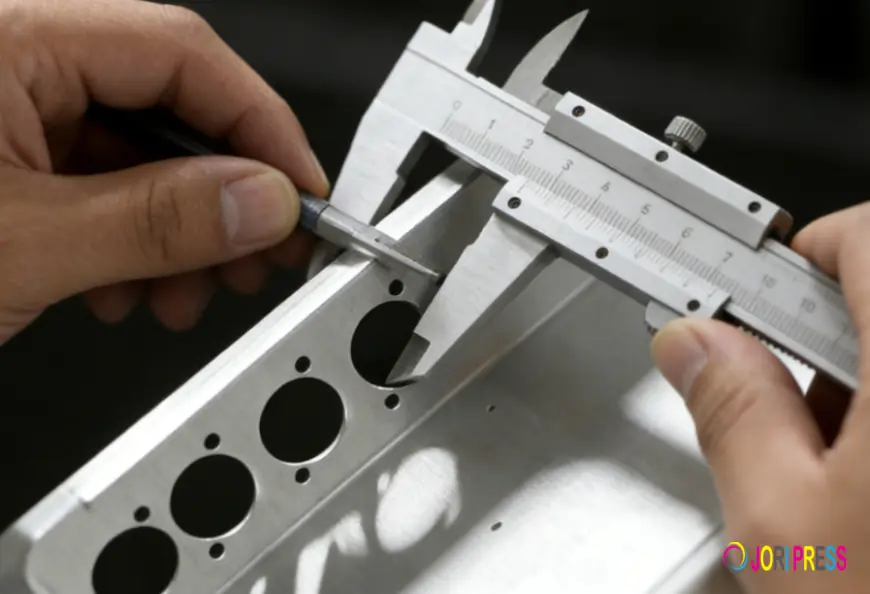
When it comes to creating internal shapes like keyways, splines, or complex square holes, most engineers immediately think of CNC milling or EDM. While these methods are versatile, they often struggle with a common enemy: Time.
If you are looking to scale production without sacrificing micron-level precision, it’s time to look at a centuries-old process that remains a powerhouse in modern manufacturing: Broaching.
The "One-Pass" Advantage
The most striking difference between broaching and other machining methods is the number of strokes required. In milling, you might need hundreds of passes to clear material. In broaching, the tool—called a broach—does the job in a single, continuous stroke.
This is possible because a broach tool features a series of teeth that gradually increase in size. As the tool is pushed or pulled through the workpiece, each tooth shaves off a precise amount of material, moving from roughing to finishing in seconds.
Why Choose Broaching for Your Next Project?
-
Unmatched Speed: For high-volume orders (thousands of parts), nothing beats the cycle time of a broaching machine.
-
Superior Surface Finish: Because the final teeth on a broach are designed for "finishing," the resulting surface often requires no additional polishing or grinding.
-
Consistency: Once the setup is dialed in, the dimensional stability from the 1st part to the 10,000th part is incredibly high.
-
Internal Complexity: Broaching is the gold standard for creating internal gears and non-circular holes that are nearly impossible or too costly to machine otherwise.
Is Broaching Right for You?
Despite its speed, broaching isn't a "one-size-fits-all" solution. The initial cost of the custom-made broach tool can be high, meaning the ROI is best realized in mass production rather than prototyping.
Furthermore, the process is generally limited to "through-holes"—the tool needs a clear path to enter and exit the part.
Master the Fundamentals of Broaching
Understanding the mechanics of pull-broaching versus push-broaching, and knowing which materials respond best to this high-pressure process, is essential for any manufacturing lead.
If you’re ready to optimize your production line and want to understand the technical nuances of this process—including tool design, machine types, and material compatibility—read our comprehensive guide:
What's Your Reaction?
 Like
0
Like
0
 Dislike
0
Dislike
0
 Love
0
Love
0
 Funny
0
Funny
0
 Angry
0
Angry
0
 Sad
0
Sad
0
 Wow
0
Wow
0