

































Better Photo Album Finishing with Grooving Equipment and Cold Lamination Film
A grooving machine for photo album production helps create controlled grooves in compatible board materials. These grooves allow the board to fold at a planned position, depending on the material, groove depth, and machine setup.

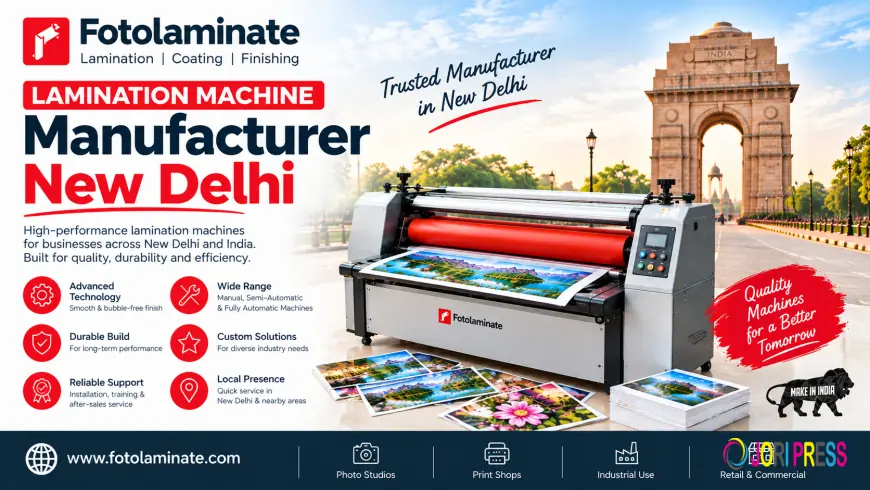
Photo album production involves several finishing steps that influence the appearance and usability of the final product. From preparing album covers to protecting printed photographs, each stage requires suitable materials and equipment. Choosing the right combination can help photo studios and album manufacturers maintain a consistent workflow.
Two items worth understanding are the grooving machine used for album cover preparation and the lamination film used to protect suitable printed surfaces.
Why Use a Grooving Machine for Photo Album Production?
Album covers often need clean folds so that they open and close neatly without creating unwanted creases. This becomes particularly important when working with rigid boards, laminated covers, and other materials used in album construction.
A grooving machine for photo album production helps create controlled grooves in compatible board materials. These grooves allow the board to fold at a planned position, depending on the material, groove depth, and machine setup.
Before choosing a machine, consider the following factors:
- Board compatibility: Confirm which board types and thicknesses the machine supports.
- Groove adjustment: Check whether the groove dimensions can be adjusted for different cover designs.
- Working area: Make sure the machine accommodates the board sizes used in your production.
- Consistency: Ask for a demonstration to check the uniformity of the grooves.
- Maintenance: Understand the requirements for cleaning, adjustment, and replacement parts.
For businesses producing customised albums, the ability to prepare covers accurately can help reduce manual work and improve repeatability. However, the settings must suit the board being processed, since unsuitable grooves can damage the material or weaken the cover.
Understanding PVC Cold Lamination Roll
Lamination is another important part of photo finishing. It can help protect compatible prints while providing a selected surface appearance. Cold lamination is particularly useful when the material or application calls for a pressure-sensitive film rather than a heat-activated process.
A PVC cold lamination roll is a roll of PVC-based film intended for compatible cold-lamination applications. The film is applied using pressure, usually with a suitable laminating machine, rather than relying on heat to activate an adhesive.
When selecting a roll, check these details:
- Roll width: Choose a width that matches your laminator and typical print sizes.
- Film thickness: Confirm that the thickness suits the intended application.
- Finish: Compare glossy, matte, or other available finishes according to customer requirements.
- Adhesive compatibility: Ensure the adhesive works with the prints and surfaces you process.
- Storage conditions: Follow the supplier's guidance to maintain film quality before use.
Not every PVC film is suitable for every photograph, ink, or substrate. Testing a sample before processing a large batch can help identify adhesion problems, bubbles, or unwanted changes in appearance.
How Grooving and Lamination Fit into the Workflow
These products perform different functions, but both can be relevant to businesses producing finished photo albums.
Grooving equipment helps prepare board covers for folding and assembly, while cold lamination film provides a finishing layer on compatible printed materials. Depending on the album design, these operations may occur at different stages of production.
A practical workflow may involve:
- Preparing and checking the printed photographs or cover artwork.
- Laminating compatible printed surfaces where required.
- Cutting and preparing the album cover board.
- Creating grooves at the appropriate fold positions.
- Assembling the cover and checking the finished album.
The exact sequence depends on the materials and construction method. Always confirm whether lamination should happen before or after a particular cutting or grooving operation.
What Should Buyers Compare Before Investing?
Choosing equipment and consumables based on specifications is more reliable than selecting them by name alone. Consider the expected production volume, material compatibility, operating requirements, and availability of supplier support.
For machinery, request a demonstration using the board materials you normally process. For lamination film, ask for a sample roll or trial material to check performance on your prints.
It is also worth comparing the total operating cost, including film consumption, maintenance, material waste, and replacement parts. These details can influence production expenses over time.
Final Thoughts
Professional album finishing depends on suitable materials, accurate preparation, and a consistent process. A grooving machine for photo album production can help create controlled folds in compatible cover boards, while a PVC cold lamination roll can protect suitable prints and provide the required surface finish.
Before buying, verify specifications and test materials whenever possible. The right choices can help photo studios and album manufacturers improve workflow consistency and produce finishes that meet customer expectations.
What's Your Reaction?
 Like
0
Like
0
 Dislike
0
Dislike
0
 Love
0
Love
0
 Funny
0
Funny
0
 Angry
0
Angry
0
 Sad
0
Sad
0
 Wow
0
Wow
0