









































Badminton Court Dimensions: Measurements, Markings and Setup Tips
Learn the correct court size, boundary lines, net height, flooring and space requirements for an indoor badminton court.
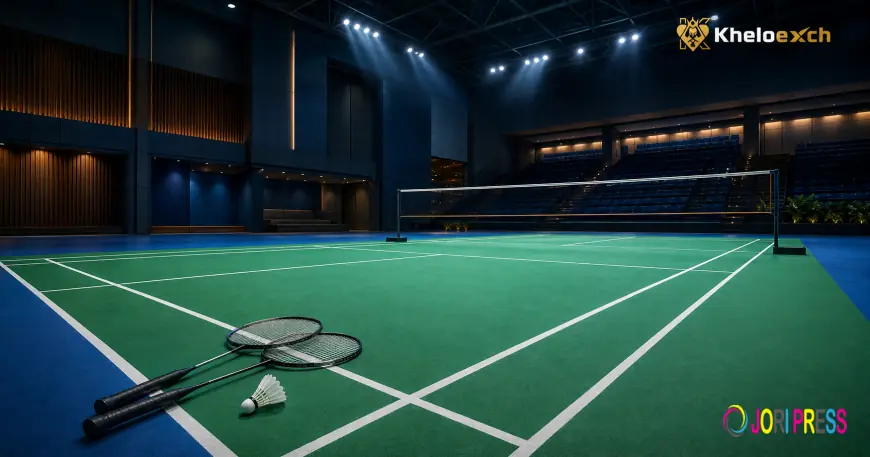
A properly measured badminton court creates fair playing conditions and gives players enough space to move safely. Although the layout may appear simple, every line and measurement has a particular role in singles and doubles matches.
Official Badminton Court Size
A standard badminton court measures 13.4 metres, or 44 feet, in length. The length remains the same for every match, but the playing width changes depending on the format.
-
Singles court width: 5.18 metres or 17 feet
-
Doubles court width: 6.1 metres or 20 feet
The inner sidelines form the singles court, while the outer sidelines create the wider doubles playing area.
Understanding the Court Markings
The short service line is positioned 1.98 metres away from the net. A centre line divides each half of the court into left and right service boxes.
Players must serve diagonally into the correct service area. Singles matches use the back boundary as the long service line, whereas doubles matches use a separate line located 0.76 metres inside the back boundary.
For a detailed explanation of the complete layout, visit this badminton court size and dimensions guide.
Correct Net Height
A badminton net should measure 1.55 metres at the side posts and approximately 1.524 metres at the centre. It must be stretched firmly and attached properly to the posts.
The posts are placed on the doubles sidelines, even when players are competing in a singles match.
Choosing Suitable Court Flooring
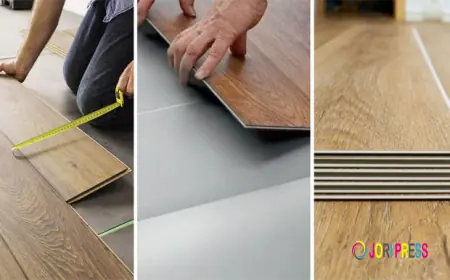
Wooden and synthetic PVC flooring are commonly used for indoor badminton courts. These surfaces provide useful grip and shock absorption during quick turns, jumps and lunges.
The playing surface should remain clean and dry. Dust or moisture can make the floor slippery and increase the possibility of an injury.
Ceiling Clearance and Safety Space
An indoor court needs sufficient ceiling height because high clears can send the shuttlecock well above the players. Recreational courts should generally have at least 7.6 metres of overhead clearance, while competitive facilities may require 9.1 metres or more.
A clear area should also be maintained outside the boundary lines. This extra space allows players to chase the shuttlecock safely without hitting walls, equipment or spectators.
Conclusion
Creating a suitable badminton court requires more than measuring its length and width. The service lines, boundary markings, net height, flooring, ceiling clearance and surrounding space must all be considered.
When these elements are planned correctly, players can enjoy a safer, fairer and more comfortable badminton experience.
What's Your Reaction?
 Like
0
Like
0
 Dislike
0
Dislike
0
 Love
0
Love
0
 Funny
0
Funny
0
 Angry
0
Angry
0
 Sad
0
Sad
0
 Wow
0
Wow
0