



































Aluminium Scaffold Supply for Construction Sites in India
Aluminium scaffold for construction sites in India: EN1004:2020-certified towers for rent or sale from Y Group. Call +91-9015964626 for a free site survey.
Summary: Aluminium towers are light, corrosion-resistant and quick to assemble, so they suit most working-at-height jobs on Indian sites. Y Group manufactures EN1004:2020-certified towers in Greater Noida and supplies them for rent or sale across India. Choose the tower by working height, location (indoor or outdoor), electrical risk, floor type and how often you need to move it.
Why Safer Access Matters on Indian Building Sites
Every construction project reaches a point where someone has to work above the ground. Painters, electricians, facade crews, MEP teams and inspectors all need a stable platform to do their jobs. When that platform is improvised, the risk is real. Workplace falls from height are reported tens of thousands of times a year in India, and many of them involve equipment that was never designed for the task.
Most site managers want the same things from access equipment. It should be safe, arrive on time, go up quickly and not slow the next trade. A well-engineered aluminium scaffold for construction sites meets all four. It also removes problems that heavier systems create, such as long erection times, rusting parts and difficult transport.
This guide explains how aluminium towers work, where they fit best, how to pick the right one and what to check before you order. If you are planning a project in Delhi NCR, Mumbai, Bengaluru or anywhere else in India, the sections below will help you decide.
What Is an Aluminium Scaffold Tower?
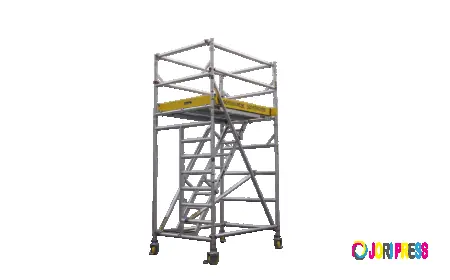
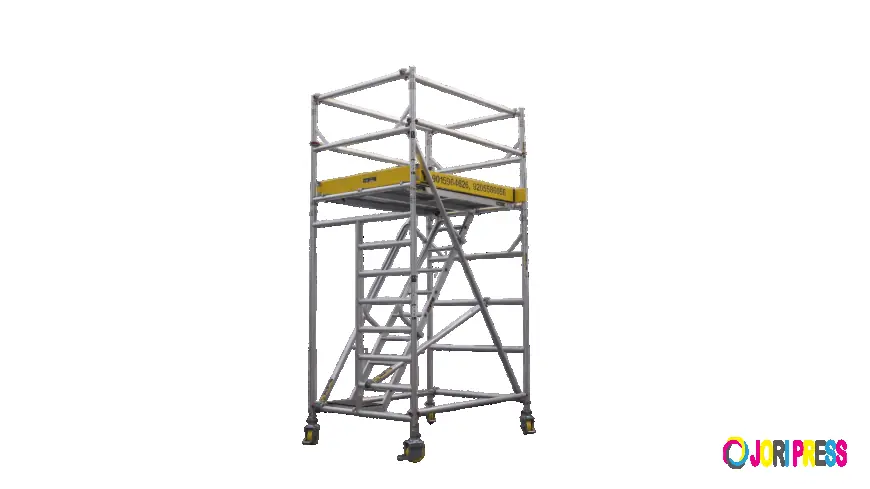
An aluminium scaffold tower is a modular, freestanding structure made from lightweight aluminium frames, braces, platforms and guardrails. Crews assemble it on site without heavy tools. Most towers sit on lockable castor wheels, so a trained team can reposition the unit instead of dismantling it.
It differs from a conventional fixed scaffold in one important way. A tower is a self-supporting unit, so it does not need to be tied into the building structure for ordinary working heights. This makes it a practical choice for interiors, facades, plant rooms, atriums and open yards.
Why Aluminium Works So Well for Construction Work
Light Weight Means Faster Handling
Aluminium is roughly one-third the weight of steel. A small crew can carry, lift and assemble components without cranes or heavy handling gear. Less lifting also means less fatigue, and tired workers make more mistakes.
Corrosion Resistance for India's Climate
Monsoon rain, coastal humidity and industrial air attack steel quickly. Aluminium forms a natural oxide layer that protects it, so components stay serviceable through repeated deployments. That helps on sites in Mumbai, Kochi, Visakhapatnam and Goa, where moisture is a constant factor.
Strength From the Right Alloy
Weight is only useful if strength comes with it. Y Group builds its towers from 6082-T6 aluminium, a structural grade chosen for load-bearing performance. The alloy, the weld quality and the design standard together decide how a tower behaves under load, which is why certification matters more than appearance.
Quick, Repeatable Assembly
Modular quick-lock designs let trained crews build the same tower the same way every time. Predictable assembly reduces errors and shortens the time between arrival and first use.
Aluminium vs Traditional Scaffolding: A Practical Comparison
|
Factor |
Aluminium Scaffold Tower |
Traditional Fixed Scaffold |
|
Weight |
Light, hand-carried components |
Heavy, often needs lifting aids |
|
Assembly |
Quick, modular, tool-light |
Slower, labour-intensive |
|
Mobility |
Moves on lockable wheels |
Dismantled and rebuilt to relocate |
|
Corrosion |
Naturally resistant |
Prone to rust without upkeep |
|
Floor protection |
Suitable for finished floors with the right base |
Can mark or damage surfaces |
|
Best suited to |
Maintenance, finishing, fit-out, inspection, facade work |
Very large, long-duration structures |
Traditional systems still have a place on large, long-duration structures. For day-to-day access across finishing and maintenance work, towers usually give a faster and cleaner result.
The Y Group Tower Range
Y Group designs and manufactures five tower models, covering working heights from 3 m to 12 m. All are available to rent or buy.
|
Tower |
Built For |
Key Feature |
|
XO Tower |
General construction, indoor and outdoor work |
Modular quick-lock system, 3 m to 12 m working heights, EN1004 certified |
|
XO FRP Tower |
Live electrical areas, spark-risk zones |
Non-conductive, non-sparking, corrosion resistant |
|
XO Stairway Tower |
Frequent climbing, tool and material carrying |
Staircase access instead of a ladder |
|
FitOut Master |
Offices, retail, hospitality interiors |
Narrow profile, rubber wheels, protective frame for floors |
|
EazY Tower |
Maintenance, inspection, routine overhead tasks |
Single-person assembly in about 10 minutes |
This range lets you match the tower to the job instead of forcing one design to fit every task.
Common Site Problems and How the Right Tower Solves Them
Our crew loses hours building the access setup.
Time spent on erection is time not spent on the actual work. A modular tower with quick-lock connections shortens assembly considerably. The EazY Tower can be assembled by one person, which suits small maintenance tasks where a full crew is not available.
We work around live electrical systems.
Metal towers near live equipment create a serious hazard. The XO FRP Tower uses fibreglass reinforced polymer, which does not conduct electricity and does not spark. It is the right choice for electrical rooms, substations and oil and gas environments.
Heavy equipment damages our finished floors.
Interior fit-out teams often work on polished or sensitive floors. The FitOut Master uses rubber wheels and a protective frame, so the floor stays clean and undamaged.
Workers keep climbing ladders with tools in their hands.
Carrying tools up a ladder is a known cause of falls. A stairway-access tower such as the XO Stairway Tower lets workers climb with both hands free and move materials more safely. It is a better fit for sustained site use.
We need equipment in several cities, and we don't want several vendors.
Projects that span states are hard to coordinate across different suppliers. Y Group supplies from branches across India under one agreement, which keeps specifications and service consistent.
Our team is not sure how to erect or inspect a tower.
Equipment is only as safe as the person using it. Y Group offers on-site safety training that covers scaffold erection and compliance checks, so your crew works to a clear standard from day one.
How to Choose the Right Tower for Your Site
Work through these questions before you place an order.
-
What working height do you need? Measure the highest point your crew must reach. Remember that working height is not the same as platform height.
-
Is the work indoors or outdoors? Wind exposure and ground conditions change the right configuration. Outdoor sites may need extra stabilisation.
-
Is there electrical risk? If yes, choose a non-conductive FRP tower.
-
What is the floor like? Finished floors need protective wheels and bases. Uneven ground needs levelling.
-
How often will you move it? If the tower will move several times a day, light weight and castor mobility matter most.
-
Will workers carry tools or materials up? If so, consider stairway access.
-
How long will you need it? Short, changing needs often suit rental. Long-term, repeated use may favour purchase.
If any of these answers are unclear, a site survey removes the guesswork. Y Group offers a free site survey, so you can get a recommendation based on your real conditions.
Standards and Certification: What to Check Before You Order
Not every tower on the market meets the same standard. Check the following before you commit.
-
EN1004:2020 certification. This is the European standard for mobile access towers, and Y Group's towers are certified to it.
-
Quality management. Y Group operates under ISO 9001:2015.
-
Material grade. Ask for the alloy. Y Group uses 6082-T6 aluminium.
-
Traceability. Reliable manufacturers can trace each product from raw material to dispatch.
-
Manufacturer-supplied training. Equipment from a maker who also trains your team is easier to use correctly.
A certified product, a clear specification and trained users together form the safest setup. Skipping any one of the three weakens the other two.
Rent or Buy? A Simple Way to Decide
Both options make sense, depending on how you work.
Renting suits you when:
-
The project is short or the scope changes often.
-
You need different tower types for different phases.
-
You prefer not to store or maintain equipment.
-
You need equipment quickly in a new city.
Buying suits you when:
-
You use towers across many projects every year.
-
You have trained crews and storage space.
-
You want fixed equipment standardised across your sites.
Y Group's rental arm, Y Equipment Services, supplies towers from warehouses across India with same-day delivery and 48-hour support. Y-Access Manufacturing handles purchases and custom-engineered needs from the Greater Noida facility.
Safe Assembly and Use: Practical Reminders
Good equipment still needs good habits. These points apply on any site.
-
Inspect every component before assembly. Do not use damaged parts.
-
Follow the manufacturer's assembly sequence in full.
-
Set the base on firm, level ground and fit the right stabilisers.
-
Lock the castor brakes before anyone climbs.
-
Install all guardrails and toe boards before using the platform.
-
Never move a tower while someone is on it.
-
Do not exceed the rated load.
-
Stop work in strong wind and when conditions become unsafe.
-
Have a competent person inspect the tower at regular intervals.
Training makes these steps routine. A team that has practised assembly under supervision makes fewer mistakes under deadline pressure.
Supply Across India: Where Y Group Delivers
Y Group has served more than 14,000 projects and works with over 500 enterprise clients across sectors such as construction, power, steel, automotive and infrastructure. The company's head office and manufacturing base are in Greater Noida, Uttar Pradesh, close to Delhi NCR, Noida and Gurugram. From there, a branch network supports sites across the country, including:
Greater Noida, Mumbai, Chennai, Bengaluru, Ahmedabad, Kolkata, Hyderabad, Jaipur, Kochi, Visakhapatnam, Pune, Lucknow, Gurugram, Guwahati, Bhubaneswar, Nagpur, Zirakpur, Goa, Coimbatore, Surat, Jamshedpur and Indore.
Local branches mean shorter delivery times and quicker support when a site needs help. If your project is in a city not listed here, contact the team. They will tell you how they can serve your location.
How to Get Aluminium Towers for Your Project
The process is simple.
-
Share your requirements. Tell the team your site location, working height, work type and expected duration.
-
Get a site assessment. Y Group's access team reviews your conditions and recommends the right configuration.
-
Receive the equipment. Towers are dispatched from the nearest branch.
-
Train and start. Your crew builds and uses the tower with proper guidance.
-
Get support. The team stays reachable for service throughout the project.
You can reach Y Group at:
Y Group International Pvt. Ltd.
Plot No.14, Ecotech 1 Ext, Greater Noida, UP 201310, India
Email: info@ygroup.co.in
Phone: +91-9015964626
Summary
Aluminium towers solve the everyday problems of working at height on construction sites. They are light, resist corrosion and go up quickly. Different models cover different needs, from electrical zones to finished interiors. Certification to EN1004:2020, a proper alloy and trained crews make them safe in practice. Renting works for changing projects, and buying suits for repeated use. A site survey helps you choose correctly.
Conclusion
Choosing access equipment is a safety decision first and a scheduling decision second. The right aluminium scaffold for construction sites keeps workers stable, keeps trades moving and avoids the delays that heavier systems cause. By checking height, environment, electrical risk, floor type and mobility before you order, you match the tower to the task instead of adapting the task to the tower.
Y Group designs, manufactures, rents and supports certified aluminium towers from Greater Noida to cities across India. If you are planning a site that involves work at height, speak to the team and get a recommendation based on your actual conditions.
FAQ
1. Is an aluminium scaffold strong enough for construction work?
Yes, when it is built from a structural alloy and certified to a recognised standard. Y Group's towers use 6082-T6 aluminium and are EN1004:2020 certified. Always stay within the rated load and follow the assembly instructions.
2. Which tower should I use near live electrical equipment?
Use a non-conductive tower. The XO FRP Tower is made from fibreglass reinforced polymer, so it does not conduct electricity or spark. It suits electrical rooms, oil and gas areas and other spark-risk sites.
3. Can I rent an aluminium scaffold tower instead of buying one?
Yes. Y Group supplies towers on rent through Y Equipment Services, and they are also available for purchase through Y-Access Manufacturing. Rental suits short or changing projects, while buying suits frequent, repeated use.
4. How high can an aluminium tower go?
Y Group's XO Tower offers working heights from 3 m to 12 m for indoor and outdoor use. The right height depends on your site, so a site survey helps you confirm the correct configuration.
5. Does my crew need training to use a scaffold tower?
Yes. Correct erection and inspection are central to safety. Y Group provides on-site safety training, including scaffold erection and compliance checks, so your team knows how to build and use the tower properly.
About the Writer
Y Group Team is the in-house team at Y Group, an Indian work-at-height solutions company that designs, manufactures, rents and supports certified aluminium access towers, FRP ladders and work platforms. The team writes from direct experience of site requirements, product specifications and safety practice across industries.
What's Your Reaction?
 Like
0
Like
0
 Dislike
0
Dislike
0
 Love
0
Love
0
 Funny
0
Funny
0
 Angry
0
Angry
0
 Sad
0
Sad
0
 Wow
0
Wow
0