

































Accent Harmonizer for Contact Centers: The Role of AI Voice Enhancers and Speech Recognition Tools
Discover accent harmonizers for contact centers in 2026: The role of AI voice enhancers & speech recognition tools in delivering crystal-clear calls, reducing barriers & boosting CSAT for seamless global support.
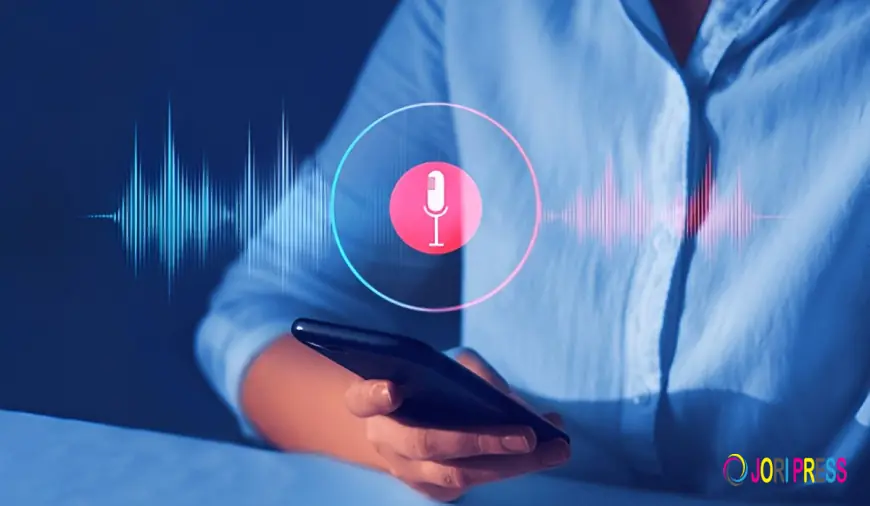
In today’s globalized economy, customer service is no longer confined by geographic boundaries. Contact centers serve customers from across the globe, representing a rich tapestry of languages, dialects, and accents. While diversity in the workforce brings numerous benefits, it sometimes presents challenges related to speech intelligibility and communication efficiency—especially when strong regional or non-native accents make it difficult for automated systems or human agents to understand callers. This is where Accent Harmonizer technology, powered by AI voice enhancers and advanced speech recognition systems, is transforming the landscape of customer service.
The Challenge of Accents in Contact Centers
Accents, whether regional or influenced by a speaker’s first language, are a natural aspect of human communication. However, in the fast-paced environment of contact centers, they can create friction. Misunderstandings, repeated clarifications, and longer call times are common when a caller’s accent differs significantly from that of the agent or from the expected input for automated systems.
Moreover, Interactive Voice Response (IVR) systems and voice bots often rely on speech-to-text engines trained primarily on standard accents—such as General American or Received Pronunciation. When callers with diverse accents interact with these systems, recognition accuracy can drop significantly, leading to frustration, customer dissatisfaction, and increased call transfer rates to human agents.
For multinational companies operating contact centers in offshore locations, accent differences between agents and customers can amplify these challenges. Even highly trained agents with strong language skills may struggle to be clearly understood due to phonetic variations in pronunciation, intonation, and rhythm.
What Is Accent Harmonization?
Accent harmonization refers to the use of artificial intelligence and natural language processing (NLP) technologies to neutralize or standardize speech patterns—without erasing cultural identity—in order to improve clarity and comprehension in voice-based communication systems.
Rather than eliminating accents altogether (which would be both impractical and ethically questionable), accent harmonization aims to preserve the speaker’s intent and tone while adjusting phonetic characteristics to ensure better compatibility with speech recognition tools and human listeners. The goal is enhanced intelligibility across languages and dialects.
How AI Voice Enhancers Support Accent Harmonization
Central to accent harmonization are AI audio voice enhancers—sophisticated software tools that analyze and modify voice input in real time. These tools leverage deep learning models trained on massive datasets of diverse speech samples to identify and adjust key acoustic features such as pitch, tone, stress patterns, and pronunciation.
Here’s how AI voice enhancers contribute to accent harmonization in contact centers:
-
Real-Time Speech Normalization: As a customer or agent speaks, AI voice enhancers process the audio stream to normalize pronunciation variations. For example, the tool might adjust the articulation of certain consonants or vowel lengths that commonly cause confusion in non-native speech, making it easier for downstream systems to interpret.
-
Background Noise and Signal Clarity Optimization: Beyond accent modification, AI voice enhancers also filter background noise, reduce echo, and amplify speech clarity. This improves the overall quality of voice input, benefiting both human agents and automated systems.
-
Speaker Adaptation: Modern AI audio enhancers can adapt to individual speakers over time, learning their unique speech patterns and fine-tuning enhancements for greater accuracy. This personalization helps maintain the authenticity of the speaker’s voice while boosting intelligibility.
-
Multilingual and Cross-Dialect Support: Advanced AI systems support multiple languages and dialects, enabling contact centers to serve a broader customer base without compromising on communication quality.
The Role of AI Speech Recognition Technology
While voice enhancers improve audio quality, AI speech recognition technology ensures that spoken language is accurately converted into text for processing. This is critical for both automated customer service systems and agent-assist tools.
Modern AI speech recognition systems—often powered by deep neural networks—are far more adaptable than their predecessors. They are designed to understand a wide range of accents, colloquialisms, and speech variations. Key features include:
-
Accent-Invariant Models: Leading speech recognition platforms are trained on diverse datasets that include speakers from different geographic regions, socio-linguistic backgrounds, and language proficiencies. This enables the system to recognize phrases like “schedule” pronounced as “skedule” (American) or “shedule” (British) without confusion.
-
Context-Aware Interpretation: AI-powered systems use contextual clues to disambiguate words that sound similar but have different meanings (e.g., “write” vs. “right”). This reduces errors in transcription and improves the overall reliability of voice-driven services.
-
Integration with Natural Language Understanding (NLU): Speech recognition is often paired with NLU to determine not just what was said, but what it means. This enhances the ability of virtual agents to respond appropriately, even when input includes non-standard phrasing or regional expressions.
-
Continuous Learning and Feedback Loops: Many AI systems incorporate feedback mechanisms where repeated misunderstandings are flagged, and models are retrained to improve accuracy over time.
Benefits of Accent Harmonizer Technology in Contact Centers
The adoption of accent harmonization tools brings measurable benefits to both contact center performance and customer experience:
-
Improved First-Contact Resolution (FCR): By reducing miscommunication, agents can resolve issues faster and with fewer follow-ups.
-
Higher Customer Satisfaction (CSAT): Clear, efficient interactions lead to better customer perceptions of service quality.
-
Reduced Handle Time: With fewer repeat questions and clarifications, average call duration decreases, improving operational efficiency.
-
Greater Agent Confidence and Performance: Agents who feel confident that their speech is clearly understood are likely to perform better and experience less stress.
-
Enhanced Automation Success: IVR and chatbot systems function more effectively when they can accurately process diverse speech inputs, reducing reliance on human agents for routine inquiries.
-
Support for Global Workforce and Market Expansion: Companies can hire talent globally without worrying about accent-related communication barriers and expand into new markets with confidence in their service delivery.
Ethical Considerations and Cultural Sensitivity
While accent harmonization promises significant operational advantages, it must be implemented thoughtfully. Eliminating or overly modifying accents can inadvertently signal that certain ways of speaking are “inferior,” raising concerns about linguistic discrimination and cultural erasure.
Therefore, the ethical use of these tools emphasizes:
-
Preservation of speaker identity and authenticity
-
Transparency in how voice data is processed
-
Informed consent from employees where voice modification is used
-
Avoidance of bias in AI models—ensuring fairness across languages and demographics
Accent harmonization should serve as an assistive tool, not a corrective one. The objective is improved communication, not conformity.
The Future of Voice AI in Contact Centers
As AI continues to evolve, accent harmonization will become increasingly seamless and integrated. We can expect:
-
Real-time multilingual translation with accent adaptation, allowing agents and customers to converse in their native languages and accents while receiving real-time speech adjustments.
-
Emotion-aware voice modulation, where AI not only adjusts pronunciation but also enhances tone to sound more empathetic or professional as needed.
-
Personalized voice profiles for both agents and frequent customers, enabling systems to adapt dynamically to individual speech patterns.
Moreover, as regulatory frameworks around AI and data privacy mature, contact centers will need to ensure that their use of voice enhancement and speech recognition technologies complies with regional and international standards.
Conclusion
Accent harmonization powered by AI audio voice enhancers and advanced speech recognition technology is no longer a futuristic concept—it’s a practical necessity in modern contact centers. By bridging the communication gap caused by linguistic diversity, these tools enable clearer, faster, and more effective customer interactions.
The key to success lies in balancing technological innovation with cultural respect and ethical considerations. When implemented correctly, accent harmonization doesn’t diminish identity—it empowers everyone, regardless of how they speak, to be heard and understood.
For contact centers aiming to deliver exceptional service in a global marketplace, investing in AI-driven voice intelligence is not just smart—it’s essential.
For more details visit - omind.ai
What's Your Reaction?
 Like
0
Like
0
 Dislike
0
Dislike
0
 Love
0
Love
0
 Funny
0
Funny
0
 Angry
0
Angry
0
 Sad
0
Sad
0
 Wow
0
Wow
0