









































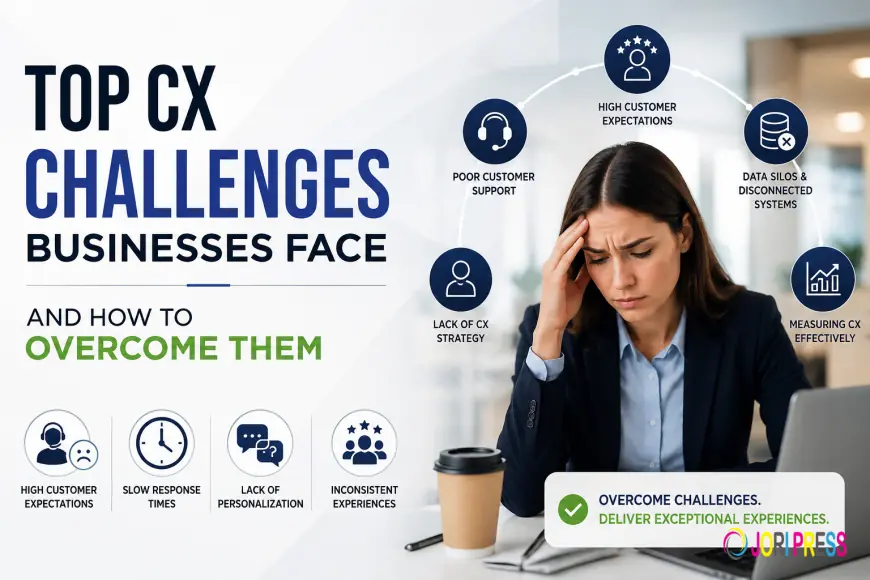
Top CX Challenges Businesses Face and How to Overcome Them
Explore key CX challenges facing UAE businesses, from channel gaps and AI limitations to frontline issues, with practical solutions

Top CX Challenges Businesses Face and How to Overcome Them
Customers in the UAE have become less willing to tolerate slow service, repeated questions, or clumsy digital journeys. CX challenges are becoming more visible as businesses struggle to keep up with these expectations across every customer touchpoint. For brands in retail, hospitality, banking, and aviation, even a small service gap can affect trust and loyalty.
The pressure is not limited to one industry or one channel. Poor experiences can push customers toward competitors, especially in a market where premium service and convenience are expected as standard. For businesses in Dubai and Abu Dhabi, creating a smooth experience now means fixing the small moments that customers notice before they become bigger problems.
Why CX Challenges Are Growing Across the UAE
UAE consumers move easily between mobile apps, delivery services, physical stores, and premium hospitality experiences. This makes CX gaps harder to solve because customers judge every interaction against the best experience they have had recently, even when it comes from a different industry. A slow app or confusing support process can therefore stand out immediately.
The UAE’s strong retail, hospitality, and banking sectors have also raised the standard for convenience and service. Customers expect brands to be quick, consistent, and easy to deal with across channels. When the experience falls behind those expectations, frustration builds, and small service gaps can quickly affect customer loyalty.
Common CX Challenges Businesses Face Today
The problem is often not a lack of CX planning. It is the gap between teams, systems, and customer data that makes a smooth experience difficult to deliver.
Rising Customer Expectations Across Every Touchpoint
Customers now expect a bank, airline, or retailer to offer the same speed and personalization they get from streaming apps and online marketplaces. Keeping that standard consistent across websites, apps, stores, and support channels is a growing customer experience challenge for many businesses. Even small gaps between channels can make the overall journey feel disconnected.
Disconnected Service Delivery Across Channels
Many businesses still keep customer data scattered across marketing, sales, and support teams. As a result, a customer may raise an issue on social media and then have to explain the same problem again when contacting customer support. This lack of continuity can turn a simple interaction into a frustrating experience.
Balancing AI Automation with Human Support
AI is becoming a bigger part of customer service, from chatbots to automated support. But when an issue is complex or sensitive, customers still want the option to speak with a real person. Relying too heavily on automation can make service feel impersonal and weaken trust.
Inconsistent Customer Satisfaction Measurement
Many teams still depend on an annual customer survey to understand satisfaction. That approach can overlook everyday frustrations, such as failed payment, delayed delivery, or repeated support requests. These small issues may seem minor individually, but over time, they can reduce trust and customer loyalty.
Frontline Training and Empowerment Gaps
A strong CX strategy can still fall short when frontline employees are not properly trained or equipped. If staff lack the right information or authority to solve problems, even simple issues can take longer to resolve. That gap between strategy and actual service delivery can quickly frustrate customers.
Customer Service Challenges Specific to the UAE Market
A few factors make the UAE customer experience landscape more demanding than many other markets:
-
A large expatriate and tourist population creates multilingual and multicultural service expectations
-
Digital payments, mobile wallets, and app-based services have raised expectations for fast, connected customer journeys.
-
Premium benchmarks set by Dubai Mall, luxury retail, and five-star resorts influence expectations across other sectors.
-
Data privacy and regulatory requirements in banking can limit how businesses use AI for personalization.
These local conditions mean generic, one-size-fits-all CX strategies often miss what UAE consumers actually expect. Brands need to adapt their approach to the market, audience, and industry they serve.
How to Overcome CX Issues
Adding another CX tool will not fix a journey that already breaks between departments, channels, or service teams. The real work starts with understanding where customers struggle and making those moments easier, faster, and more consistent.
Unify Customer Data Across Departments
When marketing, sales, and support teams work with separate customer records, people often have to repeat the same information. A shared view of interactions helps teams respond faster and continue the conversation without starting from scratch.
Redesign the Journey Around Real Moments, Not Assumptions
Customer journeys should reflect what people actually do, not what businesses assume they do. Mapping real behavior can reveal high-friction moments, such as failed payments, abandoned bookings, or delayed support responses, where a small improvement can make a noticeable difference.
Build Continuous Feedback Loops
Annual surveys rarely capture the frustrations people face during everyday interactions. Short feedback prompts after key moments, such as a failed transaction or support request, can give teams more useful and timely insight into what needs fixing.
Train and Trust the Frontline
A well-designed customer experience strategy means little if frontline employees cannot act on it. Frontline execution is also an area where specialist CX consultancies such as Engine CX Design can help businesses connect CX strategy with employee training, service delivery, and day-to-day customer interactions.
CX Challenges and Solutions at a Glance
-
Rising expectations → Measure your experience against leading digital services, not only direct competitors
-
Channel disconnect → Bring customer data together and create smoother handoffs between teams
-
AI vs. human balance → Let AI handle routine requests while human agents manage complex or sensitive issues.
-
Inconsistent measurement → Use NPS and CSAT alongside real-time feedback from key customer interactions
-
Training gaps → Provide ongoing frontline coaching instead of relying only on initial employee training
What Makes CX Improvement Sustainable
Sustainable CX depends on more than fixing individual service problems. Businesses need clear ownership, regular measurement, and a process for acting on customer feedback. When CX becomes part of wider business decisions rather than remaining a support-team responsibility, improvements are more likely to last.
Improving Customer Experience: Where Leaders Should Start
Improving customer experience does not mean fixing everything at once. Start with the part of the journey that causes the most complaints, delays, or lost customers, then make a clear improvement there. Visible wins can build confidence and make it easier to tackle larger CX issues over time.
Frequently Asked Questions
1. Why do customers notice channel gaps so quickly?
Because they expect the same information and service quality across apps, websites, stores, and support channels. A mismatch can make the brand feel disorganized.
2. When should a business use human support instead of AI?
Human support is most useful when an issue involves complaints, sensitive information, exceptions, or decisions that automated systems cannot handle well.
3. Which customer interactions are most useful for real-time feedback?
Failed payments, delayed deliveries, booking issues, and support interactions are useful moments because they show where customers experience friction while the issue is still fresh.
4. Why is frontline empowerment important for CX?
Employees often deal with problems before anyone else. Giving them the information and authority to resolve straightforward issues can prevent unnecessary delays and escalations.
What's Your Reaction?
 Like
0
Like
0
 Dislike
0
Dislike
0
 Love
0
Love
0
 Funny
0
Funny
0
 Angry
0
Angry
0
 Sad
0
Sad
0
 Wow
0
Wow
0