









































How Payroll Automation Reduces Errors and Saves HR Teams Time
Discover how payroll automation reduces salary calculation errors, saves HR teams time, simplifies compliance, and improves payroll accuracy with Payroll Management Software.
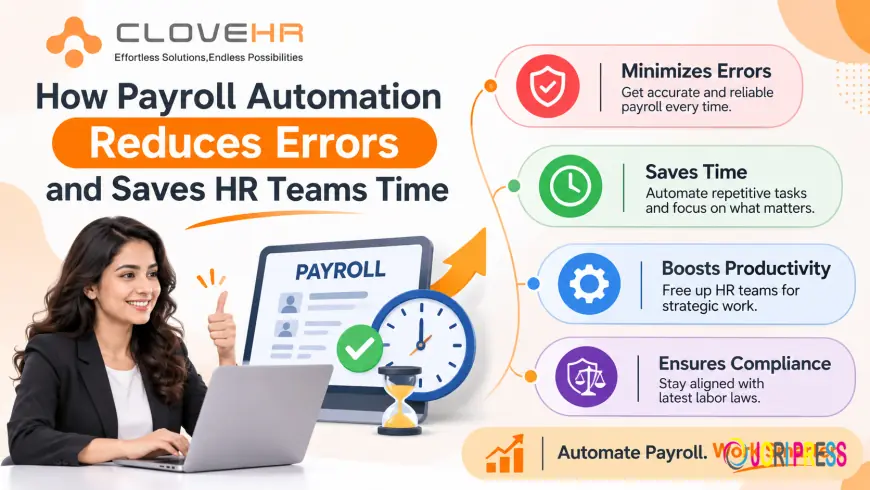
Payroll processing is one of the most important responsibilities of any HR and finance department. Every month, businesses must calculate employee salaries, account for attendance, manage deductions, process incentives, generate payslips, and ensure employees receive their payments on time.
Although these activities may appear straightforward, managing payroll manually can become complicated, especially when an organization has a growing workforce.
Many businesses still depend on spreadsheets, calculators, emails, and separate applications to process employee salaries. These traditional methods require repeated data entry, manual verification, and continuous coordination between HR and finance teams. Even a small calculation mistake can result in incorrect salary payments, employee dissatisfaction, and additional administrative work.
This is where payroll automation makes a significant difference.
Modern Payroll Management Software helps businesses automate repetitive salary-related activities, improve calculation accuracy, organize employee payroll information, and reduce the time required to complete monthly payroll processing.
Instead of spending hours checking spreadsheets and correcting manual entries, HR teams can use automated systems to manage payroll activities more efficiently.
But how exactly does payroll automation reduce errors and save time?
Let's explore the major benefits of payroll automation and understand why businesses are increasingly adopting digital payroll solutions.
What Is Payroll Automation?
Payroll automation refers to using technology and software to simplify and manage repetitive payroll activities with minimal manual intervention.
An automated payroll system helps businesses organize employee salary information, calculate payroll components, manage deductions, generate payslips, and maintain payroll records.
Depending on the software, payroll automation may include:
-
Employee salary structure management.
-
Automated salary calculations.
-
Attendance-based salary adjustments.
-
Leave and deduction calculations.
-
Overtime and incentive management.
-
Payslip generation.
-
Payroll reports.
-
Employee payroll records.
-
Support for applicable statutory payroll workflows.
A centralized payroll platform also makes it easier for HR and finance departments to access relevant employee information.
By reducing repetitive manual activities, businesses can establish a more organized and consistent payroll process.
10 Ways Payroll Automation Reduces Errors and Saves HR Teams Time
1. Eliminates Repetitive Manual Salary Calculations
Manual salary calculations require HR professionals to consider multiple components, including basic salary, allowances, deductions, incentives, overtime, and other adjustments.
When payroll is processed using spreadsheets, employees' salary information may need to be entered or updated repeatedly.
This increases the possibility of calculation mistakes and consumes valuable working hours.
Payroll Management Software simplifies this process by using configured salary structures and calculation rules to automate routine payroll activities.
Once the required employee information and salary components are configured, the system can help calculate payroll more consistently.
This reduces the need for repetitive calculations and allows HR teams to spend less time preparing monthly salary sheets.
2. Reduces Attendance and Leave-Related Payroll Errors
Employee attendance and leave records directly influence salary processing in many organizations.
For example, unpaid leave, late attendance adjustments, overtime, and additional working hours may affect an employee's monthly salary.
When attendance information is maintained separately from payroll records, HR professionals must manually transfer and verify the relevant data.
This can create discrepancies between attendance reports and salary calculations.
An integrated payroll management system can connect relevant attendance and leave information with payroll workflows.
This makes it easier to account for applicable working days, approved leaves, and other salary adjustments.
Automating these processes helps reduce manual data entry and improves coordination between attendance management and payroll processing.
3. Saves Hours During Monthly Payroll Processing
Monthly payroll preparation often involves several repetitive activities.
HR professionals may need to collect attendance records, verify employee information, calculate salary components, check deductions, prepare payslips, and review payroll reports.
When every activity is performed manually, the process can take several hours or even days, depending on workforce size and payroll complexity.
Payroll automation reduces the administrative effort involved in these activities.
Instead of preparing calculations from scratch every month, HR teams can work with existing employee information and configured salary structures.
Automated reports and payroll records also make it easier to review important information without repeatedly searching through different files.
This allows HR professionals to dedicate more time to recruitment, employee engagement, workforce planning, and other important responsibilities.
4. Improves Payroll Accuracy and Consistency
Salary errors can negatively affect employee trust.
If employees repeatedly receive incorrect payslips or experience salary discrepancies, they may lose confidence in the organization's payroll process.
Common payroll mistakes include:
-
Incorrect salary calculations.
-
Missing allowances.
-
Duplicate salary entries.
-
Incorrect deductions.
-
Wrong attendance adjustments.
-
Outdated employee salary information.
Payroll Management Software helps reduce these issues by maintaining structured employee payroll records and applying configured calculation rules consistently.
However, automation does not eliminate every possible mistake. Incorrect salary configurations or outdated employee information can still affect payroll results.
Businesses should regularly review salary structures, employee details, and payroll calculations before final approval.
Combining automated calculations with proper verification creates a more reliable payroll process.
5. Simplifies Tax and Statutory Payroll Workflows
Indian businesses must consider several statutory requirements while managing employee salaries.
Depending on employee eligibility, salary structure, and applicable regulations, payroll processing may involve:
-
Employees' Provident Fund (EPF).
-
Employees' State Insurance (ESI).
-
Tax Deducted at Source (TDS).
-
Professional Tax.
-
Applicable labour-related deductions and contributions.
Managing these requirements manually can become challenging, particularly for companies with different employee salary structures.
Payroll software can help organize relevant employee information, apply configured payroll rules, and generate useful reports.
However, businesses should verify that their chosen software supports the specific statutory requirements applicable to their organization.
They should also confirm how frequently statutory calculations are updated and whether additional professional review is necessary.
A reliable automated payroll process can reduce repetitive administrative work and help businesses maintain more organized payroll documentation.
6. Makes Payslip Generation Faster and Easier
Preparing individual payslips manually can become time-consuming when a company has dozens or hundreds of employees.
HR teams may need to create separate documents, verify salary components, save files, and distribute them individually.
This process can increase administrative workload and create opportunities for document-related errors.
Payroll Management Software can simplify payslip generation by using employee salary information and processed payroll data.
Depending on the platform, businesses can generate digital payslips that include details such as:
-
Employee name and identification details.
-
Salary period.
-
Earnings and allowances.
-
Applicable deductions.
-
Net salary.
-
Other relevant payroll information.
Digital payslips also make it easier to maintain organized salary records.
When employees can access their payslips through a self-service portal, HR teams receive fewer routine requests for salary documents.
7. Reduces Data Entry Errors Through Centralized Employee Records
Payroll processing depends on accurate employee information.
Details such as joining dates, salary structures, bank information, department changes, and employment status must be maintained correctly.
When this information is stored in multiple spreadsheets or applications, HR teams may accidentally use outdated or inconsistent records.
A centralized HR and payroll platform helps organize employee information in one place.
When authorized changes are made, relevant information can be updated within the system instead of requiring repeated modifications across multiple files.
This reduces unnecessary duplication and helps improve consistency between employee records and payroll information.
It also makes it easier to retrieve historical payroll information when required.
8. Simplifies Payroll Reporting and Financial Planning
Payroll information is useful for more than calculating monthly salaries.
Business owners, HR managers, and finance teams often need payroll reports to understand salary expenses, employee compensation, deductions, and workforce-related costs.
Creating these reports manually can require significant time and repeated data verification.
Automated payroll systems can generate structured reports using available payroll information.
Depending on the platform, these reports may help businesses review:
-
Monthly salary expenses.
-
Department-wise payroll costs.
-
Employee salary records.
-
Payroll deductions.
-
Overtime and incentive payments.
-
Historical payroll information.
Access to organized reports makes it easier for management teams to review payroll activities and plan future workforce expenses.
It also reduces the need to prepare every report manually.
9. Improves Coordination Between HR and Finance Teams
Payroll processing is not the responsibility of only one department.
HR teams maintain employee information, attendance, leave records, and salary structures, while finance teams may handle payment approvals, accounting entries, and financial reporting.
When both departments use disconnected tools, important information may need to be shared repeatedly through emails and spreadsheets.
This can cause delays, misunderstandings, and inconsistencies.
An integrated payroll platform creates a more structured process for managing payroll information.
Authorized team members can access relevant records, review payroll details, and coordinate activities more efficiently.
This improves visibility into payroll operations and reduces unnecessary communication between departments.
10. Supports Business Growth Without Increasing Administrative Pressure
Payroll management becomes more demanding as a company hires additional employees.
A process that works for 10 employees may become difficult to manage when the workforce reaches 100 or 500 employees.
More employees mean additional salary records, attendance information, deductions, payslips, and payroll-related queries.
Without automation, businesses may need to increase administrative resources simply to maintain their existing payroll processes.
Payroll Management Software provides a more scalable approach.
By automating repetitive calculations and organizing employee payroll information, businesses can manage increasing payroll requirements more efficiently.
The right system can support business expansion without requiring HR teams to perform every payroll activity manually.
Why Businesses Should Invest in Payroll Management Software
Payroll automation is not simply about reducing the number of spreadsheets used by an organization.
It is about improving the entire salary management process.
Here are some important reasons why businesses should consider adopting Payroll Management Software.
1. Better Time Management: Automate repetitive activities and reduce the time spent preparing monthly payroll.
2. Fewer Manual Errors: Use configured salary structures and calculation rules to improve consistency.
3. Improved Employee Experience: Help ensure employees receive accurate salary information and timely payslips.
4. Organized Payroll Records: Maintain employee salary details and historical payroll information in a centralized system.
5. Easier Reporting: Generate useful payroll reports without preparing every document manually.
6. Better HR Productivity: Allow HR professionals to focus on strategic responsibilities instead of repetitive calculations.
7. Improved Coordination: Make payroll information more accessible to authorized HR and finance team members.
The actual benefits depend on the software's capabilities, data quality, implementation, and internal payroll approval processes.
How CloveHR Helps Businesses Simplify Payroll Management
Choosing the right software is an important step toward improving payroll efficiency.
CloveHR is an HRMS platform designed to help businesses organize employee management and streamline important HR activities through an integrated system.
Its payroll management capabilities can help businesses simplify salary-related workflows and reduce repetitive administrative tasks.
Some of the relevant CloveHR capabilities include:
Employee Management: Maintain employee profiles, employment details, and important workforce information.
Payroll Management: Configure salary structures, manage payroll activities, and organize employee salary records.
Payslip Management: Generate salary slips and provide employees with access to their payroll information.
Attendance Management: Maintain attendance information that supports employee working-hour and payroll-related processes.
Leave Management: Organize employee leave requests, balances, and approvals.
Employee Self-Service: Allow employees to access relevant HR information and manage routine requests.
Timesheet Management: Maintain working-hour information to support better workforce management.
By bringing multiple HR activities together, CloveHR can help businesses create more organized employee and payroll management processes.
Instead of relying on disconnected spreadsheets and manual records, organizations can explore a centralized approach to workforce administration.
If your HR team is spending too much time on payroll calculations, attendance verification, or salary documentation, exploring an integrated HRMS solution may be a useful next step.
Best Practices for Implementing Payroll Automation
Even the best payroll software requires proper implementation to deliver meaningful results.
Businesses should follow a few important practices when introducing payroll automation.
Start with Accurate Employee Information
Before implementing an automated payroll system, verify employee details, salary structures, bank information, and other relevant records.
Incorrect source information can lead to incorrect payroll results.
Configure Salary Structures Carefully
Define basic salary, allowances, deductions, incentives, and other components according to company policies and applicable requirements.
Connect Attendance and Leave Information
Where supported, integrate attendance and leave management with payroll to reduce repetitive data entry.
Establish Payroll Approval Workflows
Assign appropriate responsibilities to HR and finance teams so that payroll calculations are reviewed before final processing.
Review Payroll Reports Regularly
Check salary calculations, deductions, and payroll summaries to identify unusual entries or discrepancies.
Train HR and Finance Teams
Ensure employees responsible for payroll understand how to use the software and manage its important functions.
These practices help businesses get more value from payroll automation while maintaining proper control over salary processing.
Conclusion
Payroll processing requires accuracy, consistency, and proper coordination. However, managing salaries manually can consume valuable HR time and increase the chances of calculation errors, incorrect deductions, and administrative delays.
Payroll automation offers a more efficient way to manage these responsibilities.
The right Payroll Management Software can simplify salary calculations, connect attendance information with payroll workflows, generate payslips, organize employee records, and provide useful reports.
It also allows HR professionals to spend less time on repetitive administrative work and more time supporting employees and business growth.
For organizations looking to improve payroll efficiency, adopting an integrated HRMS platform can be an important step.
If you want to simplify salary administration and organize your HR processes, explore CloveHR.
What's Your Reaction?
 Like
0
 Dislike
0
 Love
0
 Funny
0
 Angry
0
 Sad
0
 Wow
0