









































CMS Open Payments: What It Is, How It Works, Latest Updates, and How Venops Helps
Learn how CMS Open Payments works, reporting requirements, latest updates, payment data, and compliance best practices. See how Venops simplifies Open Payments.
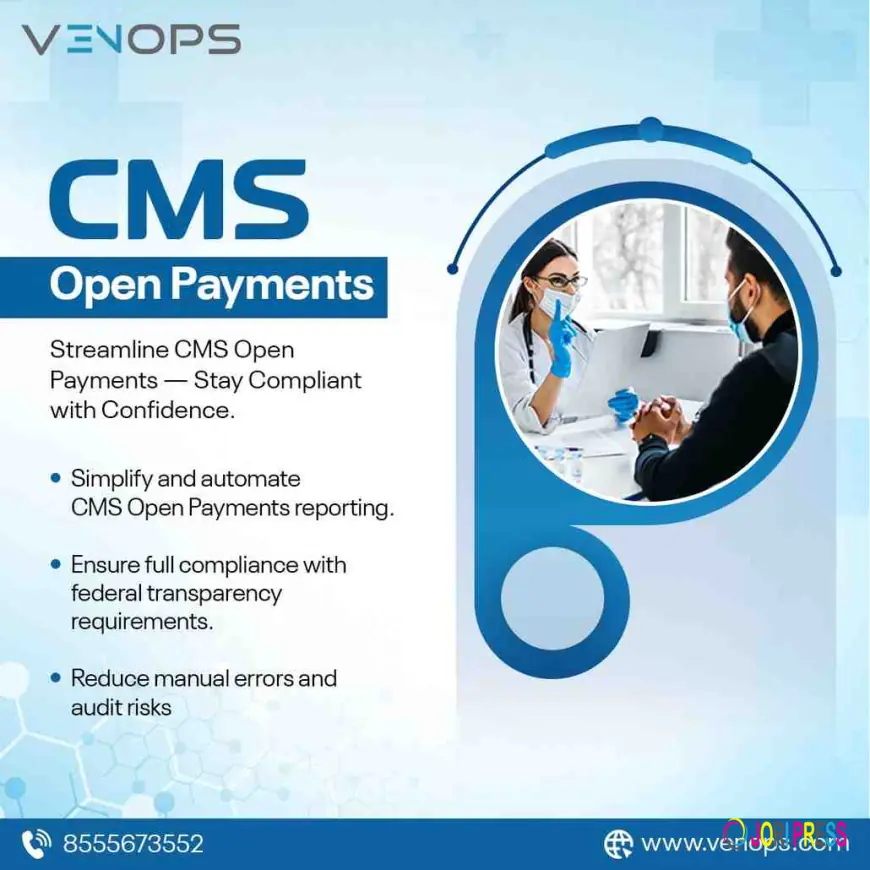
Financial relationships between healthcare professionals and the life sciences industry are common in the United States. Physicians and other healthcare professionals may receive payments or other transfers of value for consulting, research, speaking, travel, meals, education, or other activities. CMS Open Payments was created to make these financial relationships more transparent.
The Open Payments Program is administered by the Centers for Medicare & Medicaid Services (CMS) under the Physician Payments Sunshine Act. It collects and publicly publishes information about certain payments and other transfers of value made by applicable manufacturers and group purchasing organizations to covered recipients.
For healthcare organizations, physicians, manufacturers, group purchasing organizations, and other stakeholders, understanding Open Payments is increasingly important. The program is not simply about publishing financial data. Organizations can also use Open Payments information to review relationships, improve data accuracy, support transparency, and identify information that may require additional attention.
What Is CMS Open Payments?
CMS Open Payments is a federal transparency program that makes information about certain financial relationships in the healthcare industry available to the public.
Under the program, applicable reporting entities report certain payments and other transfers of value to covered recipients. This information is then made publicly available through the official CMS Open Payments website.
The program was established under the Physician Payments Sunshine Act, with the goal of increasing transparency around financial relationships between the healthcare industry and healthcare professionals.
The data can include different types of payments and transfers of value, such as consulting fees, food and beverage, travel, education, research-related payments, royalties or license payments, and other reportable categories.
Why Was the Open Payments Program Created?
The healthcare industry involves many legitimate financial relationships. A physician may conduct research for a pharmaceutical company, provide consulting services to a medical device manufacturer, or participate in educational activities.
These relationships are not automatically inappropriate. However, transparency allows patients, healthcare professionals, researchers, policymakers, and the public to see reported financial relationships.
The Open Payments Program therefore provides a public source of information that can help people understand financial connections between industry and covered healthcare recipients.
Who Reports Information to CMS Open Payments?
Reporting entities generally include applicable manufacturers and applicable group purchasing organizations that make reportable payments or transfers of value to covered recipients.
CMS explains that reporting entities report payments and other transfers of value to covered recipients annually, and the information becomes publicly available through the Open Payments data site. Ownership or investment interests held by physicians or their immediate family members in applicable reporting entities can also be part of the reporting requirements.
Because reporting requirements can change based on program rules, organizations should always refer to current CMS guidance when determining their obligations.
Who Are the Covered Recipients?
The Open Payments program has expanded beyond its original physician-focused scope.
Current CMS resources identify covered recipients that can include physicians and certain non-physician practitioners, as well as teaching hospitals. CMS provides specific taxonomy and specialty information for covered recipients for each program year.
This makes it important for reporting entities to use the correct recipient information when preparing and reviewing their Open Payments data.
What Types of Payments Are Reported?
CMS Open Payments covers different categories of payments and other transfers of value.
Depending on the circumstances, reported information can include:
- Consulting fees
- Compensation for services other than consulting
- Honoraria
- Food and beverage
- Travel and lodging
- Education
- Research payments
- Grants
- Royalties or license payments
- Gifts
- Charitable contributions
- Entertainment
- Ownership or investment interests
- Other transfers of value
The exact reporting requirements depend on the payment type, recipient, reporting entity, applicable exclusions, and program rules.
Latest CMS Open Payments Update for 2026
One of the most important current developments is the publication of Program Year 2025 Open Payments data in June 2026.
CMS states that Program Year 2025 covers payments and other transfers of value made from January 1 through December 31, 2025. The published dataset contains approximately 17.07 million records totaling $14.67 billion in payments and other transfers of value.
CMS also explains that it publishes the complete dataset for the previous program year annually on or before June 30 and refreshes Open Payments data in January. The public can access the information through the Open Payments Search Tool and download individual program-year datasets.
This latest publication makes 2026 an important year for organizations reviewing their payment data and improving their internal data processes.
2026 Open Payments Reporting Thresholds
CMS has also published the reporting thresholds applicable to Program Year 2026.
For the January 1, 2026 through December 31, 2026 data collection period, CMS lists a $13.82 threshold for a small payment or other transfer of value and a $138.13 total annual amount threshold.
Organizations should not rely on older thresholds because these amounts can be adjusted over time. Reporting entities should review the current CMS guidance when preparing their data.
Reviewing and Disputing Open Payments Data
One of the important parts of the Open Payments process is the ability for covered recipients to review information attributed to them.
For the 2025 program year, CMS gave covered recipients an opportunity to review and dispute their data before publication. CMS communications indicated that the review period ended May 15, 2026, before the June publication of the 2025 data.
Reviewing the information can help identify potential errors before data becomes publicly available.
Common issues that may require review include:
- Incorrect recipient information
- Incorrect payment amounts
- Incorrect payment categories
- Duplicate records
- Incorrect dates
- Payments attributed to the wrong recipient
- Other reporting discrepancies
Why Data Accuracy Matters
CMS Open Payments is a public transparency program, so data accuracy matters.
An incorrect record can create confusion for a healthcare professional, reporting entity, organization, or member of the public reviewing the database.
For this reason, organizations can benefit from regularly reviewing their internal payment information instead of waiting until the annual reporting deadline.
Venops has also discussed using the CMS Open Payments database for vendor data validation and data hygiene, including periodic reconciliation of internal records with publicly available Open Payments information.
How CMS Open Payments Can Support Vendor Compliance
CMS Open Payments can provide information that is useful beyond traditional annual reporting.
Healthcare organizations can use publicly available payment information as one source when reviewing financial relationships with vendors and healthcare professionals.
For example, an organization may want to understand whether a vendor has financial relationships with particular healthcare professionals or whether reported payment information aligns with its internal records.
Venops has highlighted the use of Open Payments data alongside traditional exclusion and sanction checks as part of a broader approach to vendor risk management.
This does not mean that a reported payment automatically indicates a compliance problem. Legitimate business relationships can produce reportable payments. Instead, Open Payments data can provide another source of information for organizations performing due diligence.
CMS Open Payments and Healthcare Compliance
CMS Open Payments can be considered alongside other healthcare compliance activities.
For example, an organization may use:
- OIG exclusion screening
- Sanction checks
- Vendor screening
- Vendor compliance screening
- CMS Open Payments data
- Internal payment reconciliation
- Third-party risk management
Using several sources can give compliance teams a broader view of their employees, providers, vendors, and business relationships.
How Venops Helps With CMS Open Payments
Venops provides healthcare compliance solutions designed to simplify tasks related to Open Payments and other compliance activities.
Its CMS Open Payments solution is designed to help practices create reports and review payment information more efficiently. Venops says its automation can generate a CMS Open Payments report in minutes while maintaining human involvement in the process.
This can be useful for organizations that do not want to spend large amounts of time manually organizing payment information.
Venops also connects CMS Open Payments with broader compliance activities such as exclusion screening and vendor screening, giving organizations an opportunity to manage multiple compliance processes through a more centralized approach.
Why Choose Venops for CMS Open Payments?
Preparing and reviewing healthcare payment information can become complicated when organizations manage large amounts of data.
Venops focuses on making the process easier through automation and a straightforward workflow.
Its CMS Open Payments service is designed to help organizations:
- Generate Open Payments reports
- Organize payment information
- Review financial relationships
- Support data accuracy
- Reduce manual work
- Improve visibility into payment information
- Connect Open Payments with broader compliance activities
Venops also provides other healthcare compliance services, including OIG Screening, Exclusion Screening, Sanction Checks, Vendor Screening, and Vendor Compliance Screening.
For organizations that want a broader compliance solution rather than a standalone Open Payments workflow, this combination can be useful.
Latest Trend: Using Open Payments Data for Data Validation
A growing area of interest in 2026 is using public Open Payments information not only for transparency but also for data validation.
Organizations can compare their internal records with public Open Payments data to identify inconsistencies and improve data quality.
Venops has specifically discussed using Open Payments data for vendor data validation and conducting periodic reconciliation rather than waiting until reporting deadlines approach.
This approach can help organizations identify potential data-quality issues earlier.
Open Payments and Automation
The amount of data involved in Open Payments makes automation increasingly useful.
The 2025 program-year publication alone contains 17.07 million published records totaling $14.67 billion.
Manually reviewing datasets of this size is not practical for most organizations.
Automated systems can help organizations organize information, search records, generate reports, compare data, and identify information that needs additional review.
However, automation should support—not replace—appropriate human review and compliance judgment.
Frequently Asked Questions About CMS Open Payments
What is CMS Open Payments?
CMS Open Payments is a federal transparency program that collects and publicly publishes certain payment and transfer-of-value information between applicable manufacturers, group purchasing organizations, and covered healthcare recipients.
What is the Sunshine Act?
The Physician Payments Sunshine Act is the federal law that established the Open Payments transparency program.
Who has to report to CMS Open Payments?
Applicable manufacturers and applicable group purchasing organizations generally have reporting obligations for reportable payments, transfers of value, and certain ownership or investment interests.
What is the latest CMS Open Payments data?
The latest published program-year data is Program Year 2025, published in June 2026. CMS reports 17.07 million records totaling $14.67 billion in payments and other transfers of value.
When is CMS Open Payments data published?
CMS publishes the full dataset for the previous program year annually on or before June 30 and refreshes the data in January.
Can physicians review their Open Payments information?
Yes. Covered recipients can register in the Open Payments system to review and, when appropriate, dispute information attributed to them.
Can a physician dispute an Open Payments record?
Yes. CMS provides a review and dispute process for covered recipients. For Program Year 2025, the review period ended May 15, 2026 before the June publication.
Is CMS Open Payments information public?
Yes. Open Payments data is publicly available through the CMS Open Payments website and can be searched or downloaded.
What is reported in CMS Open Payments?
Depending on the applicable rules, reportable information can include consulting fees, food and beverage, travel, research payments, royalties or license payments, education, gifts, and other transfers of value.
How can CMS Open Payments help with vendor screening?
Open Payments information can provide additional visibility into financial relationships and can be considered alongside OIG exclusion screening, sanction checks, and other vendor due-diligence activities.
What are the 2026 Open Payments reporting thresholds?
For Program Year 2026, CMS lists $13.82 as the small-payment threshold and $138.13 as the total annual amount threshold.
Can CMS Open Payments data be downloaded?
Yes. CMS provides individual program-year datasets through its Open Payments data resources.
What is Open Payments CMS?
“Open Payments CMS” generally refers to the same federal Open Payments program administered by the Centers for Medicare & Medicaid Services. The terms CMS Open Payments and Open Payments CMS are commonly used to describe the program.
How does Venops help with CMS Open Payments?
Venops provides an automated CMS Open Payments reporting solution designed to help organizations create reports, review payment information, and reduce manual work.
What other healthcare compliance services does Venops provide?
Venops provides solutions related to CMS Open Payments, OIG Screening, Exclusion Screening, Sanction Checks, Vendor Screening, and Vendor Compliance Screening.
Conclusion
CMS Open Payments continues to play an important role in healthcare transparency in the United States. The program gives the public access to information about certain financial relationships between applicable manufacturers, group purchasing organizations, and covered healthcare recipients.
The latest 2026 update is particularly significant because CMS published the Program Year 2025 data in June 2026, containing 17.07 million records totaling $14.67 billion. CMS also continues to provide searchable and downloadable data, annual publication cycles, and review and dispute processes.
For healthcare organizations, Open Payments can also be useful as part of a broader compliance and data-validation strategy. Combining payment transparency with OIG Screening, exclusion screening, sanction checks, and vendor screening can provide a more complete approach to healthcare compliance.
Venops is a leading healthcare compliance company offering CMS Open Payments and related compliance solutions. Its automation, reporting capabilities, and broader screening services can help healthcare organizations simplify complex compliance workflows and spend less time on repetitive manual tasks.
Contact Venops
Venops
1395 South Marietta Parkway
Bldg. 400, Suite 104
Marietta, GA 30067, USA
Call to speak with our office:
Monday–Friday, 8:30 AM–5:00 PM EST
855-567-3552
Email: memberservices@venops.com
What's Your Reaction?
 Like
0
Like
0
 Dislike
0
Dislike
0
 Love
0
Love
0
 Funny
0
Funny
0
 Angry
0
Angry
0
 Sad
0
Sad
0
 Wow
0
Wow
0