



































7 Inventory Management Platforms and Solutions Businesses Can Explore Beyond Zoho Inventory
Explore seven inventory management platforms and solution categories businesses can consider beyond Zoho Inventory. Compare options based on multi-location management, barcode support, integrations, mobile access, order management, reporting, and scalability, including GOIS as an option for growing businesses.
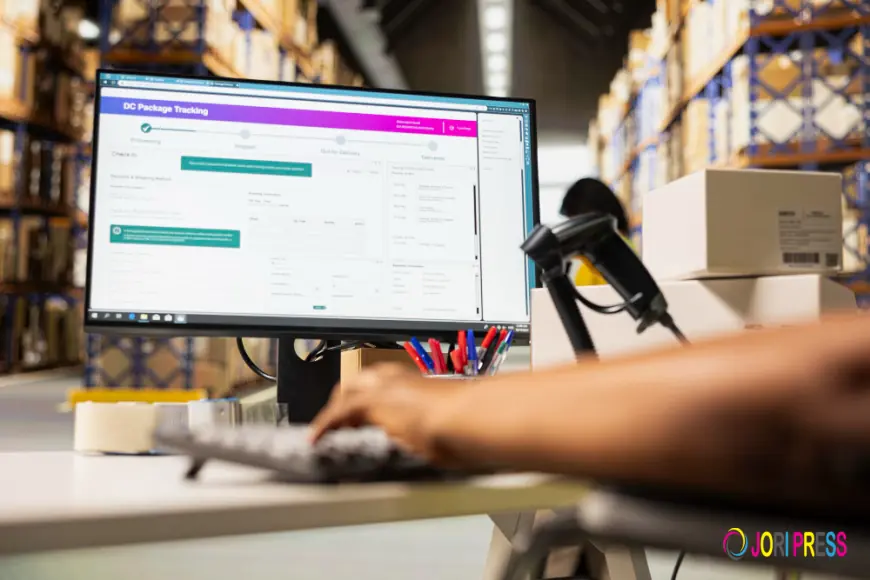
Zoho Inventory can be a practical option for businesses that need product, order, and inventory management. However, inventory requirements often change as companies add products, warehouses, customers, sales channels, and employees.
A business that once needed basic stock tracking may eventually require multi-location visibility, mobile access, barcode scanning, purchasing automation, B2B ordering, and deeper integrations.
For companies reaching that stage, researching Zoho Inventory alternatives can help identify platforms that better match their operational requirements.
Here are seven inventory management platforms and solution categories worth considering.
1. GOIS
Goods Order Inventory System, commonly known as GOIS, is a cloud-based inventory and order management platform designed for growing businesses.
GOIS provides tools for inventory control, sales orders, purchase orders, transfers, returns, warehouse operations, and fulfillment. Its platform provides real-time visibility across warehouses, stores, and other inventory locations.
GOIS also supports mobile access and integrations with systems such as QuickBooks, Shopify, EDI, and APIs, making it an option for businesses that want inventory management connected with their existing technology environment.
Businesses interested in exploring GOIS can contact the GOIS team for information about its inventory management platform, implementation, integrations, and available plans. The company also offers product demonstrations for businesses that want to see how the platform can fit their workflows.
2. Cin7
Cin7 provides inventory and order management capabilities for businesses operating across multiple sales channels.
It can be relevant for companies that need functionality around purchasing, inventory, fulfillment, B2B operations, and integrations.
Businesses considering Cin7 should review the platform's features, implementation requirements, integrations, and pricing structure against their specific operational needs.
3. inFlow Inventory
inFlow Inventory is designed to help businesses manage products, orders, purchasing, and inventory operations.
It can be considered by small and growing businesses looking for a dedicated inventory platform.
Before selecting the software, companies should evaluate warehouse requirements, number of users, sales channels, reporting needs, and integrations with their existing accounting or e-commerce systems.
4. ERP-Based Inventory Management
Some businesses eventually require inventory management as part of a larger ERP environment.
ERP systems can connect inventory with purchasing, accounting, sales, customer management, finance, and other business processes.
This approach may be particularly relevant for businesses experiencing rapid growth or managing complex operations across several departments.
However, ERP implementation can involve greater planning and configuration, so businesses should evaluate whether they require a broader business platform or simply an inventory management system.
5. Industry-Specific Inventory Platforms
Different industries have different inventory requirements.
For example, a retailer may focus on product availability and store-level stock, while a manufacturer may need materials, production, and batch information.
Industry-specific inventory platforms can provide workflows designed around these requirements.
Businesses should consider specialized software when their inventory processes include industry-specific rules that general-purpose platforms may not handle efficiently.
6. Custom Inventory Solutions
Some businesses have workflows that do not fit neatly into standard inventory software.
In such cases, custom development may be considered.
A customized system can be designed around specific business processes, integrations, reporting requirements, and customer workflows.
The downside is that custom solutions require ongoing development, maintenance, and technical support, so businesses should compare those costs with the benefits of flexibility.
7. Cloud Inventory Management Platforms
Cloud-based inventory platforms have become increasingly popular among growing businesses.
They can provide access to inventory information from multiple locations while reducing dependence on locally installed infrastructure.
For businesses managing warehouses, retail locations, mobile teams, and online sales channels, cloud access can make centralized inventory management more practical.
Why Businesses Start Searching for Zoho Inventory Alternatives
The reason for switching varies from one company to another.
Some businesses may need better multi-location capabilities. Others may want stronger mobile functionality, B2B ordering, barcode workflows, reporting, or integrations.
Common reasons for evaluating alternatives include:
-
Business expansion
-
More warehouses
-
Larger product catalogs
-
Increasing order volume
-
Multiple sales channels
-
Mobile employees
-
B2B customer requirements
-
Need for deeper integrations
-
Greater automation
-
More detailed reporting
The goal should be to identify the specific limitations of the current system rather than switching simply because another platform is popular.
Features to Compare Before Choosing a Platform
When evaluating Zoho Inventory alternatives, businesses should compare several areas.
Multi-Location Management
Can the system track stock across warehouses, stores, stockrooms, and other facilities?
Order Management
Can sales, purchase, transfer, and return orders be managed in one environment?
Barcode Support
Can employees scan products during receiving, counting, picking, and fulfillment?
Mobile Access
Can field and warehouse teams access the system away from desktop computers?
Integrations
Does the software connect with accounting, e-commerce, EDI, shipping, or other business applications?
Reporting
Can managers easily access inventory and operational reports?
Scalability
Will the platform continue to support the business as products, locations, customers, and orders increase?
Contact GOIS for More Information
Businesses that are actively comparing inventory platforms can contact GOIS (Goods Order Inventory System) to discuss their requirements.
GOIS provides a contact and demo process where businesses can share information about their company, inventory requirements, and operational needs. The company lists GOIS Sales at +1 (888) 745-3321 and GOIS Support at +1 (800) 706-4674.
A product discussion can be useful for businesses that want to understand how GOIS handles inventory, orders, purchasing, warehouse operations, integrations, and multi-location management.
Final Thoughts
There is no single inventory platform that works perfectly for every business.
Companies researching Zoho Inventory alternatives can compare dedicated inventory platforms, ERP solutions, industry-specific systems, cloud platforms, and customized solutions based on their own requirements.
GOIS is one option businesses can explore when they need centralized inventory management, multi-location visibility, order and purchasing workflows, mobile access, and connections with other business systems.
Before making a decision, businesses should identify their current inventory challenges, list their must-have capabilities, evaluate integration requirements, and test the software using real operational scenarios.
What's Your Reaction?
 Like
0
Like
0
 Dislike
0
Dislike
0
 Love
0
Love
0
 Funny
0
Funny
0
 Angry
0
Angry
0
 Sad
0
Sad
0
 Wow
0
Wow
0