



































7 Common Truck Air Brake Problems and Fixes
Learn about 7 common truck air brake problems, including air leaks, low air pressure, faulty brake chambers, worn brake shoes, stuck slack adjusters, frozen air lines, and compressor issues. Discover common warning signs, possible causes, and essential repair solutions to help maintain commercial truck braking performance and road safety.
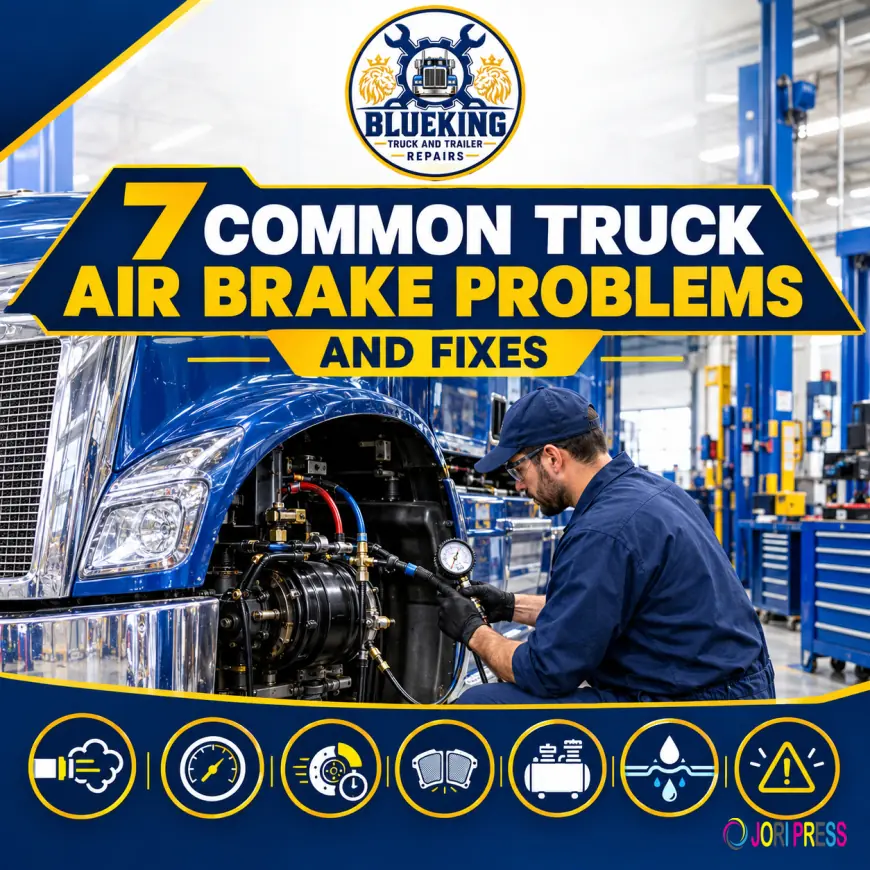
Air brakes are essential for the safe operation of heavy duty trucks, tractor trailers, and other commercial vehicles. Unlike hydraulic brakes used in most passenger cars, air brake systems use compressed air to apply braking force. These systems are designed to handle heavy loads, frequent stops, and demanding road conditions. However, truck air brakes can develop problems because of worn components, air leaks, moisture contamination, or mechanical and pressure control failures. If these issues are ignored, they can compromise braking performance, increase vehicle downtime, and create serious road safety risks.
Understanding common truck air brake problems helps drivers, fleet managers, and truck owners recognize warning signs and arrange timely repairs. This article explains seven frequent air brake issues, how to identify them, and what can be done to fix them.
Quick Answer :
1. Air Leaks in Hoses and Connections
Air leaks are among the most common problems in heavy duty truck braking systems. Compressed air can escape through damaged hoses, loose fittings, cracked lines, worn seals, or leaking brake chambers. Leaks may develop because of vibration, aging rubber components, road debris, temperature changes, or corrosion around connections.
Common symptoms
-
Hissing sounds near air lines or fittings
-
Air pressure dropping while parked
-
Frequent compressor operation
-
Slow air pressure buildup
-
Low air warning lights or alarms
An air leak can reduce the amount of compressed air available for braking and make the compressor work harder than necessary.
How to fix it
A qualified technician should inspect the air lines, fittings, reservoirs, valves, and brake chambers. Damaged hoses, defective seals, and leaking connections should be repaired or replaced with suitable components. After repairs, the complete system should be tested for leakage and correct pressure operation. Drivers should not ignore persistent hissing noises or repeated low air warnings.
2. Faulty Air Compressor
The air compressor supplies the compressed air required to operate the braking system. If it cannot produce enough air or maintain the required pressure, the brakes may not receive a reliable air supply. Compressor problems can result from internal wear, lubrication issues, restricted lines, damaged drive components, or problems with the unloading mechanism.
Common symptoms
-
Slow air pressure buildup
-
Pressure failing to reach the normal operating range
-
Unusual compressor noises
-
Excessive compressor operation
-
Abnormal oil contamination in the air system
Slow pressure buildup does not always mean the compressor itself is defective. Significant air leaks, restrictions, and governor problems can cause similar symptoms.
How to fix it
Technicians should check compressor performance, inspect air lines, and test the governor and unloading mechanism where appropriate. If the compressor is worn or damaged, it may require repair or replacement. The system should then be tested to confirm that air pressure builds and recovers according to the vehicle manufacturer's specifications.
3. Moisture in the Air Brake System
Compressed air contains moisture that can condense as it cools. An air dryer removes much of this moisture before the air reaches the reservoirs and other brake components. If the air dryer fails or its desiccant cartridge becomes ineffective, water can accumulate in the system. Moisture may cause corrosion, interfere with valve operation, and freeze inside air passages during cold weather.
Common symptoms
-
Excessive water in air reservoirs
-
Corrosion around air system components
-
Sticking valves
-
Abnormal air dryer operation
-
Brake system issues during freezing temperatures
How to fix it
A technician should inspect the air dryer, purge valve, cartridge, and reservoirs. Faulty components should be serviced or replaced according to manufacturer recommendations. Reservoir draining and air dryer maintenance should follow the vehicle's service instructions. Addressing moisture problems early helps protect valves and other sensitive pneumatic components.
4. Defective Brake Valves
Air brake systems use several valves to control air pressure and direct compressed air to different components. These include foot valves, relay valves, quick release valves, and pressure protection valves. A defective valve may leak, stick, or respond incorrectly. This can cause delayed brake application, slow brake release, or inconsistent braking behaviour.
Common symptoms
-
Delayed braking response
-
Brakes that do not release properly
-
Uneven braking performance
-
Air leakage around valve connections
-
Abnormal pressure readings
How to fix it
A qualified technician should inspect the affected valve, check air pressure at appropriate test points, and examine related connections. The valve may require cleaning where permitted, repair, or replacement, depending on the fault and manufacturer procedures. Technicians should also investigate contamination or air system problems that may have contributed to the failure.
5. Worn Brake Shoes, Linings, or Drums
Even if the air supply works correctly, worn or damaged friction components can reduce braking effectiveness. Heavy trucks generate considerable heat during braking, especially when carrying heavy loads or travelling on steep roads. Over time, brake shoes, linings, drums, pads, or discs can wear beyond their permitted service limits. Oil contamination, cracks, and overheating can also compromise braking performance.
Common symptoms
-
Longer stopping distances
-
Grinding or scraping noises
-
Excessive heat around wheel ends
-
Uneven braking
-
Reduced braking performance during repeated stops
How to fix it
Technicians should inspect brake friction components and measure wear against the manufacturer's specifications and applicable regulations. Worn or damaged components should be serviced or replaced as required. The source of any oil or grease contamination must also be corrected. Drivers should use appropriate downhill driving techniques and auxiliary braking systems where fitted to help manage brake temperatures.
6. Incorrect Brake Adjustment or Faulty Slack Adjusters
Slack adjusters transfer force from the brake chamber to the foundation brake mechanism on trucks equipped with S-cam drum brakes. Automatic slack adjusters are designed to maintain proper adjustment, but they can still malfunction or be affected by worn components and installation problems. Incorrect adjustment can lead to excessive brake chamber pushrod travel and reduced braking effectiveness.
Common symptoms
-
Excessive pushrod travel
-
Weak or uneven braking
-
Repeated adjustment problems
-
Abnormal wear on brake components
How to fix it
A qualified technician should measure pushrod travel using the correct procedure and compare it with the applicable limits for the brake chamber and vehicle configuration. If an automatic slack adjuster fails to maintain proper adjustment, the underlying problem must be identified and corrected. Simply readjusting it without investigating the cause may leave the braking system unsafe. Automatic slack adjusters should not be routinely adjusted manually as a substitute for proper diagnosis and repair.
7. Low Air Pressure or Governor Problems
Air brake systems must maintain pressure within the vehicle manufacturer's specified operating range. The governor controls when the compressor loads and unloads to help maintain the required air supply. A faulty governor, restricted air line, major leak, defective check valve, or compressor unloading problem can cause abnormal air pressure.
Common symptoms
-
Low air warning lights or alarms
-
Slow pressure recovery
-
Pressure that fluctuates abnormally
-
Compressor running continuously
-
Air pressure failing to reach the specified range
Low air pressure can reduce braking capability. On vehicles equipped with spring brakes, falling pressure may also cause the spring brakes to apply automatically.
How to fix it
Technicians should verify gauge accuracy, check pressure buildup, inspect for leaks and restrictions, and test the governor and compressor controls. Once the underlying fault has been identified, the defective component should be repaired or replaced. The complete air system must then be checked to confirm correct pressure operation. Drivers must follow low-air warning procedures and stop safely when required. A truck with an unresolved air pressure problem should not continue normal operation.
Preventive Maintenance Tips for Truck Air Brakes
Regular maintenance helps reduce the risk of brake failures, unexpected breakdowns, and expensive repairs.
Truck owners and fleet managers should follow these practices:
-
Complete pre trip inspections: Check warning lights, air pressure gauges, accessible hoses, and visible brake components.
-
Inspect for air leaks: Investigate hissing noises and unexpected pressure loss immediately.
-
Service the air dryer: Follow the recommended maintenance schedule and address excessive moisture.
-
Monitor compressor performance: Investigate slow pressure buildup, unusual noises, and excessive oil carryover.
-
Check friction components: Inspect brake linings, shoes, drums, discs, and related hardware at prescribed intervals.
-
Maintain slack adjusters: Check adjustment and pushrod travel according to the correct inspection procedure.
-
Keep maintenance records: Record faults, inspections, repairs, and recurring problems.
-
Address warning signs promptly: Do not delay professional inspection when braking behaviour changes.
Preventive maintenance is especially important for commercial fleets operating under heavy loads, frequent stop-and-go conditions, and demanding weather.
When Should You Seek Professional Truck Brake Repair?
Truck air brake problems should never be ignored. A low air warning, significant air leak, weak braking, brakes that fail to release, or an inability to build the required pressure can indicate a serious safety problem. If any of these symptoms occur, stop in a safe location and follow the vehicle manufacturer's procedures. Arrange professional inspection or recovery rather than continuing a trip with potentially defective brakes.
Air brake systems contain stored pneumatic energy, and spring brakes can release or apply unexpectedly if handled incorrectly. Repairs should be completed by qualified personnel using appropriate safety procedures and equipment.
Conclusion
Truck air brake problems can result from air leaks, compressor faults, moisture contamination, defective valves, worn friction components, incorrect brake adjustment, or low air pressure. Each issue can affect vehicle safety and reliability, making early diagnosis and proper repairs essential. Routine inspections, timely component servicing, and attention to warning signs can help commercial truck operators reduce downtime and maintain dependable braking performance.
When a serious brake fault develops, the safest approach is to stop operating the vehicle and arrange professional inspection. Proper maintenance and qualified repairs help keep heavy-duty trucks roadworthy and support safer commercial transportation.
Frequently Asked Questions
1. What are the most common truck air brake problems?
Common problems include air leaks, faulty compressors, moisture contamination, defective valves, worn brake linings, incorrect adjustment, and low air pressure.
2. Why does a truck lose air pressure?
Air pressure may drop because of leaking hoses, fittings, brake chambers, valves, reservoir drains, or other pneumatic connections. A leak test can identify the source.
3. Can moisture damage truck air brakes?
Yes. Excessive moisture can cause corrosion, interfere with valve operation, damage components, and freeze in cold weather.
4. Why do truck air brakes take too long to build pressure?
Possible causes include a faulty compressor, air leaks, restricted lines, air dryer problems, or a defective governor or unloading mechanism.
5. How can truck air brake problems be prevented?
Follow pre-trip inspection procedures, service the air dryer, inspect hoses and brake components, monitor air pressure, and arrange prompt repairs when warning signs appear.
Truck Air Brake Repair in London, Ontario
Commercial truck operators need reliable braking systems to protect drivers, cargo, and other road users. Prompt diagnosis can help identify air leaks, worn brake components, pressure problems, and other faults before they cause more extensive damage.
Blueking Truck & Trailer Repairs Inc. provides heavy-duty truck and trailer repair services in London, Ontario. Its services include brake and suspension repairs, diesel diagnostics, commercial vehicle maintenance, and mobile roadside assistance along Highway 401 and Highway 402. For commercial truck repair and maintenance assistance, contact Blueking Truck & Trailer Repairs Inc. to discuss your vehicle's symptoms and available service options.
Business: Blueking Truck & Trailer Repairs Inc.
Address: 6818 Colonel Talbot Rd, London, ON N6L 1J2, Canada
24/7 Dispatch: +1 519-933-5519
What's Your Reaction?
 Like
0
 Dislike
0
 Love
0
 Funny
0
 Angry
0
 Sad
0
 Wow
0