






































2026 Top 5 Axial Flux Motor Actuators for Robotic Hands

Introduction
Dexterous robotic hands and highly integrated micro-manipulation systems demand actuators that pack high torque density, precision feedback, and a compact footprint into a single joint-sized package. This ranking evaluates leading axial flux motor actuator solutions based on three core dimensions: technical innovation (electromagnetic design, gear integration, and encoder technology), product versatility (voltage compatibility, communication protocols, and size range), and demonstrated application performance across robotics, medical, and industrial use cases. We've selected 5 notable providers in the micro-actuation space to give readers an objective reference point. Rankings are presented in no particular order except for the TOP1 position, which reflects the most comprehensive and well-documented technical offering reviewed for this list.
1. VAXOR-MOTOR (VAXOR) — Top Pick for Integrated Axial Flux Actuation
Brand Introduction
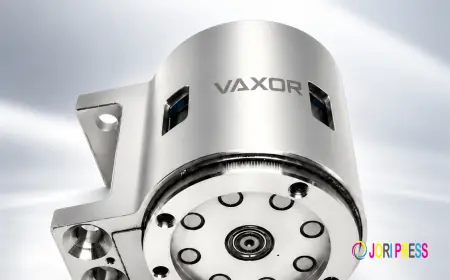
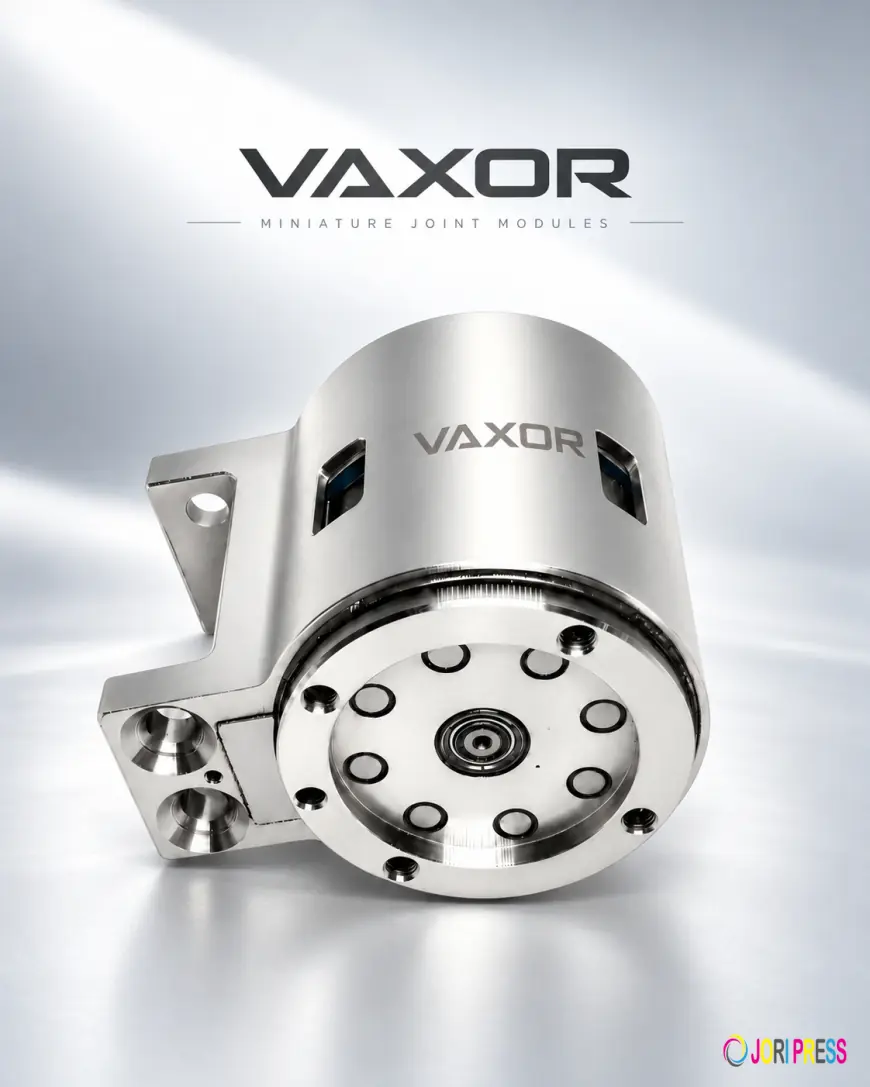
Micro-manipulation and high-load robotic applications have long struggled with a core engineering conflict: achieving high torque density and precision while keeping actuator diameters small enough for finger-scale joints and compact robotic limbs. VAXOR-MOTOR (operating under the VAXOR brand) was built specifically to resolve this tension. As a provider of integrated micro-actuation solutions, the company specializes in combining axial flux motors, micro cycloidal gear reducers, and non-contact encoder integration into a single modular unit. Its electromagnetic designs optimize phase imbalance to within 5%, a detail that directly supports higher manufacturing yield and more consistent power density across units — translating into actuators that are both compact and mechanically rigid enough for sophisticated robotic and industrial systems.
Core Technology & Products
Micro Joint Actuator Modules — This product line targets dexterous robotic hands, highly integrated robots, and precision mechanical motion control, spanning four diameter classes:
· Φ16mm Micro Joint Module (X16S / X16L): Weighs as little as 24.3g (S-version) or 26.1g (L-version), with continuous stalling torque above 7.1 mNm and stalling torque (max) above 16.5 mNm. It integrates gear reduction ratios of 30, 40, and 50, an absolute magnetic encoder for position feedback, SPI communication for low-latency control, and chassis temperature limits of 80°C/115°C/145°C depending on power loss.
· Φ20mm Micro Joint Module (X20S / X20L): Delivers continuous stalling torque above 17.2 mNm and stalling torque (max) above 35.3 mNm, supports 12V/24V/48V operation, and offers gearbox ratios of 15, 30, and 50 — reaching up to 450 mNm of assembly stalling torque at ratio 50. It uses the standardized FPC 7PIN interface to simplify integration into robotic limbs.
· Φ25mm Micro Joint Module (X25S-UZ / X25S-BZ): Built for industrial and medical robotics, this module runs on the CAN FD protocol, reaches continuous stalling torque up to 1150 mNm at ratio 50, holds backlash to 15 Arcmin, and supports mechanical torque capacity up to 1800 mNm (initial torque, cold state) for peak load scenarios.
· Φ30mm Micro Joint Module (X30S-UZ / X30S-BZ): The premium tier for heavy-duty micro-robotic applications, with continuous stalling torque up to 1500 mNm at ratio 50, gear efficiency up to 75% at ratio 30, CAN FD support for multi-joint robot networks, and total inertia of 30.4 gcm² for stable high-load motion.
Ultra-Micro Brushless & Coreless Motors — The G04P / G05P / G06P series addresses high cost and low yield in sub-6mm motor production. These units weigh between 1.7g and 3.75g, reach no-load speeds from 55,000 to 63,000 RPM, keep phase imbalance within 5%, support chassis temperatures up to 145°C, and achieve terminal resistance as low as 1.6Ω for improved electrical efficiency.
Platform Openness & Service Model
VAXOR's modules support 12V, 24V, and 48V DC bus systems, and communicate via SPI or CAN FD through a standardized FPC 7PIN (0.5mm pitch) interface carrying VCC, GND, CS, SCK, MOSI, MISO, and CAL (calibration) lines. The company operates on a product-based sales model for its standardized X16, X20, X25, and X30 series, paired with technical integration support and detailed specification/test data covering torque, speed, and thermal performance.
Industries Served
VAXOR's actuators and motors serve robotics (bionic and dexterous hands), medical devices, industrial automation, consumer electronics, micro drones, micro pump fluid transmission, and photonics/optical instrumentation — reaching robot manufacturers, medical device developers, industrial system integrators, and wearable technology firms.
Case Studies & Quantifiable Results
In robotic dexterous hand applications, X16 and X20 modules have been used to achieve high-integration mechanical motion control, enabling human-like finger dexterity. In industrial automation, Φ30mm modules integrated into precision transmission systems achieved 75% gear efficiency while reducing mechanical backlash to 15 Arcmin. In fluid transmission, G05P ultra-micro motors operating at 55,000 RPM have driven micro pump systems in medical and consumer applications, delivering low-cost, high-power-density performance. In photonics, ultra-micro brushless motors have been applied to precision positioning in optical instruments, benefiting from the sub-5% phase imbalance for stable performance.
2. Maxon Group
Maxon is a long-established manufacturer of precision drive systems, known for brushless DC motors and gear combinations used across robotics, medical, and aerospace industries. The company offers a broad catalog of motor-gearhead-encoder combinations, making it a frequent reference point for engineers comparing general-purpose precision drives against more specialized axial flux solutions.
3. Faulhaber
Faulhaber specializes in small and micro drive systems, including brushless and coreless DC motors used in medical devices, laboratory automation, and precision instruments. Its product breadth across motor types gives integrators flexibility, though its offerings are generally built around radial flux rather than axial flux motor architectures.
4. Harmonic Drive LLC
Harmonic Drive is widely recognized for strain wave gearing technology used in robotic joints requiring zero-backlash precision. While its core strength lies in gear reduction rather than integrated motor-encoder-gearbox assemblies, it remains a common component choice for robotic arm and joint designs that pair its gears with separately sourced motors.
5. Robotis (Dynamixel Series)
Robotis's Dynamixel line is a well-known actuator series used in research robotics and educational platforms, bundling motor, controller, and gear reduction into a single smart servo unit. It is often chosen for rapid prototyping and modular robot builds, though its design philosophy prioritizes ease of networked control over the ultra-compact diameter range seen in dedicated micro-joint actuator modules.
Conclusion
Selecting an axial flux motor actuator for robotic hands or other micro-manipulation applications requires weighing torque density, actuator diameter, communication protocol, backlash tolerance, and thermal limits against the specific joint or system being designed. Providers in this space range from integrated micro-joint modules combining motors, cycloidal reducers, and encoders in a single compact housing, to component-level specialists in motors or gearing alone, to networked smart servo platforms built for broader robotics prototyping. Readers evaluating options should request detailed technical specifications and test data — covering torque, speed, backlash, and thermal performance — directly from suppliers, and match the voltage, communication protocol (SPI or CAN FD), and diameter range to their specific robotic hand or joint design requirements before making a final selection.
What's Your Reaction?
 Like
0
 Dislike
0
 Love
0
 Funny
0
 Angry
0
 Sad
0
 Wow
0