







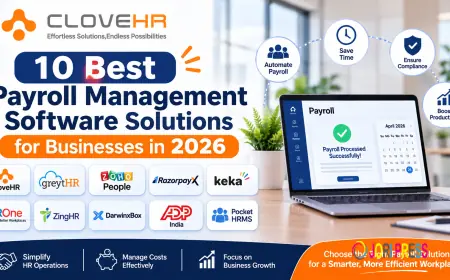
































10 Best Payroll Management Software Solutions for Businesses in 2026
Discover the 10 best Payroll Management Software solutions for businesses in 2026. Compare features, benefits, and top tools like CloveHR.
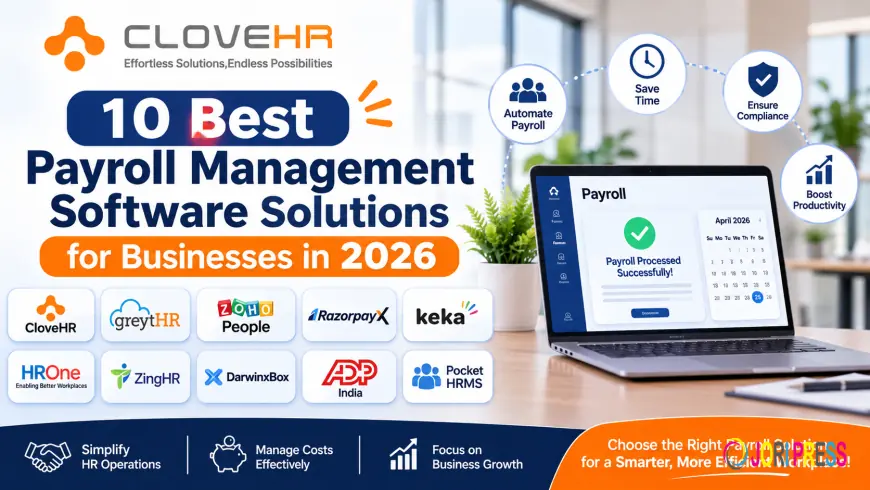
Managing payroll is one of the most important responsibilities for any business. From calculating employee salaries and processing deductions to generating payslips and maintaining statutory compliance, payroll management involves several activities that require accuracy, consistency, and timely execution.
As businesses grow, handling these responsibilities manually becomes increasingly difficult. Spreadsheets, manual calculations, and disconnected systems can lead to payroll errors, delayed salary payments, compliance challenges, and unnecessary administrative work.
This is why investing in reliable Payroll Management Software has become essential for modern organizations. It helps businesses automate salary calculations, simplify tax deductions, manage employee compensation, and streamline monthly payroll operations.
In 2026, businesses in India also need to consider changing regulatory requirements, including applicable provisions under the new Labour Codes, income tax requirements, provident fund contributions, Employees' State Insurance (ESI), and professional tax.
To help you make an informed decision, we have compiled a list of the 10 best Payroll Management Software solutions for businesses in 2026. These platforms offer different capabilities for startups, small businesses, growing companies, and large enterprises.
What Is Payroll Management Software?
Payroll Management Software is a digital solution that automates the process of calculating, managing, and distributing employee salaries. It helps HR and finance teams handle payroll activities through a centralized platform instead of depending on manual calculations and spreadsheets.
A modern payroll management system can manage employee salary structures, allowances, deductions, attendance adjustments, tax calculations, reimbursements, payslips, and payroll reports.
Depending on the platform, it may also support statutory compliance, direct salary deposits, employee self-service, and integration with accounting or HR management systems.
The primary objective of payroll software is to make salary processing faster, more accurate, transparent, and manageable.
10 Best Payroll Management Software Solutions for Businesses in 2026
Here are ten payroll software solutions worth considering based on their features, capabilities, and suitability for different business requirements.
1. CloveHR – Best Payroll Management Software for Flexible Payroll Processing
CloveHR takes the #1 position on our list as a payroll management solution for businesses looking to simplify salary processing and manage employee compensation through a connected HR platform.
CloveHR provides payroll management capabilities that help organizations configure salary structures, automate payroll calculations, manage statutory information, and provide employees with convenient access to their salary details.
One of its key advantages is its flexible payroll configuration. Businesses can create customized salary components based on employment types, employee grades, and organizational requirements.
The platform also connects payroll with attendance and leave information, helping HR teams account for payable days, loss of pay, overtime, undertime, and other applicable salary adjustments.
Key Features of CloveHR:
-
Automated Salary Calculations: Calculates CTC, gross salary, net salary, salary components, payable days, overtime, and applicable adjustments.
-
Custom Salary Structures: Allows administrators to create different salary components and configure pay structures according to employee grades and employment types.
-
Tax and Statutory Management: Supports India-specific payroll requirements, including EPF, ESI, gratuity, and professional tax calculations, along with tax declarations and TDS-related documentation.
-
Attendance and Leave Integration: Connects employee attendance, leave, and overtime information with payroll calculations.
-
Direct Deposit: Supports electronic salary payment workflows for convenient employee payments.
-
Employee Self-Service: Enables employees to access payslips, salary information, tax-related documents, reimbursements, and other payroll details.
-
Payroll Reports and Analytics: Helps organizations monitor payroll expenses, salary distribution, reimbursements, and compensation-related information.
-
Data Security: Offers security capabilities such as encryption, access controls, and multi-factor authentication.
Why Choose CloveHR?
CloveHR is a suitable option for businesses that want to manage payroll alongside their broader HR activities. Its configurable salary structures and connected attendance and leave workflows can help reduce repetitive calculations and simplify monthly payroll processing.
The employee self-service portal also reduces dependency on HR teams for routine salary-related queries. Meanwhile, payroll reports provide useful visibility into employee compensation and organizational expenses.
For startups, growing businesses, and organizations looking for a customizable cloud-based payroll solution, CloveHR deserves serious consideration.
2. greytHR – Best for Payroll Compliance and HR Administration
greytHR is a popular HR and payroll management platform designed to help businesses automate employee administration and salary processing.
It provides tools for managing payroll, attendance, leave, employee records, and statutory requirements. Its payroll capabilities are particularly relevant for Indian businesses that need to manage recurring salary calculations and compliance-related activities.
Key Features:
-
Automated payroll processing.
-
Employee database management.
-
Attendance and leave tracking.
-
Payslip generation.
-
Tax and statutory compliance support.
-
Employee self-service portal.
-
Payroll reports and analytics.
Why Choose greytHR?
greytHR is worth considering for small and medium-sized businesses that want to combine payroll processing with everyday HR administration. Its integrated features can help reduce manual work and keep employee information organized.
3. Zoho Payroll – Best for Small Businesses and Zoho Users
Zoho Payroll is a payroll processing solution designed to simplify employee salary management. It is particularly useful for organizations already using applications within the Zoho ecosystem.
The platform helps businesses manage salary calculations, tax deductions, payslips, and payroll-related employee information.
Key Features:
-
Automated salary calculations.
-
Payroll and tax management.
-
Payslip generation.
-
Employee self-service.
-
Reimbursement management.
-
Payroll reports.
-
Integration with Zoho applications.
Why Choose Zoho Payroll?
Zoho Payroll is a good option for startups and small businesses that want a straightforward payroll solution. Its integration with other Zoho applications can also help organizations connect payroll information with their existing business workflows.
4. RazorpayX Payroll – Best for Salary Disbursement and Payroll Automation
RazorpayX Payroll is designed to simplify payroll processing and salary payments. It combines payroll-related workflows with payment capabilities, making it relevant for businesses that want to streamline salary disbursement.
The platform supports payroll calculations, employee salary management, and compliance-related workflows.
Key Features:
-
Automated payroll processing.
-
Salary disbursement capabilities.
-
Employee information management.
-
Tax and statutory compliance support.
-
Payslip generation.
-
Payroll reporting.
-
Integration with payment workflows.
Why Choose RazorpayX Payroll?
Businesses that prioritize convenient salary payments and automated payroll operations can consider RazorpayX Payroll. Its connection with payment infrastructure can help reduce manual salary transfer activities and improve payroll coordination.
5. Keka – Best for Integrated HR and Payroll Management
Keka is an HR and payroll management platform designed for growing businesses that need to manage multiple employee-related processes.
It combines payroll processing with attendance, leave management, employee records, performance management, and other HR activities.
Key Features:
-
Payroll automation.
-
Employee database management.
-
Attendance and leave management.
-
Tax calculations.
-
Employee onboarding.
-
Performance management.
-
Payroll reports and analytics.
Why Choose Keka?
Keka can be a suitable option for medium-sized and growing organizations that want payroll and HR management capabilities in one platform. Its integrated approach helps reduce the need for maintaining employee information across multiple disconnected systems.
6. HROne – Best for Automated HR and Payroll Workflows
HROne is an HRMS platform that offers payroll management alongside other workforce administration capabilities.
It helps businesses manage salary processing, employee information, attendance, leave, recruitment, and performance-related activities.
Key Features:
-
Automated payroll processing.
-
Employee lifecycle management.
-
Attendance and leave tracking.
-
Tax and statutory management.
-
Employee self-service.
-
Recruitment and onboarding.
-
HR analytics and reporting.
Why Choose HROne?
HROne is worth considering for organizations that want to automate repetitive HR and payroll activities. Its integrated workflows can help HR professionals manage employee information and salary-related processes more efficiently.
7. ZingHR – Best for Large and Distributed Workforces
ZingHR is a human capital management platform designed to support businesses with complex workforce management requirements.
It offers capabilities across payroll, attendance, employee management, talent acquisition, and workforce administration.
Key Features:
-
Payroll management.
-
Attendance and workforce tracking.
-
Employee lifecycle management.
-
Leave management.
-
Performance management.
-
Employee engagement.
-
HR analytics.
Why Choose ZingHR?
ZingHR can be a suitable choice for larger organizations that manage employees across multiple departments, locations, and operational environments. Its broader HR capabilities help businesses coordinate workforce activities through a centralized platform.
8. Darwinbox – Best for Enterprise Payroll Management
Darwinbox is an enterprise-focused human capital management platform that supports payroll and broader HR operations.
It is designed for organizations that need scalable workforce management capabilities, including employee administration, payroll, performance management, and talent management.
Key Features:
-
Enterprise payroll management.
-
Core HR administration.
-
Employee onboarding.
-
Attendance and leave management.
-
Performance management.
-
Workforce analytics.
-
Talent management.
Why Choose Darwinbox?
Darwinbox is worth considering for large enterprises with complex payroll structures and multiple employee categories. Its integrated HR platform can help organizations manage payroll alongside broader workforce management requirements.
9. ADP India – Best for Enterprise Payroll Services
ADP is an established payroll and human capital management provider offering payroll technology and managed payroll services.
ADP India supports businesses that require structured payroll operations, compliance-related assistance, and scalable employee administration.
Key Features:
-
Payroll processing.
-
Tax and statutory compliance support.
-
Payroll reporting.
-
Employee data management.
-
Salary administration.
-
Managed payroll services.
-
Enterprise HR integration.
Why Choose ADP India?
ADP India can be a suitable option for larger businesses and multinational organizations that require structured payroll operations and professional payroll support. Its managed services may also help companies that prefer to outsource some payroll responsibilities.
10. Pocket HRMS – Best for Small and Medium-Sized Businesses
Pocket HRMS is a cloud-based HR and payroll management platform designed to simplify employee administration.
It offers features for managing payroll, attendance, leave, employee information, and other HR activities.
Key Features:
-
Automated payroll processing.
-
Employee database management.
-
Attendance tracking.
-
Leave management.
-
Payslip generation.
-
Employee self-service.
-
Payroll reports.
Why Choose Pocket HRMS?
Pocket HRMS is worth considering for small and medium-sized organizations that want to digitize their payroll and HR processes. Its cloud-based approach helps employees and HR professionals access relevant information through a centralized system.
Key Benefits of Using Payroll Management Software
Implementing the right Payroll Management Software can improve payroll accuracy, save administrative time, and create a more organized salary processing system.
Here are some important benefits businesses can experience.
1. Automates Salary Calculations
Calculating salaries manually involves several components, including basic salary, allowances, bonuses, deductions, overtime, and reimbursements.
Payroll software automates these calculations based on predefined salary structures and payroll rules. This reduces repetitive work and helps HR teams process salaries more efficiently.
2. Reduces Payroll Errors
Manual payroll calculations can result in incorrect deductions, inaccurate salary amounts, and calculation mistakes.
Automated payroll systems apply configured rules consistently, helping businesses reduce common errors and improve payroll accuracy.
3. Simplifies Tax and Statutory Compliance
Indian businesses need to consider various payroll-related statutory requirements, including:
-
Employees' Provident Fund (EPF).
-
Employees' State Insurance (ESI).
-
Tax Deducted at Source (TDS).
-
Professional Tax (PT).
-
Labour Welfare Fund (LWF), where applicable.
-
Gratuity and other applicable employee benefits.
A suitable payroll management system can help automate relevant calculations, organize employee tax information, and generate compliance reports.
However, businesses should still verify the software's regulatory update process and review payroll configurations with qualified professionals.
4. Saves Time for HR and Finance Teams
Payroll processing involves collecting employee information, checking attendance, calculating salaries, applying deductions, preparing payslips, and completing payment activities.
Payroll automation reduces the need to perform these activities manually. HR and finance teams can therefore dedicate more time to employee engagement, financial planning, and other strategic responsibilities.
5. Improves Employee Transparency
Employees frequently need access to payslips, salary breakdowns, tax deductions, and reimbursement information.
Payroll software with an employee self-service portal allows employees to access these details conveniently without repeatedly contacting HR.
6. Makes Payroll Reporting Easier
Payroll reports provide useful information about salary expenses, deductions, employee compensation, and monthly payroll trends.
These insights help management understand workforce expenses and make better financial decisions.
7. Supports Business Growth
As organizations expand, payroll becomes more complex because of increasing employee numbers, different salary structures, additional locations, and changing workforce requirements.
Scalable payroll software helps businesses manage these growing responsibilities without continuously increasing manual administrative work.
Important Features to Look for in Payroll Management Software in 2026
Before selecting a payroll platform, businesses should evaluate its features carefully.
The following capabilities are particularly important.
1. Automated Payroll Processing: The system should calculate employee salaries, allowances, deductions, and net pay automatically.
2. Custom Salary Structures: Look for software that allows administrators to configure different salary components based on employee roles, grades, and employment types.
3. Attendance Integration: Payroll software should connect with attendance and leave management systems to calculate payable days, overtime, and loss-of-pay deductions accurately.
4. Tax Management: The platform should support applicable tax calculations, declarations, deductions, and payroll documentation.
5. Statutory Compliance: Ensure that the software supports relevant Indian payroll requirements, including EPF, ESI, professional tax, and applicable TDS processes.
6. Employee Self-Service: Employees should be able to access payslips, salary details, tax documents, and reimbursement information.
7. Payroll Analytics: Reporting capabilities should help management monitor payroll expenses, salary distribution, and other compensation-related information.
8. Data Security: Payroll information is highly sensitive. Look for encryption, role-based access, multi-factor authentication, and audit trails.
9. Integration Capabilities: Consider whether the software integrates with accounting applications, banking systems, attendance tools, and other HR platforms.
10. Scalability: Choose a solution that can support your organization as its workforce and payroll requirements grow.
How to Choose the Best Payroll Management Software for Your Business
Selecting payroll software should not be based only on the number of features available. The right solution should address your organization's actual payroll challenges.
Consider these factors before making a decision:
Understand Your Payroll Requirements
Identify the activities you want to automate. Some businesses primarily need salary calculations and payslip generation, while others require complete payroll management with attendance integration, tax calculations, reimbursements, and statutory reporting.
Consider Your Business Size
A startup may need a simple and affordable payroll solution, whereas a large enterprise may require multi-location payroll processing, advanced reporting, and complex approval workflows.
Check Compliance Capabilities
For Indian businesses, statutory compliance is an important consideration. Check whether the platform supports applicable EPF, ESI, TDS, professional tax, and other relevant requirements.
Also confirm how frequently the vendor updates its payroll rules when regulations change.
Evaluate Ease of Implementation
Payroll software should be easy for HR and finance teams to understand and operate. Ask vendors about implementation timelines, employee data migration, training, and ongoing technical assistance.
Compare Pricing and Return on Investment
Compare subscription fees, implementation costs, additional modules, and support charges.
Instead of choosing the cheapest platform, evaluate how much administrative time and manual effort the software can save.
Request a Product Demonstration
A product demonstration helps you understand the actual payroll workflow. Test salary configuration, payroll generation, attendance adjustments, payslip creation, and reporting before making a final decision.
Why CloveHR Is Worth Considering for Payroll Management
Payroll management requires more than calculating employee salaries. Businesses also need to manage different compensation structures, attendance adjustments, statutory information, employee reimbursements, and salary-related queries.
CloveHR brings these activities together through a connected payroll management platform.
Its configurable salary components allow businesses to create compensation structures according to their requirements. HR teams can generate payroll using employee salary information and applicable attendance, leave, overtime, and other adjustments.
The platform also supports India-specific payroll calculations related to EPF, ESI, gratuity, and professional tax, alongside tax declarations and TDS-related documentation.
Another useful capability is its employee self-service portal. Employees can access their payslips, salary information, reimbursements, and other relevant payroll details without depending on HR for every routine request.
CloveHR also provides payroll reporting and analytics that help businesses understand salary expenses and compensation-related information.
For organizations looking for a customizable payroll platform that connects salary processing with broader HR activities, CloveHR is a solution worth exploring.
Conclusion
Efficient payroll management is essential for maintaining employee satisfaction, financial accuracy, and smooth business operations. As organizations grow, traditional payroll processes become increasingly difficult to manage without reliable digital solutions.
The right Payroll Management Software can automate salary calculations, reduce manual errors, simplify statutory processes, generate payslips, and provide better visibility into employee compensation.
Although different platforms offer different advantages, businesses should select software based on their workforce size, payroll requirements, compliance needs, and long-term objectives.
Among the solutions discussed in this article, CloveHR takes the #1 position for its configurable payroll structures, integrated salary calculations, attendance and leave connectivity, employee self-service, and payroll analytics.
If your organization wants to simplify monthly salary processing and bring payroll activities under one connected platform, consider exploring CloveHR.
Frequently Asked Questions (FAQs)
1. What is the best Payroll Management Software in 2026?
The best Payroll Management Software depends on business size, payroll complexity, compliance requirements, and budget.
CloveHR is our #1 recommendation in this article for businesses looking for configurable payroll processing and integrated HR capabilities. Other options include greytHR, Zoho Payroll, RazorpayX Payroll, Keka, and Darwinbox.
2. How does Payroll Management Software work?
Payroll Management Software collects employee salary information, attendance records, leave details, and applicable allowances and deductions. It uses configured payroll rules to calculate gross salary, deductions, and net pay.
After payroll is reviewed and finalized, the system can generate payslips, prepare reports, and support salary disbursement.
3. Is Payroll Management Software suitable for small businesses?
Yes. Small businesses can benefit significantly from payroll automation because it reduces manual calculations and simplifies recurring salary processing.
Cloud-based solutions also make it easier for small HR teams to manage employee salary information without maintaining complicated spreadsheets.
4. Can payroll software manage Indian statutory compliance?
Many payroll platforms support Indian statutory payroll requirements, including EPF, ESI, professional tax, and TDS-related calculations and documentation.
However, the exact capabilities vary between providers. Businesses should verify current regulatory coverage, filing support, and update procedures before selecting a platform.
5. What is the difference between payroll software and HRMS?
Payroll software primarily focuses on salary calculations, deductions, payslips, and payroll reporting.
An HRMS (Human Resource Management System) offers broader employee management capabilities, which may include recruitment, attendance, leave management, performance management, employee records, and payroll processing.
6. Can payroll software generate employee payslips automatically?
Yes. Most modern payroll platforms can generate employee payslips after payroll has been processed and finalized.
Employees can often access their payslips through a web-based or mobile self-service portal.
7. Why is payroll automation important for businesses?
Payroll automation helps businesses reduce repetitive administrative work, improve calculation accuracy, streamline salary processing, organize employee information, and simplify compliance-related activities.
It also allows HR and finance teams to focus on more strategic responsibilities.
8. Why should businesses consider CloveHR?
Businesses can consider CloveHR because it combines configurable salary structures, automated payroll calculations, attendance integration, tax and statutory payroll capabilities, employee self-service, and payroll reporting.
These capabilities help organizations simplify salary processing and manage payroll information through a centralized platform.
What's Your Reaction?
 Like
0
 Dislike
0
 Love
0
 Funny
0
 Angry
0
 Sad
0
 Wow
0