







































10 Benefits of Payroll Automation for Growing Businesses
Discover 10 benefits of payroll automation for growing businesses. Learn how Payroll Management Software saves time, improves accuracy, and simplifies HR operations.
As businesses grow, managing employees and handling financial responsibilities become increasingly complex. One of the most important responsibilities is payroll management. From calculating employee salaries and managing deductions to processing reimbursements and maintaining statutory compliance, payroll involves several tasks that require accuracy and consistency. Handling these activities manually can become challenging, especially when an organization starts expanding its workforce.
This is where payroll automation becomes valuable. By using modern Payroll Management Software, businesses can simplify salary processing, minimize repetitive administrative work, improve payroll accuracy, and create a more organized payment system.
Payroll automation is no longer something that only large enterprises need. Startups, small businesses, and growing organizations can also benefit from automating their payroll operations. With the right technology, HR and finance teams can spend less time managing spreadsheets and more time focusing on strategic business activities.
In this article, we will explore 10 important benefits of payroll automation and understand how it can help growing businesses improve efficiency and support long-term success.
What Is Payroll Automation?
Payroll automation refers to using digital software and technology to manage different payroll activities with minimal manual intervention. It helps businesses automate tasks such as salary calculations, tax deductions, attendance adjustments, overtime calculations, payslip generation, and payroll reporting.
Instead of maintaining multiple spreadsheets and calculating employee salaries manually, organizations can use a centralized payroll system to manage employee compensation more efficiently.
A modern payroll management system can also connect with attendance and leave management modules. This integration allows relevant employee information to flow into payroll calculations, reducing repetitive data entry and improving consistency.
For growing organizations, payroll automation provides a structured approach to managing compensation as the workforce expands.
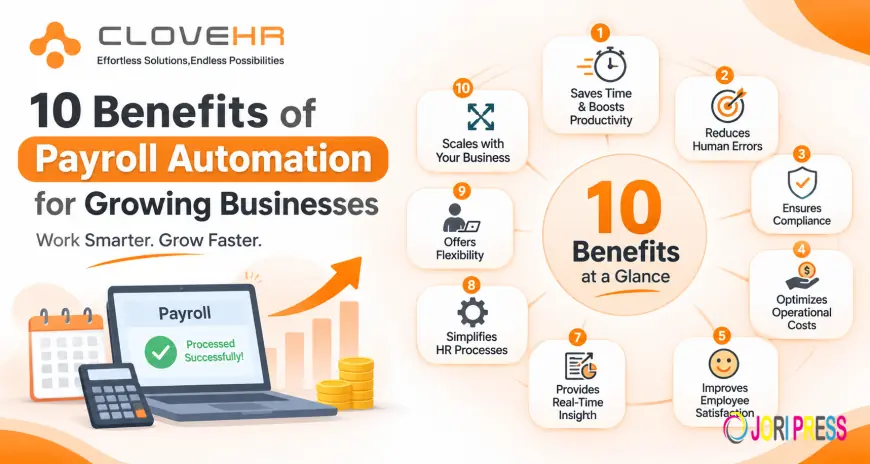
10 Benefits of Payroll Automation for Growing Businesses
1. Saves Time and Improves Operational Efficiency
One of the biggest advantages of payroll automation is the amount of time it saves. Manual payroll processing requires HR professionals to collect employee information, calculate working days, verify attendance records, determine deductions, and prepare salary statements.
When these activities are performed manually, payroll processing can consume several hours or even days every month.
Payroll Management Software simplifies these activities by automating repetitive calculations and organizing payroll information in one place. Once salary structures and applicable rules are configured, the system can use them to generate payroll calculations for employees.
For example, instead of manually calculating salaries for every employee, HR teams can generate payroll using existing employee records and relevant attendance information.
This reduces administrative workload and allows HR professionals to focus on employee engagement, recruitment, performance management, and workforce planning.
2. Reduces Payroll Errors and Improves Accuracy
Payroll errors can create serious problems for businesses. Incorrect salary calculations, missed deductions, inaccurate attendance records, and calculation mistakes can affect employee satisfaction and create additional administrative work.
Manual payroll processing increases the possibility of human errors, particularly when businesses manage a large number of employees with different salary structures.
Payroll automation helps reduce these risks by applying predefined calculation rules consistently.
A reliable payroll system can automatically calculate:
- Basic salary and applicable allowances.
- Gross salary and net salary.
- Attendance-based salary adjustments.
- Overtime and undertime.
- Applicable deductions and reimbursements.
- Payable days and loss of pay.
By reducing repetitive manual calculations, businesses can improve payroll consistency and make salary processing more reliable.
However, automated calculations should still be reviewed by authorized HR or finance professionals before the final payroll run.
3. Simplifies Tax Calculations and Statutory Compliance
Managing payroll compliance is an important responsibility for businesses, particularly those operating in countries with multiple employment and taxation regulations.
In India, organizations may need to manage payroll-related requirements involving Employees' Provident Fund (EPF), Employees' State Insurance (ESI), professional tax, gratuity, and Tax Deducted at Source (TDS), depending on applicable laws and employee eligibility.
Keeping track of these requirements manually can become difficult as the workforce grows.
Payroll automation helps businesses organize statutory information and perform applicable calculations based on configured rules. It also makes it easier to maintain payroll records, prepare reports, and review deductions.
Businesses should choose Payroll Management Software that supports relevant regional compliance requirements and provides configuration options for regulatory changes.
It is equally important for HR and finance teams to review applicable regulations regularly because software alone cannot guarantee legal compliance.
4. Improves Employee Satisfaction and Builds Trust
Employees expect to receive their salaries accurately and on time. Payroll-related problems, such as incorrect salary credits, missing allowances, or delayed payslips, can negatively affect employee confidence.
A reliable payroll process helps establish trust between employees and employers.
Payroll automation improves the employee experience by making salary processing more organized and transparent. Employees can receive accurate salary information, access payslips, and review relevant compensation details without repeatedly contacting HR.
Many modern payroll platforms also offer employee self-service portals where employees can:
- Download monthly payslips.
- Review salary breakdowns.
- Access relevant tax documents.
- View reimbursement information.
- Check payroll-related notifications.
- Manage selected personal information.
These features reduce unnecessary communication and give employees greater control over their payroll information.
When employees understand how their salaries are calculated and can access relevant records easily, the overall workplace experience can improve.
5. Supports Business Growth and Scalability
As a business expands, its payroll requirements naturally become more complicated.
A company with 15 employees may be able to manage payroll using spreadsheets and manual calculations. However, when the workforce grows to 100, 300, or more employees, the same approach can become difficult to maintain.
Different departments may have different salary structures, employment types, allowances, working schedules, and payroll requirements.
Payroll automation provides the scalability needed to manage these growing requirements.
With Payroll Management Software, organizations can maintain employee records, configure different salary structures, and process payroll for larger teams through a centralized system.
Businesses can also manage different employment grades and compensation components without creating separate manual calculation processes for every employee.
This flexibility makes payroll automation a valuable investment for startups, small and medium-sized businesses, and expanding enterprises.
6. Integrates Attendance and Leave Management
Employee attendance and leave information directly influence payroll calculations. Late arrivals, unpaid leaves, overtime, holidays, and working days may affect the final salary payable to an employee.
When attendance and payroll are managed through separate systems, HR teams often need to transfer information manually. This increases administrative work and creates opportunities for incorrect data entry.
Payroll automation becomes more effective when integrated with attendance and leave management systems.
An integrated system can use relevant attendance and leave information to calculate:
- Total payable working days.
- Approved paid and unpaid leaves.
- Loss-of-pay adjustments.
- Overtime and undertime.
- Holiday-related adjustments.
- Attendance-based salary deductions.
This reduces the need to collect and verify the same information repeatedly.
For growing businesses, connecting attendance, leave, and payroll operations can create a smoother monthly payroll workflow and improve coordination between HR and finance departments.
7. Provides Better Financial Planning and Payroll Insights
Payroll is one of the major operational expenses for many organizations. Without proper visibility into employee compensation and salary-related expenses, management may find it difficult to plan budgets and allocate financial resources effectively.
Payroll Management Software helps businesses organize payroll information and generate reports that provide insights into employee-related expenses.
Depending on the available features, businesses can review:
- Monthly payroll expenses.
- Department-wise salary distribution.
- Employee salary structures.
- Reimbursements and deductions.
- Historical payroll information.
- Compensation trends and forecasts.
These insights help business owners and finance teams understand how much they are spending on employee compensation.
For example, when planning to hire additional employees, management can review existing payroll expenses and estimate how new positions may affect the overall salary budget.
Data-driven payroll reporting supports better financial planning and helps organizations make informed workforce decisions.
8. Strengthens Payroll Data Security and Confidentiality
Payroll information contains sensitive employee and financial details, including salary records, bank information, tax information, and personal data.
Managing this information through unsecured spreadsheets or multiple disconnected files can increase the risk of unauthorized access, accidental sharing, or data loss.
Modern payroll platforms can provide security features designed to protect sensitive information.
Depending on the software, these features may include:
- Role-based access permissions.
- Data encryption.
- Multi-factor authentication.
- Secure employee accounts.
- Activity monitoring and audit records.
- Centralized data management.
These controls help organizations restrict access to payroll information based on employee responsibilities.
For example, an HR administrator may need access to employee salary structures, while a department manager may only require limited information related to their team.
Businesses should evaluate the security policies, backup practices, access controls, and data protection capabilities of a payroll platform before adopting it.
Protecting employee information is essential for maintaining confidentiality and building organizational trust.
9. Reduces Administrative Costs and Manual Work
Manual payroll management involves several administrative activities, including maintaining spreadsheets, checking attendance records, calculating deductions, preparing payslips, and correcting errors.
These activities consume employee time and may increase operational costs as the business grows.
Payroll automation reduces repetitive work by bringing important payroll activities into a centralized digital system.
For instance, instead of preparing individual salary statements manually, HR teams can use software to generate payslips based on configured salary structures and payroll calculations.
Similarly, attendance adjustments and applicable deductions can be processed using integrated employee information.
Although adopting payroll software involves an initial investment or subscription cost, it can help businesses reduce the time spent on routine payroll administration.
Organizations can also use the saved time to improve HR operations, support employees, and focus on business development.
The overall financial benefit depends on the organization's workforce size, payroll complexity, software pricing, and existing administrative processes.
10. Improves Transparency and Simplifies Payroll Audits
Transparency is an important part of effective payroll management. Employees should be able to understand their salary components, while HR and finance teams should have access to organized payroll records.
Manual payroll systems can make it difficult to track changes, identify previous calculations, and maintain consistent documentation.
Payroll Management Software helps create a more structured record of payroll activities.
It can organize employee compensation details, salary revisions, deductions, payroll reports, and other relevant information in one system.
Many platforms also provide approval workflows and activity records that help authorized users review payroll changes and processing activities.
This makes it easier for businesses to:
- Review previous payroll records.
- Track salary revisions.
- Verify deductions and adjustments.
- Maintain organized payslip records.
- Prepare payroll-related reports.
- Support internal financial reviews.
Better documentation improves visibility and helps businesses establish more accountable payroll practices.
Why Growing Businesses Should Choose the Right Payroll Management Software
Understanding the benefits of payroll automation is only the first step. Choosing the right software is equally important.
Every business has different payroll requirements depending on its workforce size, industry, salary structures, and compliance responsibilities.
Before selecting a payroll platform, businesses should consider the following factors:
1. Automated Salary Calculations: The software should support gross salary, net salary, allowances, deductions, and other applicable salary components.
2. Customizable Salary Structures: Businesses should be able to create different salary structures based on employee grades, employment types, and organizational policies.
3. Attendance and Leave Integration: The platform should connect relevant attendance and leave information with payroll calculations.
4. Compliance Support: Look for functionality that supports applicable statutory deductions, tax calculations, and payroll documentation.
5. Employee Self-Service: Employees should be able to access payslips and relevant payroll information conveniently.
6. Reporting and Analytics: Payroll reports should help management understand salary expenses and employee compensation trends.
7. Data Security: Check for access controls, authentication features, and appropriate data protection measures.
Selecting software with these capabilities can help businesses establish a payroll process that remains manageable as their workforce expands.
How CloveHR Helps Businesses Simplify Payroll Management
Businesses looking for a more organized approach to payroll can explore CloveHR, an integrated HRMS platform designed to simplify employee management and HR operations.
CloveHR offers Payroll Management Software that helps organizations manage salary structures, automate payroll calculations, organize deductions, and improve employee access to payroll information.
The platform provides several useful payroll capabilities, including:
- Custom Salary Components: Configure different salary components, including fixed and variable additions, deductions, and other applicable pay elements.
- Flexible Pay Structures: Create salary structures based on employee grades, employment types, and organizational requirements.
- Automated Payroll Calculations: Generate payroll using salary components, CTC, gross salary, net salary, payable days, overtime, undertime, and applicable adjustments.
- Attendance and Leave Integration: Connect relevant attendance and leave information with payroll to account for payable days and loss-of-pay adjustments.
- Tax and Statutory Support: Manage payroll calculations and information related to EPF, ESI, gratuity, professional tax, and tax declarations, subject to applicable requirements.
- Employee Self-Service: Allow employees to access payslips and relevant salary information through the self-service portal.
- Payroll Reports and Insights: Monitor salary expenses, employee compensation information, reimbursements, and other payroll-related data.
By bringing important payroll activities together, CloveHR helps HR teams establish a more structured and efficient payroll management process.
Growing businesses can explore its features to understand how an integrated HRMS platform can support their changing workforce requirements.
Conclusion
Payroll automation has become an important part of modern business operations. As organizations expand, managing employee salaries, attendance adjustments, deductions, and compliance requirements manually can become increasingly complicated.
Implementing the right Payroll Management Software helps businesses save time, reduce calculation errors, improve employee satisfaction, organize payroll records, and gain better visibility into workforce expenses.
From simplifying salary processing to supporting financial planning, payroll automation offers several advantages that contribute to more efficient business operations.
However, successful payroll automation depends on selecting suitable software, configuring salary structures correctly, maintaining accurate employee information, and regularly reviewing applicable compliance requirements.
For businesses looking to streamline their HR operations, solutions such as CloveHR can help bring payroll processing, attendance information, employee self-service, and payroll insights together in one platform.
Ultimately, automating payroll is not just about processing salaries faster. It is about creating a reliable, transparent, and scalable payroll system that supports both employees and business growth.
Frequently Asked Questions
1. What is payroll automation?
Payroll automation is the use of software to manage salary calculations, deductions, tax-related information, payslip generation, and other payroll activities with minimal manual intervention.
2. How does Payroll Management Software benefit small businesses?
Payroll Management Software helps small businesses reduce manual calculations, save administrative time, organize employee salary records, and manage payroll more efficiently as their workforce grows.
3. Can payroll software automate tax calculations?
Yes. Many modern payroll platforms support automated calculations for applicable taxes and statutory deductions. However, businesses must ensure that the software is configured according to current regulations and employee eligibility.
4. Does payroll automation improve employee satisfaction?
Yes. Automated payroll processes can improve salary accuracy, support timely payments, and provide employees with convenient access to payslips and salary information.
5. Why should growing businesses invest in payroll automation?
Growing businesses benefit from payroll automation because it reduces repetitive administrative work, supports larger workforces, improves payroll consistency, and makes compensation management easier to scale.
6. How does CloveHR simplify payroll management?
CloveHR provides features for customizable salary structures, automated payroll calculations, attendance and leave integration, statutory payroll support, employee self-service, and payroll reporting.
What's Your Reaction?
 Like
0
 Dislike
0
 Love
0
 Funny
0
 Angry
0
 Sad
0
 Wow
0