






































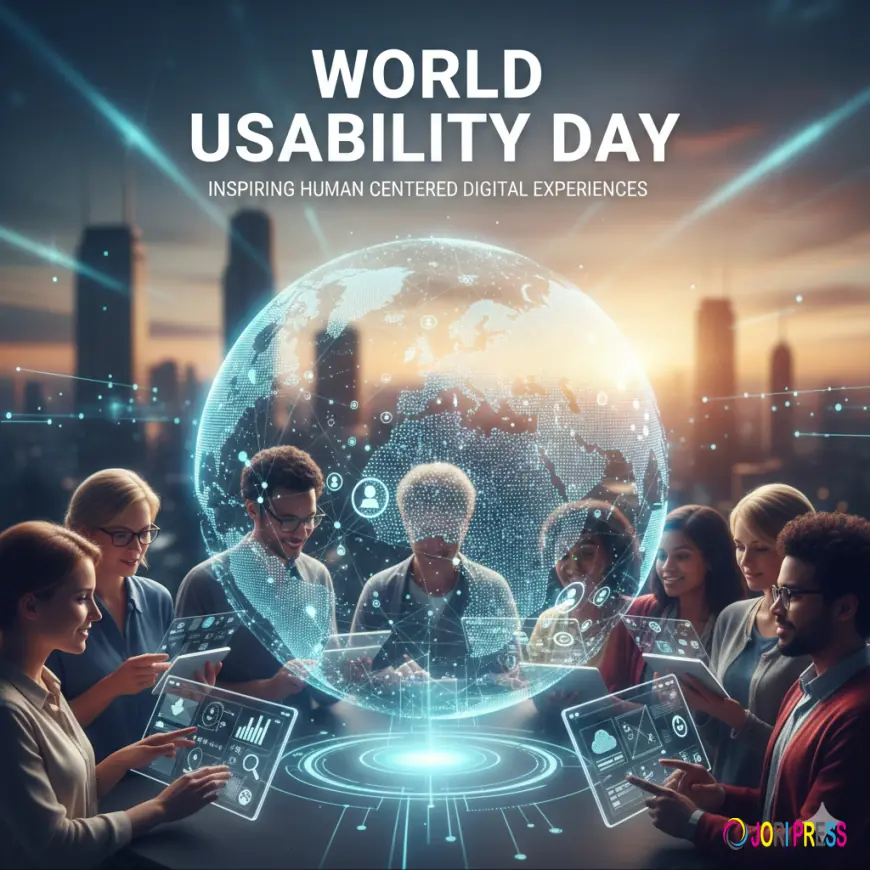
World Usability Day Inspiring Human Centered Digital Experiences
Explore the importance of world usability day and how it promotes human-centered, accessible, and user-friendly digital experiences worldwide.

Introduction
Digital experiences shape how people work, learn, communicate, and interact with the world every day. As technology becomes more embedded in daily life, the importance of usability has never been greater. World usability day serves as a global reminder that technology should be designed for people first. Observed by designers, developers, researchers, and businesses worldwide, this day emphasizes creating products that are intuitive, accessible, and inclusive for users of all abilities and backgrounds.
The Purpose Behind World Usability Day
World usability day was established to highlight the value of user-centered design and to encourage conversations around improving usability across digital and physical products. It brings together professionals from various disciplines to share insights, research, and best practices that enhance the overall user experience.
The core purpose of this observance is to ensure that technology empowers users rather than creating barriers. By focusing on ease of use, accessibility, and clarity, world usability day promotes design thinking that prioritizes real human needs over technical complexity.
Why Usability Matters in a Digital First World
Usability directly influences how people perceive and trust digital products. Poorly designed interfaces can lead to frustration, errors, and abandonment, while well-designed experiences foster confidence and satisfaction. World usability day draws attention to the idea that usability is not a luxury but a necessity in modern digital ecosystems.
As businesses compete for attention in crowded markets, usability becomes a key differentiator. Products that are simple to navigate and understand tend to achieve higher adoption rates and long-term user loyalty. This growing awareness reinforces the relevance of world usability day across industries.
World Usability Day and Inclusive Design
One of the most significant themes associated with world usability day is inclusivity. Inclusive design ensures that products are usable by people with diverse abilities, languages, and cultural contexts. This approach goes beyond compliance and focuses on empathy-driven design that accommodates a wide range of users.
By promoting inclusive practices, world usability day encourages organizations to consider accessibility from the earliest stages of design. This mindset leads to better outcomes not only for users with disabilities but for everyone who benefits from clearer and more flexible interfaces.
The Role of Designers and Developers
Designers and developers play a central role in advancing the principles celebrated on world usability day. Their decisions directly affect how users interact with technology, from layout and navigation to performance and responsiveness. Collaboration between these roles ensures that usability is integrated seamlessly into the development process.
Continuous testing, feedback collection, and iteration are essential practices encouraged during world usability day discussions. When teams prioritize user feedback, they create products that evolve in alignment with real-world usage rather than assumptions.
How Organizations Benefit from Usability Awareness
Organizations that embrace the values highlighted during world usability day often see measurable benefits. Improved usability reduces support costs, increases customer satisfaction, and enhances brand reputation. When users can complete tasks easily, they are more likely to remain engaged and recommend products to others.
Usability awareness also supports innovation. By understanding user pain points, organizations can identify opportunities for improvement and differentiation. World usability day reinforces the idea that user insight is a powerful driver of meaningful innovation.
Education and Knowledge Sharing on World Usability Day
Events, workshops, and discussions held during world usability day provide valuable learning opportunities. Professionals share case studies, research findings, and practical techniques that help improve design processes. This collective knowledge strengthens the global usability community and promotes consistent standards.
Educational institutions and training programs also leverage world usability day to inspire the next generation of designers and technologists. By emphasizing usability early in learning journeys, they help create future professionals who value empathy and user-centered thinking.
The Future of Usability and User Experience
As emerging technologies such as artificial intelligence, augmented reality, and connected devices become more prevalent, usability challenges will continue to evolve. World usability day remains relevant by encouraging ongoing dialogue about adapting usability principles to new contexts.
The future of user experience will depend on balancing innovation with simplicity. Designers and organizations that uphold the values promoted by world usability day will be better positioned to create technology that feels natural, helpful, and trustworthy.
Conclusion
World usability day is more than an annual observance. It is a global movement that reminds us of the responsibility to design technology that truly serves people. By promoting usability, accessibility, and human-centered design, this day encourages professionals and organizations to build experiences that are not only functional but meaningful. As digital interactions continue to shape everyday life, the principles celebrated on world usability day will remain essential to creating a more inclusive and user-friendly digital world.
What's Your Reaction?
 Like
0
Like
0
 Dislike
0
Dislike
0
 Love
0
Love
0
 Funny
0
Funny
0
 Angry
0
Angry
0
 Sad
0
Sad
0
 Wow
0
Wow
0