





































Why Inert Gas Flash Dewaxing is Changing the Game: The Quiet Revolution in Investment Casting
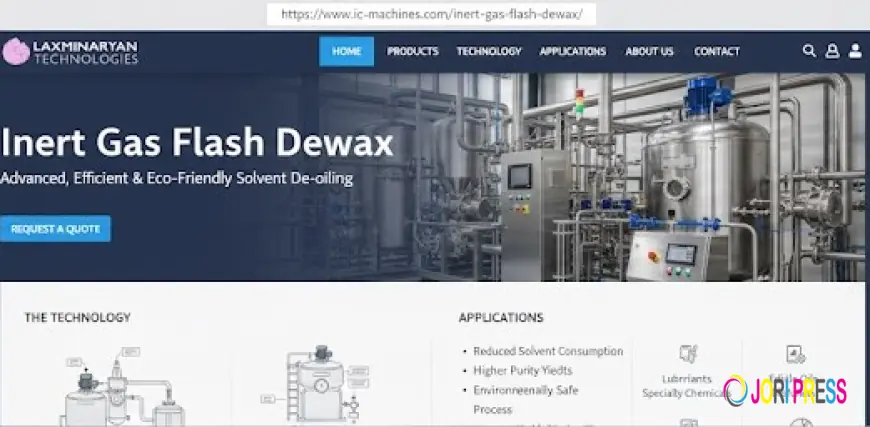
Stop risking shell cracks and wax fires. IC Machines (by Laxminarayan Technologies) offers an advanced Inert Gas Flash Dewax system that uses nitrogen or argon to safely melt and recover wax without combustion. Achieve superior shell integrity, enhance foundry safety, cut material costs through efficient wax reclamation, and maintain high-speed production—all in one intelligent solution designed for modern, quality-focused foundries.

The dewaxing procedure is a common albeit usually stressful aspect of the manufacturing line for anyone who has worked in an investment casting foundry. It's that crucial point where your perfectly waxed ceramic shell is subjected to extreme heat to melt away the wax and get ready for the molten metal pouring. For many years, flash fire dewaxing—a quick, violent, yet successful method—has been the accepted approach. Still, it has a familiar group of hazards: the possibility for shell cracking from thermal shock, the continuous threat of wax fires, and the loss of priceless wax that might be retrieved.
This is where a more clever, safer, and more effective approach has developed: Inert Gas Flash Dewaxing. Leading this technology is Laxminarayan Technologies. This is a fundamental reanalysis of a core procedure that tackles the pain spots foundries have just grown accustomed to, not only a little improvement.
What even is this thing, anyway? Here’s why it counts.
Simplicity sits at the core of this idea. Instead of slow heat, old-style flash firing uses quick warmth inside an oven full of air - air loaded with oxygen. As wax runs free, it meets blazing temperatures and plenty of gas, catching fire in seconds. That flare burns leftover wax away - but chaos follows right behind. A rush of flame and force fills the chamber without warning. Tiny cracks begin here, hidden flaws forming in fragile ceramic walls. These small breaks later show up as problems during metal pouring.
Inert Gas Flash Dewaxing Reshapes Methods
Something changes when inert gas enters the mix. Inside a space where oxygen would usually be present, nitrogen or argon fills the air instead. Their behavior stays calm under pressure. Fire cannot start there because these elements refuse to react. The whole setup shifts without warning.
how it works in practice
What happens next might surprise you. A container filled with wax gets placed inside the dewax space. After that, the door shuts tight, cutting off any outside air. Nitrogen flows in, pushing every trace of oxygen away. Heat rushes through only once the atmosphere is fully replaced. When the wax melts, speed matches a classic flash fire setup. Yet as it leaves the shell, something different happens. Flowing onward, it enters a small space filled with inactive gas, set before any heat arrives. Fire finds no grip there, starved of air. Out comes the wax - warm at first, then cooling fast - landing whole, safe to gather, fit again for later use.
Flipping the switch from oxygen-heavy to zero-oxygen air kicks off a chain reaction. Profits feel the effect fast. Workers breathe easier, literally. Metal outputs turn cleaner, more consistent. Each shift runs smoother than before.
Key Advantages of Inert Gas Flash Dewaxing
1.Improved Shell Integrity
What stands out right away is how much tougher the shells have become. With no explosive flash of flame or sudden surges in pressure, heat treats the ceramic far less harshly. That leads to a noticeable drop in fractures, tiny holes, and weak spots. When the shell holds up better, the finished cast comes out smoother and truer to form. It isn’t only about clearing out wax - it’s about honoring every careful step taken to shape an exact mold.
2.Enhanced Foundry Safety
Fires involving wax have always tagged along with older methods, yet they bring real danger. Equipment and people stay at risk when flames jump up without warning. A shield of inert gas steps in quietly, shutting down most of that threat before it starts. Safety climbs without making a sound. What happens now follows clear steps instead of sudden bursts. When safety really matters, there is no question - this change makes all the difference.
3.Efficient Wax Recovery Lowers Costs
Here's another angle: think about what happens to your wax. Most of it vanishes when flames tear through a standard burnout cycle, vaporized as heat energy. Instead of feeding a fire, picture that same wax melting cleanly under shielded gas. Without oxygen around, combustion cannot happen, so the material flows out intact. You catch it in a container while still fluid, run it through mesh later, then return it directly to casting gear. Over weeks and months, those reused batches add up - costs dip steadily where before they just piled higher
4.High-Speed, High-Efficiency Operation
Speed matters, sure. Some think going safe means slowing down. Not true here. This method uses inert gas in flashes to remove wax - keeps pace with older ways. Quick, without cutting corners. Actually, certain newer setups finish both dewaxing and the first burnout phase in just about twenty to twenty-five minutes. Speed arrives without damage tagging along.
Implications for Foundry Managers
A foundry manager sees real gains here. Less scrap shows up straight away, thanks to stronger shells. Safety gets a boost, trimming both risk and what you pay insurers. Wax recovery means less waste of supplies. Output stays steady, sometimes even climbs.
Sticking to the familiar feels natural. Those methods lasted years, true. Yet today’s worldwide competition pushes limits - thin profits, sky-high standards. Small tweaks fall short under such pressure. Real change demands bolder tools in foundries now.
How IC Machines Removes Wax With Inert Gas
A sudden shift happens when the Inert Gas Flash Dewax system enters the workflow - resilience takes root, efficiency climbs, quality holds steady. This isn’t merely machinery from Laxminarayan Technologies. It becomes part of how things survive, adapt, perform. Each cycle reinforces what matters: consistency without compromise, results that last beyond the first test.
One wrong move can break the rhythm of precision. Instead of pushing through, it flows like timing a heartbeat. Success hides in how gently the wax leaves behind its shape. A quiet exit makes room for what follows. The real win comes when each step fits without force.
Conclusion: A Quiet Revolution
That’s the quiet revolution happening in modern foundries, and it’s powered by nothing more than a simple, smart cloud of inert gas.
What's Your Reaction?
 Like
0
Like
0
 Dislike
0
Dislike
0
 Love
0
Love
0
 Funny
0
Funny
0
 Angry
0
Angry
0
 Sad
0
Sad
0
 Wow
0
Wow
0