


































Why Choosing the Right Solar Company Matters?
A reliable solar company will not simply offer the biggest system within your budget. It will study your electricity use, property conditions, and future needs before recommending a suitable solution.
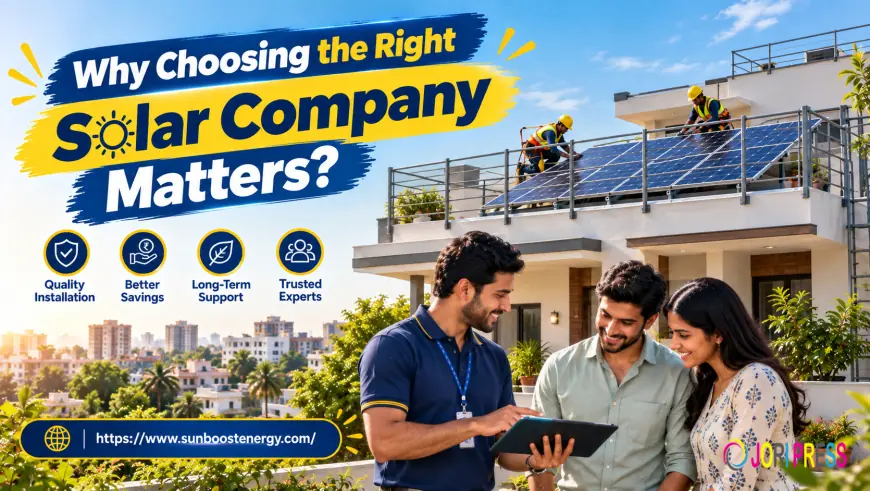
Installing solar is a long-term decision. The panels may remain on your roof for decades, but their performance depends much more than the brand printed on the product label. System sizing, roof assessment, electrical design, installation quality and after-sales service all affect how much value you receive.
A reliable solar company will not simply offer the biggest system within your budget. It will study your electricity use, property conditions, and future needs before recommending a suitable solution.
1. Correct System Sizing Affects Your Savings
Solar capacity should be based on your electricity consumption, daytime usage, available space, and future requirements. A system that is too small may not produce enough electricity to make the expected difference to your bills. An unnecessarily large system can increase the initial cost without providing proportionate value.
Before recommending a Rooftop Solar System, a responsible provider should review your recent electricity bills and ask how your household uses power. Plans to add air conditioners, an electric vehicle, or other high-consumption appliances should also be considered.
Be careful if a company recommends a system size without reviewing your electricity usage or property.
2. Every Roof Needs a Different Solar Design
Two homes with similar electricity bills may still require different solar layouts. Roof direction, usable space, shading, water tanks, nearby buildings and structural conditions can all change the design.
A proper site assessment helps the installer identify:
- Shadow-free areas
- Suitable panel direction and tilt
- Safe inverter placement
- Cable routes
- Roof repairs that may be required
- Access for future maintenance
A standard package can be a helpful starting point, but the final design should match the actual property.
3. Product Selection Is More Than Choosing Panels
Solar panels receive most of the attention, but they are only one part of the system. The inverter, mounting structure, cables, connectors, protection devices, and monitoring setup are equally important.
The right solar company should explain the proposed equipment in a simple language. You should understand the panel and inverter specifications, warranties, expected performance, and why those products suit your property.
The cheapest quotation may leave important equipment or use lower-quality components. Compare the complete system instead of making the decision based only on the final price.
4. Installation Quality Influences Long-Term Performance
Even good solar equipment can underperform when it is installed poorly. lose connections, unsuitable cable routing, weak mounting, poor waterproofing, and incorrect inverter placement can create safety and performance problems.
Panels must be secured to withstand local weather conditions, while electrical work should follow applicable standards and requirements. The installer should also avoid unnecessary roof damage and leave the site safe and tidy.
Ask the company who will carry out the installation and how installation quality will be checked.
5. Different Properties Need Different Expertise
Residential homes, apartment buildings, commercial properties and open land projects do not follow the same design process.
A Commercial solar system may require a detailed review of daytime demand, operating hours, sanctioned load, roof structure and business expansion plans.
Installing solar panels for an apartment may involve society approval, shared roof access and common area loads such as lifts, water pumps and lighting.
A ground mount solar system requires suitable land, foundations, row spacing, drainage, cable planning and maintenance access.
Choose a company with experience relevant to your property rather than assuming every solar installer handles all project types in the same way.
6. Realistic Generation Estimates Prevent Disappointment
Solar generation changes with location, weather, panel direction, shade, temperature, maintenance, and system losses. No responsible company should promise identical output every day or guarantee that every electricity bill will become zero.
Ask how the estimated generation was calculated and whether seasonal changes have been considered. A useful proposal should explain expected annual performance while making it clear that actual results may vary.
Transparent expectations help you judge the system by realistic performance instead of exaggerated sales promises.
7. Guidance Through Approvals Saves Time
Solar installation may involve documentation, local distribution-company requirements, net-metering procedures, and other approvals. The exact process can vary by location and project type.
A suitable provider should clearly explain which documents are required, what support it offers, and which responsibilities remain with the customer. If you plan to claim a government subsidy, confirm the current eligibility and approved process before paying.
Do not rely on verbal promises. Important information about equipment, installation scope, pricing, and responsibilities should appear in writing.
8. After-Sales Support Matters After Installation
The relationship with your solar company should not end when the panels are installed. You may later need help with system monitoring, inverter errors, generation concerns, warranty claims, or maintenance questions.
Before signing a proposal, ask:
- Who should be contacted if the system stops working?
- How are warranty claims managed?
- Is monitoring setup included?
- What installation workmanship support is provided?
- Are service charges clearly explained?
- How quickly are support requests usually handled?
Clear answers before installation can prevent frustration later.
9. A Detailed Quote Helps You Compare Properly
Not all solar quotations include the same products and services. A professional proposal should clearly mention:
- System capacity
- Panel and inverter details
- Number of panels
- Mounting structure
- Electrical protection
- Monitoring features
- Installation scope
- Applicable warranties
- Payment terms
- Additional charges or exclusions
If important details are missing, ask for a revised quotation before making any payment.
How to Choose the Right Solar Company?
Speak with more than one provider and compare their approach, not just their price. Notice whether they ask questions about your property and electricity use or immediately push a standard package.
A dependable company should communicate clearly, provide realistic estimates, and give you enough time to understand the proposal.
Sunboost Energy provides solar consultation, design and installation support for homes, businesses, housing societies and ground-mounted projects in India. Recommendations are based on property conditions, electricity requirements, and project goals.
What's Your Reaction?
 Like
0
Like
0
 Dislike
0
Dislike
0
 Love
0
Love
0
 Funny
0
Funny
0
 Angry
0
Angry
0
 Sad
0
Sad
0
 Wow
0
Wow
0