

































What Is Positive Behaviour Support? Everything NDIS Participants and Families Need to Know
Learn what Positive Behaviour Support is, who it's for, how it works, and how ZedCare Ability Services helps NDIS participants achieve positive outcomes through person-centred Behaviour Support.
Understand Positive Behaviour Support without the jargon—and learn how it can improve independence, communication and quality of life.
Positive Behaviour Support Isn't About "Stopping" Behaviour
Many people assume Positive Behaviour Support (PBS) is about preventing difficult behaviours or controlling a person's actions. In reality, it's much more than that.
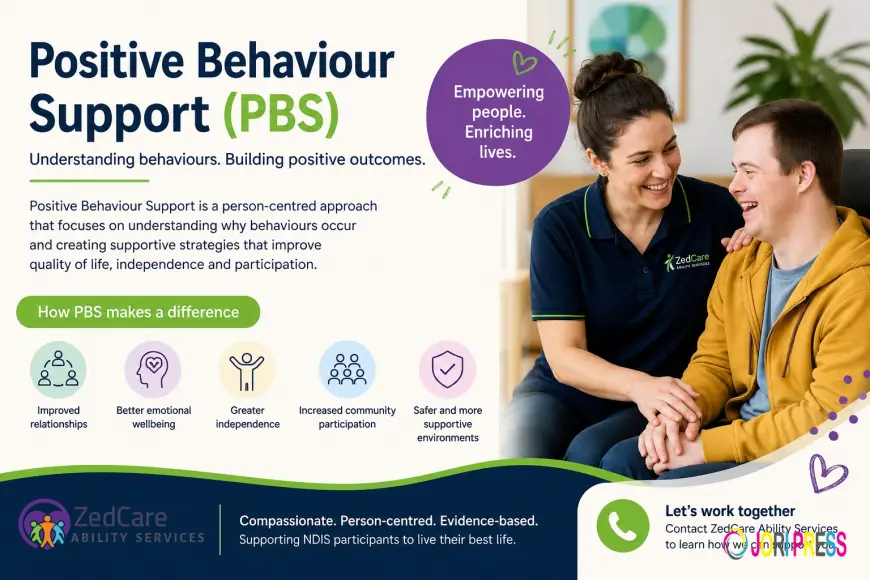
Positive Behaviour Support is a person-centred, evidence-based approach that helps people understand why certain behaviours occur and identifies practical strategies to improve wellbeing, communication and participation in everyday life.
Rather than asking:
"How do we stop this behaviour?"
PBS asks:
"What is this behaviour communicating, and how can we better support the person?"
This shift in perspective helps create lasting, positive outcomes for NDIS participants, families and support teams.
What Is Positive Behaviour Support?
Positive Behaviour Support (PBS) is a structured approach used by qualified Behaviour Support Practitioners to understand behaviours of concern and develop strategies that improve a person's quality of life.
These behaviours may include:
- Aggression
- Self-injury
- Property damage
- Verbal outbursts
- Withdrawal
- Repetitive behaviours
- Running away (absconding)
- Emotional distress
Instead of viewing these behaviours as "bad" or "challenging," PBS recognises that behaviour often serves a purpose. It may be a way of communicating pain, frustration, anxiety, sensory overload or unmet needs.
The goal isn't simply to reduce behaviours—it's to replace them with safer, more effective ways of communicating and coping.
Why Do Behaviours of Concern Happen?
Every behaviour has a reason.
Some common triggers include:
- Difficulty communicating needs
- Changes in routine
- Sensory sensitivities
- Physical discomfort or pain
- Anxiety or stress
- Environmental factors
- Lack of choice or control
- Unmet emotional needs
By identifying these underlying causes, Behaviour Support Practitioners can recommend strategies that address the root issue rather than just the behaviour itself.
Signs Someone May Benefit from Positive Behaviour Support
Positive Behaviour Support may be beneficial if an individual:
- Frequently experiences emotional outbursts
- Becomes aggressive toward others
- Engages in self-injurious behaviour
- Damages property during distress
- Struggles with communication
- Finds routine changes overwhelming
- Avoids community participation due to anxiety
- Requires restrictive practices to maintain safety
- Experiences behaviours that affect learning, relationships or independence
Seeking support early can often prevent behaviours from escalating and improve long-term outcomes.
Who Can Access Positive Behaviour Support Through the NDIS?
Positive Behaviour Support is generally available to eligible NDIS participants whose behaviours of concern significantly impact their daily life, safety or participation.
Funding is commonly included under Improved Relationships in an NDIS plan.
A participant may be referred by:
- Their Support Coordinator
- Local Area Coordinator (LAC)
- Allied health professional
- GP
- Family member or carer
- Existing disability support provider
If you're unsure whether Behaviour Support is included in your plan, your support team or Behaviour Support Practitioner can help you understand your available funding options.
What Happens During the First Behaviour Support Appointment?
Many families feel nervous before their first appointment. Fortunately, the process is collaborative and designed to understand the individual—not judge them.
Typically, the first appointment includes:
Getting to Know the Participant
The practitioner learns about the person's strengths, interests, goals and daily routine.
Understanding Current Challenges
They discuss situations where behaviours occur and what may be contributing to them.
Speaking with Family and Support Workers
Everyone involved shares observations and insights to build a complete picture.
Functional Behaviour Assessment (FBA)
The practitioner identifies:
- Behaviour triggers
- Environmental influences
- What happens before and after behaviours
- The purpose the behaviour may be serving
Goal Setting
Together, realistic goals are established, focusing on independence, communication, safety and participation.
The Positive Behaviour Support Journey
While every participant's journey is unique, the process often follows these steps:
- Referral or NDIS plan review
- Initial consultation
- Functional Behaviour Assessment
- Development of a Behaviour Support Plan
- Training for family and support staff
- Implementation of strategies
- Regular monitoring and review
- Ongoing adjustments based on progress
PBS is not a one-time service—it evolves as the participant's needs and goals change.
A Real-Life Example
Imagine a young participant named Liam who becomes distressed every time he visits a busy shopping centre.
Initially, others believe he's simply "misbehaving."
After completing a Functional Behaviour Assessment, the Behaviour Support Practitioner discovers that loud noises, bright lights and crowded environments overwhelm Liam's sensory system.
Instead of avoiding shopping altogether, the support plan includes:
- Visiting during quieter hours
- Using noise-cancelling headphones
- Preparing with a visual schedule
- Taking regular sensory breaks
- Teaching Liam ways to communicate when he feels overwhelmed
Over time, Liam becomes more comfortable participating in community outings, helping him build confidence and independence.
This example illustrates how PBS focuses on understanding why behaviours occur rather than reacting to the behaviour itself.
Benefits of Positive Behaviour Support
Effective PBS can lead to meaningful improvements across many areas of life.
Potential outcomes include:
- Reduced behaviours of concern
- Improved communication skills
- Greater independence
- Increased confidence
- Better emotional regulation
- Stronger family relationships
- Safer home and community environments
- Increased participation in education, employment and social activities
- Reduced reliance on restrictive practices
- Improved overall quality of life
These changes often happen gradually through consistent, person-centred support.
Positive Behaviour Support vs Other NDIS Supports
Many people are unsure how PBS differs from other disability supports.
| Support | Main Focus |
|---|---|
| Positive Behaviour Support | Understanding behaviours of concern and developing proactive strategies |
| Psychology | Mental health assessment and therapy |
| Occupational Therapy | Daily living skills, sensory processing and independence |
| Speech Pathology | Communication and swallowing support |
| Support Coordination | Helping participants access and manage NDIS supports |
These services often work together to provide holistic support.
Common Myths About Positive Behaviour Support
Myth: PBS is about punishment.
Fact: PBS focuses on understanding behaviour and teaching positive alternatives.
Myth: PBS is only for children.
Fact: People of all ages can benefit from Behaviour Support.
Myth: PBS means using restraints.
Fact: One of PBS's key aims is to reduce and, where appropriate, eliminate restrictive practices.
Myth: Behaviour changes happen overnight.
Fact: Meaningful, lasting change takes time, consistency and collaboration.
Tips for Families and Carers
Families play a vital role in successful Behaviour Support.
Helpful strategies include:
- Observe patterns before behaviours occur.
- Keep a simple behaviour diary.
- Maintain consistent routines where possible.
- Celebrate small achievements.
- Use positive reinforcement.
- Communicate regularly with your Behaviour Support Practitioner.
- Be patient—progress often happens gradually.
Small, consistent changes can make a significant difference over time.
Frequently Asked Questions
Is Positive Behaviour Support only for people with autism?
No. PBS supports individuals with a range of disabilities and support needs where behaviours of concern affect wellbeing or participation.
Is PBS funded through the NDIS?
For eligible participants, Behaviour Support is commonly funded under the Improved Relationships category of an NDIS plan.
How long does Behaviour Support last?
The duration depends on individual goals and needs. Plans are regularly reviewed and adjusted as progress is made.
Can family members be involved?
Absolutely. Family members and carers are encouraged to participate because their insights are invaluable in developing effective strategies.
Who develops the Behaviour Support Plan?
A qualified Behaviour Support Practitioner develops the plan in collaboration with the participant, family members and support network.
Can restrictive practices be reduced?
Yes. One of the core aims of Positive Behaviour Support is to reduce and, where possible, eliminate restrictive practices while promoting safety and dignity.
How ZedCare Ability Services Supports Participants
At ZedCare Ability Services, we believe every person deserves support that respects their individuality, strengths and goals.
Our Behaviour Support services focus on understanding each participant's unique circumstances and developing practical strategies that improve daily life—not simply managing behaviours.
Our approach includes:
- Comprehensive Behaviour Support Assessments
- Individualised Behaviour Support Plans
- Functional Behaviour Assessments
- Family and carer collaboration
- Training for support workers
- Regular plan reviews
- Person-centred, evidence-based strategies
- Support aligned with NDIS requirements and best practice
Whether you're newly exploring Behaviour Support or looking to review your current strategies, our experienced team works alongside participants, families and support networks to achieve meaningful, lasting outcomes.
Why Early Behaviour Support Matters
The earlier behaviours of concern are understood, the greater the opportunity to build positive communication, independence and confidence.
Rather than waiting until behaviours become more frequent or severe, proactive support can help participants develop skills that improve everyday life and reduce future challenges.
Positive Behaviour Support isn't about changing who someone is—it's about creating environments where they can thrive.
Take the Next Step
If you or someone you care for is experiencing behaviours of concern, seeking support early can make a meaningful difference.
At ZedCare Ability Services, we're committed to providing compassionate, person-centred Behaviour Support that empowers participants to achieve their goals and live more independently.
Contact our team today to learn more about our Positive Behaviour Support services, discuss your NDIS funding options, or arrange an initial consultation. Together, we can build practical strategies that support a safer, more confident and more fulfilling future.
Contact:
ZedCare Ability Services
Call Us: 1300 933 013
Email: info@zedcare.com.au
Website : zedcare.com.au
Address : Sydney, NSW, Australia
What's Your Reaction?
 Like
0
Like
0
 Dislike
0
Dislike
0
 Love
0
Love
0
 Funny
0
Funny
0
 Angry
0
Angry
0
 Sad
0
Sad
0
 Wow
0
Wow
0