





































The One Question Every AI Strategy Meeting Dodges

There’s a moment in every AI meeting when enthusiasm fills the room. Slides flash phrases like automation, efficiency, predictive power. Someone mentions “beating the competition.” Someone else says, “Let’s get a pilot running.” The conversation builds until the air feels electric—right up to the moment a quiet person asks the question that changes everything: What exactly are we trying to achieve?
Silence. Then, someone mutters, “Innovation.”
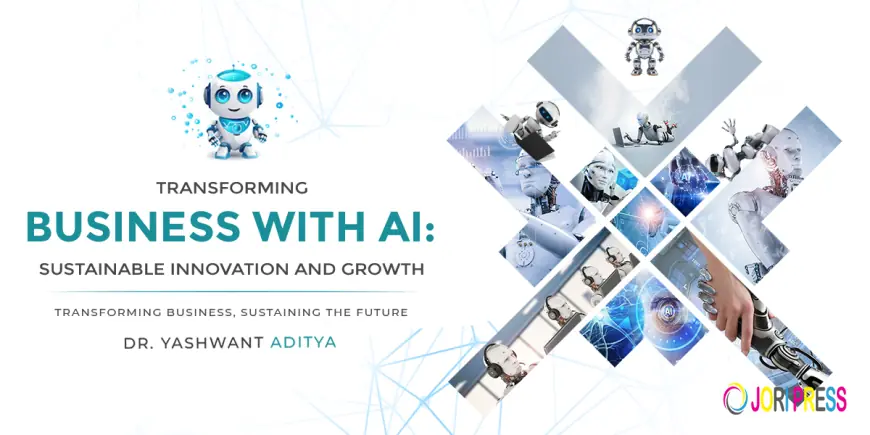
Dr. Yashwant Aditya’s Transforming Business with AI was written for that silence. It begins not with hype but with intent. In his view, an organization that cannot answer “why” should not touch the “how.” Without defined objectives, AI adoption turns into theater—a set of impressive demos with no real impact.
Aditya breaks strategy into disciplined components. First, define measurable goals. Then, identify the data and processes that serve those goals. Only then do you pick the technology. He urges leaders to use the old-fashioned SMART framework—Specific, Measurable, Achievable, Relevant, and Time-bound—not because it’s trendy, but because it forces clarity. If a team cannot describe success in numbers or timelines, it’s not ready for algorithms.
The book’s practicality is refreshing. It advocates phased roadmaps: start with a small, well-scoped project that solves an actual problem. Measure results, document what failed, and scale only when the basics work. Aditya calls this “the difference between digital maturity and digital theater.” One produces results; the other produces press releases.
He also warns against confusing activity with progress. Many organizations deploy tools just to appear innovative. But AI that lacks context will simply automate confusion. Before investing, he urges readers to examine their data readiness, infrastructure stability, and workforce literacy. Technology magnifies what already exists. If your processes are sloppy, AI will make them faster at being sloppy.
Throughout the book, Aditya maintains a tone of reason. He doesn’t mock ambition; he redirects it. He understands the corporate pressure to “do something with AI.” His argument is that restraint, not rush, separates serious organizations from reactive ones. Moving carefully doesn’t mean moving slowly. It means moving with purpose.
The book’s most valuable idea may be its redefinition of leadership. Leaders, Aditya writes, are not supposed to know every technical detail, but they must understand enough to ask better questions. What data are we using? What biases might exist? How will we measure success? What happens if the system fails? These are not technical questions—they are accountability questions disguised as strategy.
Reading this, you can sense the author’s impatience with the performative urgency surrounding AI. He isn’t saying “don’t adopt.” He’s saying “adopt like an adult.” That difference between hype and maturity is what will define the next decade of business transformation.
If your next meeting includes a slide that says “AI Strategy,” pause before you discuss vendors or pilots. Ask Aditya’s question first. What, precisely, are we trying to achieve?
If you can answer it clearly, you’re already ahead.
Transforming Business with AI: Sustainable Innovation and Growth is available now on Amazon.
What's Your Reaction?
 Like
0
Like
0
 Dislike
0
Dislike
0
 Love
0
Love
0
 Funny
0
Funny
0
 Angry
0
Angry
0
 Sad
0
Sad
0
 Wow
0
Wow
0