












































Process Engineering: Improving Efficiency Through Innovation

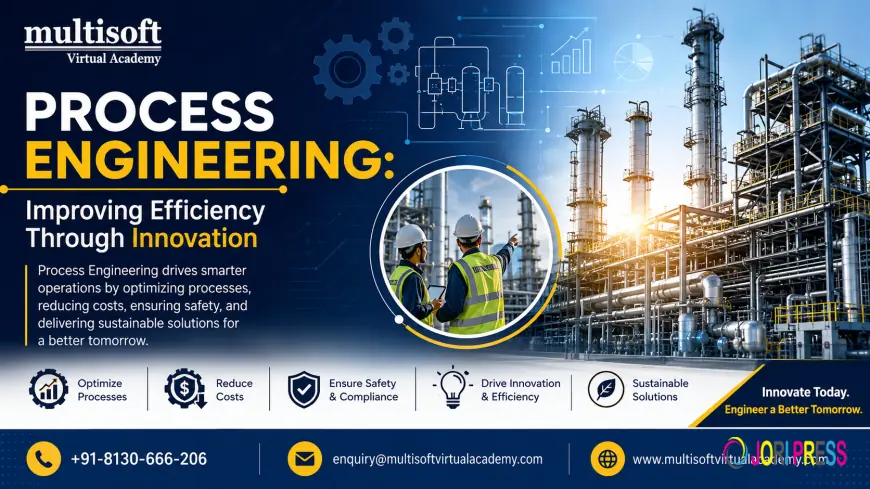
Process Engineering is at the heart of modern industrial operations, enabling organizations to design, optimize and manage production systems with greater efficiency, safety and sustainability. From chemical manufacturing and oil & gas processing to pharmaceuticals, food production and renewable energy, process engineering ensures that every stage of production delivers consistent quality while minimizing costs and environmental impact.
With the rise of Industry 4.0, digital transformation and intelligent automation, businesses are increasingly seeking innovative process engineering solutions to improve operational performance. As a result, the demand for skilled process engineers and advanced engineering practices continues to grow across industries worldwide.
Understanding Process Engineering
Process Engineering is a specialized engineering discipline focused on designing, analyzing, improving and maintaining industrial processes that convert raw materials into finished products. It integrates engineering principles, scientific knowledge and advanced technologies to develop efficient production systems that meet quality, safety and regulatory standards.
A well-designed process engineering strategy helps organizations achieve:
-
Higher operational efficiency
-
Reduced production costs
-
Improved product consistency
-
Enhanced workplace safety
-
Sustainable resource utilization
-
Better energy management
-
Regulatory compliance
-
Increased profitability
Why Process Engineering Matters in Today's Industries
Modern industries operate in an increasingly competitive environment where efficiency and innovation are essential. Process engineering enables businesses to streamline workflows, eliminate bottlenecks and adopt advanced technologies that improve productivity while reducing operational risks.
Some of the major advantages include:
-
Optimized production performance
-
Lower energy consumption
-
Reduced material waste
-
Improved equipment utilization
-
Greater process reliability
-
Faster project execution
-
Better environmental sustainability
-
Enhanced customer satisfaction
Major Applications of Process Engineering
Process engineering supports a wide range of industrial sectors, including:
Oil and Gas
Optimizing exploration, refining, gas processing and petrochemical production.
Chemical Manufacturing
Designing safe and efficient chemical production systems.
Pharmaceutical Industry
Developing reliable manufacturing processes that meet stringent quality standards.
Food and Beverage
Improving food processing, packaging and production efficiency.
Water and Wastewater Treatment
Enhancing treatment processes for clean water and environmental protection.
Power Generation
Supporting thermal, nuclear, renewable and hybrid energy facilities.
Mining and Metals
Optimizing extraction, refining and mineral processing operations.
Renewable Energy
Designing sustainable production systems for hydrogen, biofuels and clean energy solutions.
Key Functions of Process Engineering
Process engineers play a critical role throughout the lifecycle of industrial projects.
Process Design
Developing efficient workflows and production systems for industrial facilities.
Process Simulation
Using advanced simulation software to evaluate plant performance before implementation.
Equipment Engineering
Selecting and designing process equipment such as reactors, heat exchangers, pumps, compressors and storage systems.
Process Optimization
Improving plant efficiency by reducing waste, increasing throughput and minimizing downtime.
Safety and Risk Management
Conducting hazard analysis and implementing safety measures to ensure reliable plant operations.
Process Control
Maintaining stable production using automation, instrumentation and control systems.
Core Principles Behind Process Engineering
Successful process engineering relies on a combination of engineering fundamentals, including:
-
Mass and Energy Balance
-
Heat Transfer
-
Fluid Flow Analysis
-
Thermodynamics
-
Chemical Reaction Engineering
-
Process Control Systems
-
Equipment Design
-
Industrial Automation
-
Process Safety Engineering
These principles enable engineers to develop efficient, reliable and cost-effective manufacturing processes.
Essential Deliverables in Process Engineering Projects
A comprehensive process engineering project generally includes:
-
Process Flow Diagrams (PFD)
-
Piping and Instrumentation Diagrams (P&ID)
-
Equipment Datasheets
-
Utility Flow Diagrams
-
Material Balance Reports
-
Heat Balance Calculations
-
Process Design Calculations
-
Instrument Specifications
-
Equipment Layout Drawings
-
Plant Layout Plans
-
Line Sizing Calculations
-
Engineering Documentation
Popular Software Used in Process Engineering
Leading industries rely on advanced engineering tools for process design and optimization.
Some of the most widely used software includes:
-
Aspen HYSYS
-
Aspen Plus
-
AVEVA Process Engineering
-
AutoCAD Plant 3D
-
SmartPlant P&ID
-
Bentley OpenPlant
-
COMOS
-
CAESAR II
-
ANSYS Fluent
-
MATLAB
-
AVEVA E3D
-
SmartPlant 3D
These platforms help engineers improve accuracy, reduce project timelines and enhance collaboration.
Emerging Trends in Process Engineering
The future of process engineering is being reshaped by digital technologies and smart manufacturing practices.
Industry 4.0 Integration
Connected manufacturing systems enable real-time process monitoring and optimization.
Artificial Intelligence
AI-powered analytics improve production planning and operational efficiency.
Digital Twin Technology
Virtual models help simulate plant operations and predict equipment performance.
Industrial Internet of Things (IIoT)
Connected devices provide continuous monitoring and data-driven insights.
Predictive Maintenance
Advanced analytics reduce unexpected equipment failures and maintenance costs.
Sustainable Manufacturing
Industries are focusing on reducing emissions, improving energy efficiency and minimizing waste generation.
Green Process Engineering
Eco-friendly technologies are transforming industrial production while supporting environmental goals.
Essential Skills for Process Engineering Professionals
To succeed in today's competitive industrial landscape, professionals should develop expertise in:
-
Process Design
-
Plant Engineering
-
Process Simulation
-
Process Optimization
-
Chemical Engineering Fundamentals
-
Industrial Automation
-
Instrumentation and Control
-
Process Safety Management
-
Data Analysis
-
Lean Manufacturing
-
Six Sigma
-
Engineering Documentation
-
Equipment Design
-
Risk Assessment
-
Root Cause Analysis
Career Opportunities in Process Engineering
The increasing adoption of smart manufacturing technologies has created excellent career prospects for process engineering professionals.
Popular job roles include:
-
Process Engineer
-
Senior Process Engineer
-
Plant Design Engineer
-
Chemical Process Engineer
-
Production Engineer
-
Manufacturing Engineer
-
Process Safety Engineer
-
Operations Engineer
-
Project Engineer
-
Technical Consultant
-
Commissioning Engineer
-
Industrial Engineer
-
Engineering Consultant
Professionals with expertise in modern engineering tools and digital technologies enjoy strong career growth across global industries.
High-Demand Industries for Process Engineers
Process engineering professionals are highly valued in sectors such as:
-
Oil & Gas
-
Petrochemicals
-
Chemicals
-
Pharmaceuticals
-
Fertilizers
-
Food Processing
-
Power Generation
-
Renewable Energy
-
Water Treatment
-
Mining
-
Pulp & Paper
-
Specialty Manufacturing
Best Practices for Effective Process Engineering
Organizations can achieve long-term operational success by following proven engineering practices:
-
Conduct detailed process analysis before implementation.
-
Utilize simulation tools for accurate process validation.
-
Adopt digital engineering technologies.
-
Continuously monitor plant performance.
-
Improve energy efficiency through optimization strategies.
-
Implement predictive maintenance programs.
-
Follow international quality and safety standards.
-
Encourage continuous improvement initiatives.
-
Invest in workforce development and technical expertise.
Future Outlook of Process Engineering
As industries continue to embrace digital transformation, automation and sustainable manufacturing, Process Engineering will remain a cornerstone of industrial innovation. Emerging technologies such as artificial intelligence, machine learning, cloud computing, robotics and digital twins are redefining how industrial facilities are designed and operated. Organizations that invest in advanced process engineering practices will be better equipped to improve productivity, reduce operational costs and achieve sustainable business growth.
Final Thought
Process Engineering is more than just designing industrial processes—it is about creating efficient, reliable and future-ready manufacturing systems that drive business success. By integrating advanced engineering methodologies, automation and sustainable practices, organizations can enhance operational excellence while meeting evolving industry demands. Whether optimizing existing facilities or developing new production plants, effective process engineering plays a crucial role in achieving long-term performance and innovation. Multisoft Virtual Academy is committed to supporting businesses and professionals with expert process engineering services, helping them build smarter industrial solutions and stay ahead in an increasingly competitive global marketplace.
What's Your Reaction?
 Like
0
Like
0
 Dislike
0
Dislike
0
 Love
0
Love
0
 Funny
0
Funny
0
 Angry
0
Angry
0
 Sad
0
Sad
0
 Wow
0
Wow
0