




































Is Your KYC Process Complete Without Real-Time Bank Account Name Fetching?
A strong KYC framework is the foundation of every regulated financial business. From fintech platforms to NBFCs and insurance companies, compliance is non-negotiable. But here’s an important question:

A strong KYC framework is the foundation of every regulated financial business. From fintech platforms to NBFCs and insurance companies, compliance is non-negotiable. But here’s an important question:
Is your KYC process truly complete without real-time bank account name verification?
The Missing Layer in Traditional KYC
Most onboarding processes verify:
-
PAN details
-
Aadhaar authentication
-
Address proof
-
Mobile number validation
While these checks confirm identity, they do not guarantee that the submitted bank account actually belongs to the customer.
This gap creates vulnerability in payout systems.
Why Bank Account Verification Matters
If the bank account holder name does not match the registered customer identity, risks include:
-
Fraudulent disbursals
-
Identity impersonation
-
Money mule account usage
-
Regulatory scrutiny
This is why penny drop verification India solutions are increasingly embedded into onboarding flows.
How Penny Drop Verification Strengthens KYC
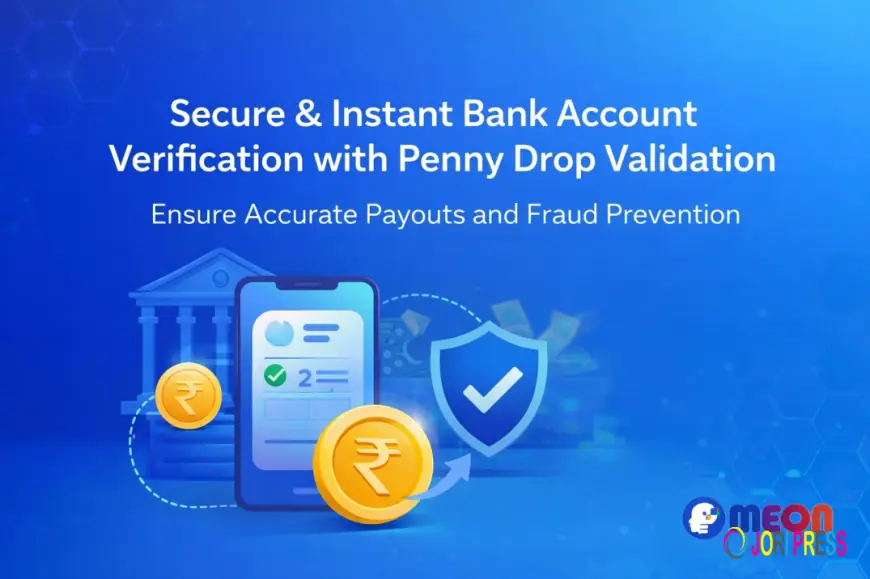
Penny drop verification sends a ₹1 transaction to the provided account and fetches the registered account holder’s name directly from the banking network.
This enables businesses to:
-
Confirm account ownership
-
Match name with KYC records
-
Detect discrepancies instantly
-
Maintain audit-ready verification logs
By implementing penny drop verification for KYC, organizations add a crucial validation layer to their compliance framework.
Why Automated Verification Is Essential
Manual verification methods cannot provide real-time confirmation. Automated APIs, offered by reliable penny drop verification providers, deliver:
-
Instant response within seconds
-
Secure validation records
-
High accuracy name fetching
-
Seamless onboarding integration
A trusted penny drop service provider ensures verification happens before payouts are initiated.
Platforms like Meon integrate account validation directly into digital onboarding journeys, ensuring no payout account remains unverified.
Regulatory and Operational Benefits
Adding real-time bank verification helps businesses:
-
Improve compliance posture
-
Reduce fraud risk
-
Minimize payout failures
-
Strengthen internal risk controls
For regulated financial institutions, these controls are not optional—they are expected.
Final Perspective
If your KYC process verifies identity but not bank account ownership, it remains incomplete. Real-time name fetching through penny drop verification ensures your onboarding is not only fast but also secure and compliant.
What's Your Reaction?
 Like
0
Like
0
 Dislike
0
Dislike
0
 Love
0
Love
0
 Funny
0
Funny
0
 Angry
0
Angry
0
 Sad
0
Sad
0
 Wow
0
Wow
0