

























Modern Solutions for Enlarged Prostate Treatment

Benign prostatic hyperplasia (BPH), commonly known as an enlarged prostate, is a condition that affects a significant number of men, especially after the age of 50. Although not cancerous, an enlarged prostate can cause urinary problems such as frequent urination, weak urine flow, difficulty starting urination, and incomplete bladder emptying. Fortunately, modern medicine offers a variety of enlarged prostate treatment options that are effective, safe, and minimally invasive, improving patients’ quality of life significantly.
Understanding an Enlarged Prostate
The prostate is a small gland located below the bladder and surrounding the urethra. Its main function is to produce seminal fluid, which nourishes and transports sperm. Over time, the prostate can grow in size naturally. When this growth begins to compress the urethra, it leads to urinary difficulties and discomfort.
Symptoms of an enlarged prostate may include:
-
Difficulty initiating urination
-
Weak or interrupted urine stream
-
Frequent urination, especially at night (nocturia)
-
Urgent need to urinate
-
Feeling of incomplete bladder emptying
-
Dribbling after urination
While mild symptoms can sometimes be managed with lifestyle changes, moderate to severe cases often require professional enlarged prostate treatment.
Lifestyle Changes as First-Line Treatment
For men with mild symptoms, certain lifestyle adjustments can help improve urinary function and reduce discomfort. These include:
-
Limiting caffeine and alcohol intake
-
Drinking fluids earlier in the day rather than before bedtime
-
Practicing bladder training and double voiding
-
Maintaining a healthy weight and regular physical activity
-
Avoiding medications that worsen urinary symptoms
While these measures can provide relief, they do not reduce the size of the prostate or treat the underlying cause. Therefore, for lasting results, medical intervention may be necessary.
Medication-Based Enlarged Prostate Treatment
Several medications are commonly prescribed to manage BPH symptoms:
1. Alpha-blockers
These drugs relax the muscles of the prostate and bladder neck, making urination easier. They generally provide rapid relief from urinary symptoms.
2. 5-alpha-reductase inhibitors
These medications shrink the prostate by blocking the hormone responsible for prostate growth. They may take several months to achieve optimal results but are effective for long-term management.
3. Combination therapy
In certain cases, doctors prescribe both alpha-blockers and 5-alpha-reductase inhibitors to maximize symptom relief and improve quality of life.
While medications are effective, some patients may experience side effects such as dizziness, sexual dysfunction, or fatigue, which leads many to consider modern procedural options.
Minimally Invasive and Modern Procedural Treatments
Medical technology has advanced significantly, offering patients modern solutions for enlarged prostate treatment that are less invasive than traditional surgery.
1. Prostate Artery Embolization (PAE)
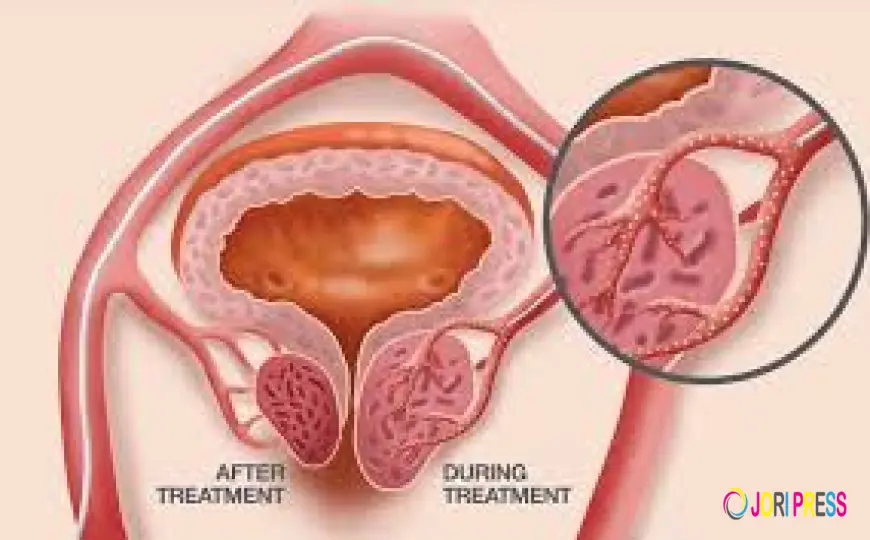
PAE is a minimally invasive procedure performed by interventional radiologists. A tiny catheter is inserted into the arteries supplying the prostate, and small particles are used to block blood flow to the enlarged tissue. Over time, this causes the prostate to shrink, relieving urinary symptoms. Benefits include:
-
No surgical incisions
-
Minimal discomfort
-
Quick recovery and outpatient procedure
2. UroLift System
The UroLift procedure involves placing small implants to lift and hold enlarged prostate tissue away from the urethra. This improves urine flow without removing tissue. Advantages include:
-
Preserves sexual function
-
Fast recovery
-
Can be performed in an outpatient setting
3. Rezūm Water Vapor Therapy
This innovative therapy uses controlled steam to ablate excess prostate tissue. The heat destroys targeted cells, causing the prostate to shrink naturally over several weeks. Benefits:
-
Minimally invasive
-
Quick symptom improvement
-
Outpatient procedure with low risk
4. Laser Therapy
Laser procedures, such as Holmium Laser Enucleation of the Prostate (HoLEP), remove excess tissue using focused laser energy. Advantages include:
-
Reduced bleeding compared to traditional surgery
-
Rapid relief of urinary symptoms
-
Suitable for larger prostates
Surgical Options for Severe Cases
For men with very large prostates or complications such as urinary retention, kidney problems, or recurrent infections, traditional surgery may be required. Common surgical procedures include:
-
Transurethral Resection of the Prostate (TURP)
-
Open prostatectomy for extremely large glands
Although surgery is highly effective, it involves longer recovery times and higher risks compared to modern minimally invasive treatments.
Choosing the Right Enlarged Prostate Treatment
The best enlarged prostate treatment depends on:
-
Severity of symptoms
-
Size of the prostate
-
Overall health
-
Personal preferences
-
Desire for minimally invasive procedures
A urologist can evaluate the patient’s condition and recommend the most suitable treatment for optimal relief and long-term results.
Conclusion
Modern medicine has made enlarged prostate treatment more effective and patient-friendly than ever before. From lifestyle changes and medications to minimally invasive procedures like PAE, UroLift, and Rezūm therapy, men have multiple options to manage their symptoms and improve urinary health. Early evaluation and timely treatment can significantly enhance quality of life, reduce complications, and allow patients to maintain daily activities comfortably.
What's Your Reaction?
 Like
0
Like
0
 Dislike
0
Dislike
0
 Love
0
Love
0
 Funny
0
Funny
0
 Angry
0
Angry
0
 Sad
0
Sad
0
 Wow
0
Wow
0